%20(1).png)
Women's Wear Factory: From Design Brief to Production-Ready Collection

An approved design can still miss the mark in bulk production. The difference often comes down to how clearly a brand’s creative decisions are translated into specifications a women's wear factory can follow, from measurements and construction details to fabric and trims.
That handoff can feel complicated. Development samples need to reflect the brief, sourcing needs to stay aligned with the design, and quality checks should help maintain consistency as production scales. Each step depends on clear information and close coordination between your team and the factory.
This guide explains how a collection moves from design brief to production-ready garments, which details help prevent avoidable misunderstandings, and how sample review and quality control support a smoother bulk run. We’ll also show how PowerSweet Fashion brings fabric sourcing, pattern making, sample development, quality control, and production together in one collaborative workflow, so you can prepare your designs for manufacturing and understand each stage.
Table of Contents
What Does a Women's Wear Factory Do for a Fashion Brand?
A women's wear factory develops and manufactures apparel to a brand’s specifications. It helps turn a design direction into a garment that can be sampled, reviewed, and prepared for production. The factory contributes technical and manufacturing expertise, while the brand sets the creative direction, defines its customer, and makes product decisions.
This differs from buying finished apparel through a retail store or wholesale reseller. Those channels sell garments that have already been made. Custom manufacturing starts with a brand’s requirements and coordinates development, materials, construction, production, and quality checks around them. These are connected parts of the clothing industry, but they serve different business needs.
Which services can a women's apparel factory support?
Development and production work best when each handoff is clear. In a custom project, pattern making translates garment requirements into a pattern; sample development gives the brand a physical version to assess; fabric sourcing supports material selection; and quality control checks garments against agreed requirements. PowerSweet Fashion provides these services alongside custom women's clothing production, connecting development work with the path to bulk garments.
Pattern making: Converts design and measurement information into a pattern for garment construction.
Sample development: Produces a sample for review before the project moves further into production.
Fabric sourcing: Helps align material selection with the brand's design requirements.
Quality control: Supports checks against the specifications established for the garments.
The factory supports execution, but it doesn't take over the brand's wider responsibilities. The brand leads design intent and makes decisions about merchandising, positioning, and sales. A productive collaboration makes those roles explicit: the brand provides direction and approvals, while the factory applies manufacturing expertise to develop and produce the garments.
How does custom manufacturing differ from buying ready-made apparel?
Ready-made products are created before a buyer selects them. Custom manufacturing is organized around the brand's brief, so decisions can be made about the garment's silhouette, materials, construction, and labels. The agreed project specifications define the work, so include the intended style and its requirements clearly in the brief.
Custom manufacturing: Garments are developed to brand-specific requirements, with samples and production guided by approved specifications.
Ready-made retail: Shoppers choose from products already designed and manufactured for sale.
Wholesale resale: A business purchases existing products for resale rather than commissioning garments built around its own design brief.
For brands, the practical distinction is control over the product definition. A clear brief gives the production partner a basis for developing the garment, while the brand retains ownership of the creative decisions and approvals. That shared understanding connects concept to execution without confusing manufacturing support with retail or design ownership.
How a Women's Wear Factory Moves Designs from Sample to Bulk
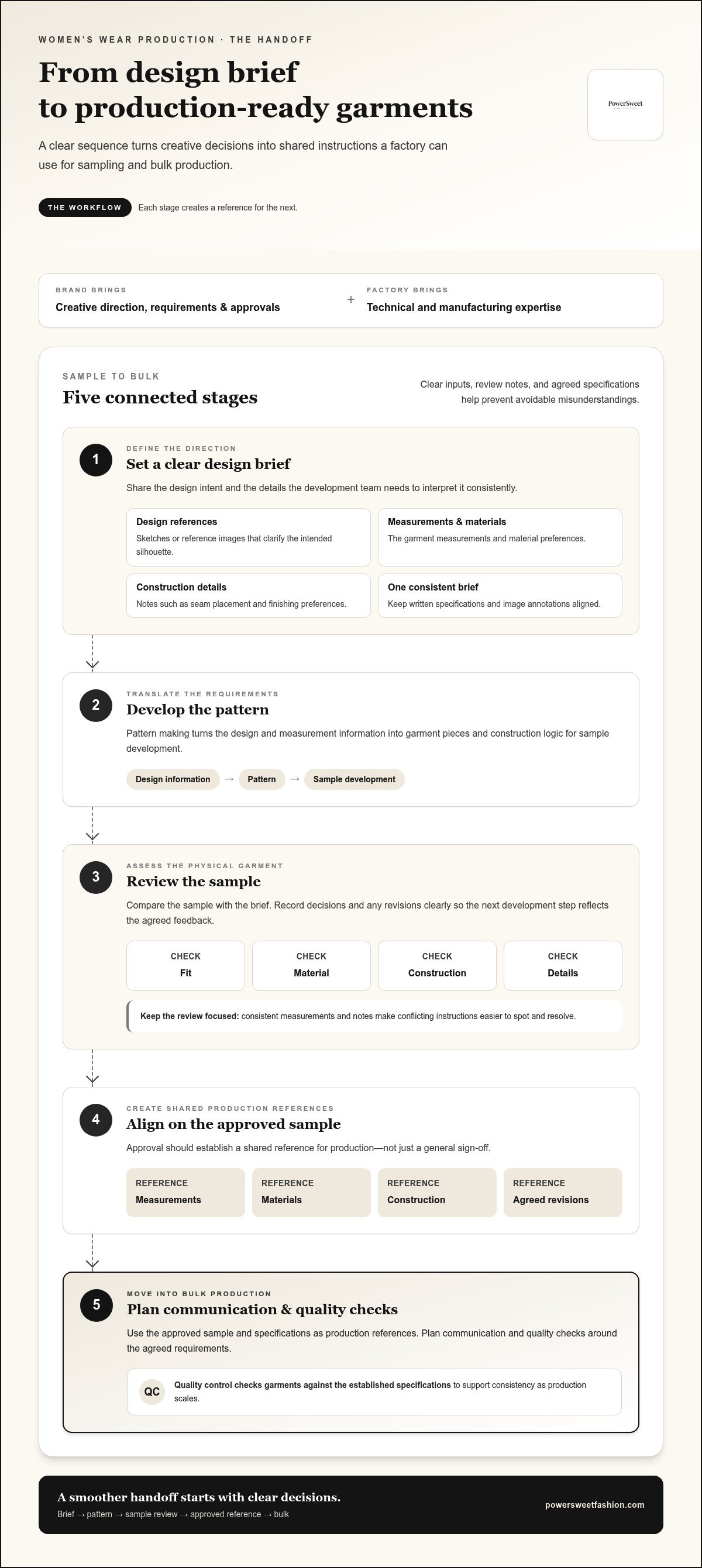
Moving from an idea to a bulk run takes more than sending a sketch to production. A women's wear factory needs clear inputs, a pattern that reflects the intended fit and construction, and a sample the brand can assess against its requirements. Each stage creates a reference for the next, turning creative direction into repeatable instructions.
Set the brief: Share the design intent, measurements, materials, construction details, and reference images that clarify the garment.
Develop the pattern: Pattern making translates those requirements into garment pieces and construction logic for sample development.
Review the sample: Assess fit, material, construction, and details that need revision. Record feedback clearly so the next development step reflects the decisions made.
Prepare for bulk: Use the approved sample and specifications as production references, with communication and quality checks planned around the agreed requirements.
What information helps turn a design brief into a sample?
Give the development team enough detail to interpret the design consistently. Useful inputs include sketches or reference images, measurements, construction notes, and material preferences. A sketch can show the intended silhouette, while written notes clarify details an image may not communicate, such as seam placement or finishing preferences.
Keep measurements and notes consistent across files. If the written specification conflicts with an annotated image, the team has to resolve the difference before developing the sample. A consolidated brief makes open decisions easier to spot early and keeps the review focused on the garment rather than conflicting instructions. For a closer look at preparing and assessing prototypes, explore this sample development guide.
What happens between sample approval and a bulk run?
Sample approval should establish a shared production reference, not just a general sign-off. The brand and factory need aligned specifications for the garment’s measurements, materials, construction, and agreed revisions. This helps production teams understand what they’re making and gives quality checks clear criteria to follow.
Quality control works best as a planned process rather than a single check at the end. Checks can be organized around the project’s agreed requirements as production progresses, helping the team identify deviations and address them in context. The brand also plays a role: review the sample carefully, provide consolidated feedback, and approve the specifications intended for bulk.
Samples are ready in 10 days; bulk production takes 15-20 days.
These timelines provide a planning reference, while project requirements can affect the schedule. If your brief is taking shape, custom women's clothing production can connect pattern making, sampling, sourcing, quality control, and bulk manufacturing in a coordinated workflow.
How to Assess a Women's Wear Factory's Production Fit
A strong production fit is more specific than a broad promise of “high quality” or an “extensive selection.” It means the factory’s development support, communication, and quality-control processes can align with the garments your brand wants to make. Assess how those processes relate to your requirements, then look for clear explanations of how information moves from your team to production.
Use a practical comparison framework: match each need to the relevant process, and distinguish a demonstrated capability from a general claim. This makes it easier to spot gaps in the working plan before they lead to unclear approvals or mismatched expectations.
Do the factory's processes match your women's apparel requirements?
Start with the garment, not a general capability claim. If your design depends on a particular construction approach or fabric characteristic, make that requirement clear in the brief. Discuss how fabric sourcing, pattern making, and production preparation will support it. This keeps the conversation grounded in your actual product rather than assumptions about categories or machinery.
Document fit requirements in a form the development team can use. Provide measurement points, intended fit, and relevant notes alongside the sample or reference materials. If a measurement changes after review, record the revision and identify which specification it replaces. This gives the women's wear factory an agreed reference instead of conflicting instructions.
How do communication and quality controls support consistency?
Consistency depends on shared decisions. Keep approvals, comments, and revised specifications together, and make clear which version is current. During sample review, consolidate feedback on fit, fabric, and construction so the next action is unambiguous. Before bulk production, align the approved sample and written specifications as references for the production team.
Quality control is a set of planned checks against agreed garment specifications. Checkpoints during production can help identify differences while there’s still an opportunity to review them, rather than relying only on a final inspection. Discuss how checks relate to the project’s requirements and how findings are communicated. The objective is not to assume sample and bulk garments will match automatically, but to manage the information and review points that guide production.
Prepare Your Brand for a Women's Wear Production Run
A production run is easier to coordinate when key decisions are ready before development begins. A clear handoff gives the factory a practical reference for building the sample, sourcing materials, and preparing the garment for production. It also helps your team separate firm requirements from details that can be refined during review.
What should be ready before sample development begins?
Gather information that communicates both design intent and product requirements. A focused brief helps a women's wear factory connect your direction with pattern making, fabric sourcing, and sample development. Not every detail has to be final, but identify what must remain consistent.
Design intent: Include sketches, reference imagery, and notes that explain the intended look and purpose of the garment.
Fit direction: Provide target measurements and clarify the intended fit, using consistent measurement points.
Material preferences: Note known fabric requirements or preferences and identify what is still open to sourcing or development.
Construction priorities: Record essential details that affect how the garment is made, and separate them from refinements that can be assessed on the sample.
Review responsibilities: Name the decision-makers on your team and agree how feedback will be consolidated and approved.
This preparation makes the development handoff more useful. Pattern making can translate agreed garment requirements into a pattern, while fabric sourcing can support material decisions against the brief. If your team is mapping the whole sequence from concept through production, the end-to-end clothing production guide offers further context on how the stages connect.
Separate requirements into two groups: decisions that define the product and preferences that can be explored during development. For example, target measurements and a required material characteristic may be essential, while a minor finishing preference could be reviewed once the sample is available. Marking this distinction helps the team focus early effort where it matters most.
How can brands plan minimums, materials, and timing?
Build minimum order quantities and production schedules into the launch plan rather than treating them as details to solve after development. The order plan should reflect the quantity needed for the launch, while the schedule should leave room for sample review, feedback, and production preparation. PowerSweet Fashion offers low minimum order quantities, which can support brands planning smaller production runs. Include the quantity needed for each style and color in your project plan.
Materials and quantity decisions are connected. Fabric choice can shape development and sourcing discussions, while the planned run helps frame production preparation. Align these decisions with your launch priorities, and keep unresolved preferences visible so they aren't mistaken for approved specifications. For guidance on planning smaller runs, see the low-MOQ manufacturing guide.
Clear preparation reduces avoidable ambiguity. It gives your team and production partner a shared starting point, a defined review process, and a better basis for deciding what is ready to move forward. Explore PowerSweet Fashion's production support for a collaborative workflow spanning development and custom women's clothing production.
Partner with PowerSweet Fashion for Women's Wear Production
A production partnership works best when creative direction and manufacturing execution stay connected. PowerSweet Fashion supports fashion brands with custom women's clothing production, bringing development services and bulk production into a coordinated workflow. Your team sets the design intent and approves the product; our team helps translate those decisions into clear steps toward finished garments.
What does PowerSweet Fashion bring to a production partnership?
Our services support the handoffs that shape a custom project. Pattern making turns garment requirements into a workable pattern. Sample development gives your team a garment to review, while fabric sourcing helps progress material decisions. Quality control connects agreed specifications with checks during production. These capabilities work together, rather than leaving your team to coordinate each stage in isolation.
From fabric sourcing and sample development to pattern making, quality control, and bulk production, we support brands through connected stages of women's apparel manufacturing.
That connection matters in practice. If sample feedback leads to a design or measurement revision, the updated requirements can inform the next production steps. Clear communication between your team and ours helps keep the approved direction visible as the project moves forward. PowerSweet Fashion also offers low minimum order quantities, giving brands flexibility to plan smaller production runs. Include the intended order quantity in the brief so it can inform production planning.
Partnership can extend beyond digital handoffs. Clients can visit the factory, meet the production team, and oversee quality control. Seeing the people and work behind the process can make coordination more direct and give your team a closer view of how agreed requirements are being followed.
What is the next step for a brand planning production?
Start with a concise project brief. Include the design direction, garment specifications, target quantities, material preferences, and preferred schedule. Identify who will review samples and approve revisions on your team. If some decisions are still open, mark them clearly so they can be discussed during development rather than mistaken for settled requirements.
These inputs help shape a production plan around the project. Requirements, approvals, and materials can affect how development and production are scheduled, so consider timelines in context rather than treating them as identical for every order. A focused discussion of the brief gives both teams a practical starting point for aligning the work.
PowerSweet Fashion's stated timelines are: samples ready in 10 days, and bulk production in 15-20 days. Project requirements can affect schedules, so these timelines are a planning reference rather than a promise that every order follows the same path. To discuss a women's wear production project, share your production brief with PowerSweet Fashion.
Turn Your Production Plan into a Clear Next Step
Your next move is to turn the decisions behind your collection into a focused project brief. Set out what the garments need to achieve, which details are essential, and how your team will review development. That gives you and your production partner a practical starting point for aligning priorities and shaping the work around your launch.
A women's wear factory partnership is most effective when both teams can make decisions openly and keep the creative direction connected to production requirements. You don't need every detail resolved before starting. Bring the information you have, identify what still needs development, and build the plan collaboratively.
Ready to move your concept forward? Discuss your women's wear production project with PowerSweet Fashion and take the next step toward a production-ready collection.
Frequently Asked Questions
What is the difference between a women's wear factory and a clothing wholesaler?
A women's wear factory makes garments to a brand's specifications, while a clothing wholesaler typically resells products that are already made. A factory partnership suits a brand that wants to define product details, such as measurements or materials. A wholesaler may suit a business seeking ready-to-order stock. The key difference is whether you are commissioning production or selecting existing inventory for resale.
What does MOQ mean when working with a women's wear factory?
MOQ means minimum order quantity, the smallest quantity a factory accepts for a production order. It can affect how you plan a launch, especially if you’re ordering different designs, colors, or sizes. Clarify which styles and colors the planned quantity covers. PowerSweet Fashion offers low minimum order quantities, which can help brands plan smaller production runs.
How much does it cost to manufacture women's clothing?
Manufacturing costs depend on the project, so there isn’t one price that applies to every garment. Factors include order volume, fabric complexity, garment construction requirements, and development work needed before production. To make a useful estimate, prepare your design details, target quantity, and material preferences. Request a project-specific breakdown that distinguishes sample development costs from bulk production costs, so you can plan the full budget.
Can a women's wear factory help source fabric and trims?
Yes, a production partner can help source materials for a custom garment. PowerSweet Fashion provides fabric sourcing, including trims such as buttons, zippers, and labels. Share required material characteristics, references, or preferences early. If a component is still undecided, note that in the brief so sourcing discussions can account for it before specifications are finalized.
Can a factory develop samples before bulk clothing production?
Yes. Sample development gives a brand a physical prototype to assess before bulk production. Use the sample review to evaluate how the garment matches the intended fit, materials, and construction, then record revisions clearly. PowerSweet Fashion provides sample development and pattern making, helping translate design requirements into a garment your team can review and refine before production decisions move forward.
How long does bulk women's clothing production take?
PowerSweet Fashion states that bulk production takes 15-20 days. Treat this as a planning reference because project requirements can affect the schedule. The brief, materials, quantity, and approvals all shape production planning. Build time into your launch calendar for development and review as well as the bulk run, so the production timeline isn’t mistaken for the full journey from concept to finished garments.


Comments