%20(1).png)
Garment Fit Testing: 2026 Guide for Fashion Brands

A sample can look right on one person and still miss the intended fit across the size range. Garment fit testing turns a try-on into a structured review, helping your team make clear decisions before production moves forward.
Comments such as “make it more comfortable” or “adjust the shape” are difficult to act on. A consistent review process records what is happening, where it happens, and what the garment should do instead. That gives your team and manufacturing partner specific direction for sample revisions and approval.
This guide explains how to assess fit systematically, record useful sample feedback, and evaluate what has and hasn’t been reviewed across the planned size range. It also shows how to separate a preference from a pattern issue and document decisions that support the transition from sample development to bulk production.
Table of Contents
What Is Garment Fit Testing, and Why Does It Matter Before Production?
A sample can look polished yet sit differently on the body than the design brief intends. Garment fit testing gives a fashion team a structured way to assess that difference before approving a style for production. Reviewers compare how the garment sits and performs with the intended silhouette, measurements, and use, rather than relying on a general reaction such as “it feels off.”
Garment fit testing is the structured assessment of clothing on a wearer or fit model to determine whether a sample matches its design intent. Occupational fit testing checks protective equipment, such as a respirator, for workplace safety. Workplace medical testing has a separate purpose. Although search results may use the same word, apparel fit review concerns the relationship between a garment, the body, and the intended wearing experience, not medical surveillance or protective-equipment clearance.
Fit is practical as well as visual. Clothing physiology and garment fit offers context on how clothing interacts with the body, including comfort. Evaluate a fashion sample against its specific design, not a generic idea of what “fits.”
What does a garment fit test evaluate?
A fit review considers how the garment hangs, where it contacts or releases from the body, and whether its proportions look balanced. Reviewers may assess ease, the room allowed for the body and intended movement, and how the garment behaves during relevant actions. A fitted woven top, for example, calls for a different balance of shaping and movement allowance than a loose outer layer.
Set the criteria from the design brief and intended wearer. Separate observations into distinct categories so a pattern change addresses a fit issue rather than masking another problem:
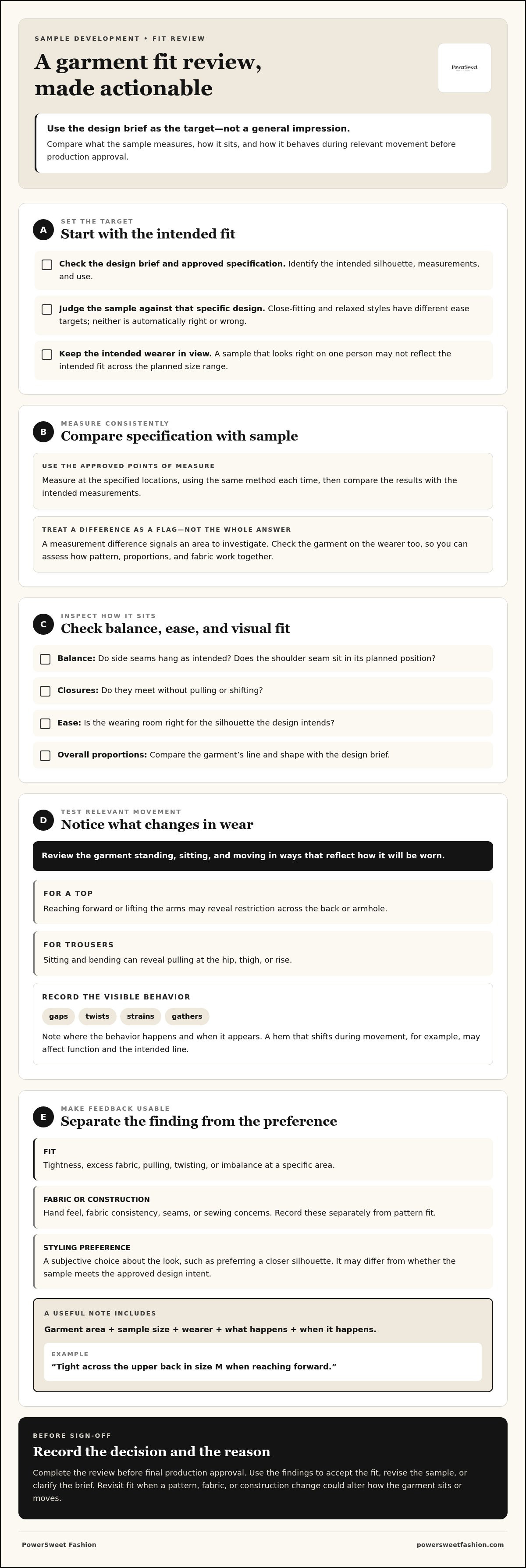
Fit: tightness, excess fabric, pulling, twisting, or imbalance at a specific area.
Fabric or construction: concerns about hand feel, fabric consistency, seams, or sewing that should be recorded separately from pattern fit.
Styling preference: a subjective choice about the look, such as preferring a closer silhouette, which may differ from a failure to meet the approved design intent.
This distinction makes feedback more useful. “The sleeve restricts reach” describes a performance concern; “I prefer a wider sleeve” expresses a styling preference. Both can inform a decision, but they are not the same kind of finding.
When should a fashion brand test garment fit?
Review fit during sample development, while the sample and pattern can still be assessed against the approved design intent. Complete the review before final production approval so the team can accept the fit, revise the sample, or clarify the brief. Record both the decision and its reasoning to give pattern-making and sample-development work a clear direction.
Revisit fit when a change could alter how the garment sits or moves. A pattern revision may shift balance or ease. A fabric substitution can change drape or stretch, while a construction adjustment may affect how a seam or panel behaves on the body. The number of reviews depends on the garment and the changes made. Each design does not need an identical set of fitting rounds, but meaningful changes should be reviewed before sign-off.
Which Fit Checks Reveal Whether a Garment Matches the Design?
A useful fit review turns the approved specification and design brief into observable checks. Compare the sample with the intended silhouette, then assess how it sits on the wearer and responds to relevant movement. This ties approval to what the design is meant to achieve, rather than whether one person likes the sample at first glance.
Fit approval compares observed fit with documented design intent, so the decision can be explained, recorded, and applied consistently. Record findings by garment area, sample size, and wearer. “Tight across the upper back in size M when reaching forward” is easier to act on than “feels small.” If you review more than one wearer or size, keep each observation distinct instead of combining them into a general impression.
Check measurements, balance, and ease
Start with the brand’s approved points of measure and specification. Measure the sample consistently, using the same locations and method each time, and compare the results with the intended measurements. A difference flags an area to investigate, but it does not explain the whole fit. Check the garment on the wearer to see how the pattern, proportions, and fabric work together.
Assess balance, too. Do the side seams hang as intended? Does the shoulder seam sit in the planned position? Do closures meet without pulling or shifting? Ease is the wearing room built into a garment. Judge it against the intended silhouette: close-fitting clothing should sit differently from a relaxed style, and neither is automatically right or wrong. The design brief sets the target.
Assess comfort, movement, and visual fit
Check the garment standing, sitting, and moving in ways that reflect how it will be worn. For a top, reaching forward or lifting the arms may reveal restriction across the back or armhole. For trousers, sitting and bending can show pulling at the hip, thigh, or rise. Note whether the fabric gaps, twists, strains, or gathers, and record where and when the issue appears.
Compare the overall proportions with the design brief. A hem that shifts during movement, for example, may affect both function and the intended line. Record the location and visible behavior instead of guessing at a pattern correction. The pattern maker can assess an adjustment while keeping the original design intent in view.
Keep repeatable fit observations separate from individual preference. “The neckline gapes when the wearer bends forward” describes an observable issue. “I prefer a higher neckline” is a preference the team can weigh against the brief. Capture both, but label them clearly before deciding whether to revise the sample.
Consistent records make the review easier to share across design and production. For teams developing custom women’s clothing, coordinated sample development and pattern making connect fit observations with the next sample decision.
Which Garment Fit Testing Method Suits Your Sample and Size Range?
The right review method depends on what your team needs to learn. A static fitting can reveal proportion and silhouette; movement checks show how the garment behaves during wear; measurement-based assessment checks dimensions against the specification. These methods answer different questions, so combine them when one check alone would leave an important question unresolved.
Choose a method based on the design’s intended use, construction, and open fit concerns. A structured jacket may need close attention to shoulder balance and closure behavior. A stretch garment intended for active movement may need more attention to restriction and recovery during relevant actions. No single method suits every category.
Static fitting versus movement-based wear testing
A static fitting reviews the garment while the wearer stands in a neutral position. It helps the team assess silhouette, balance, and visible proportions, such as whether the hem falls evenly or the garment hangs as intended. It is a useful first look, but cannot show how the garment responds to motion.
A movement-based review observes the garment during actions relevant to its use. Reaching, sitting, or bending may reveal shifting, pulling, or restriction that is not visible while standing. Keep the movements purposeful and record what changes, where it happens, and during which action. A brief wear review represents only the conditions observed; it cannot account for every body, activity, or wearing situation.
Use measurement-based assessment to compare sample dimensions with the approved specification. It can help identify whether the garment was made to the intended measurements, but measurements alone cannot establish how it hangs or feels on a wearer. Pair methods where appropriate: a sample can meet its measurement targets and still raise a balance or movement concern.
How should brands think about size-range fit?
One sample size cannot demonstrate fit across every planned size. Grading changes garment dimensions from one size to another, and intended proportions may not behave identically throughout the range. A successful review on the base size provides evidence about that sample, not automatic proof that every size will fit as intended.
Use the sample sizes available to define what has actually been evaluated. If only the base size is available, record that scope in the review rather than implying the full range has been assessed. Consider reviewing additional sizes when grading raises a material question, such as whether a proportion or shaping detail remains consistent in a larger or smaller size. The need depends on the design and the uncertainty involved, not a universal number of sizes or fit models.
Bring the findings together before deciding. Measurement checks can flag dimensional differences, static review can show how the silhouette reads, and movement review can reveal behavior during use. If results point in different directions, document the unresolved question and focus the next review on it. This tailors the method to the sample instead of forcing every garment through the same test.
How to Run a Garment Fit Test and Turn Feedback into Revisions
A productive fitting ends with a clear next step, not a pile of subjective comments. Use agreed criteria throughout the review and capture enough detail for the design and pattern teams to understand what needs attention. This workflow keeps garment fit testing connected to sample decisions.
Prepare a useful and repeatable fit session
Before the wearer tries on the sample, gather the current specification, design reference, and agreed fit criteria. Record the wearer or fit model, sample size, and relevant conditions, such as whether the review includes sitting or reaching. If visual records are appropriate, take consistent front, back, and side views so the team can compare the same angles in a later review.
Write feedback that can guide pattern and sample changes
Describe what you observe in plain language. Identify the garment area, the issue, and the intended result. Avoid prescribing a technical pattern solution unless the team has agreed on one. A clear description gives the pattern maker useful information while leaving room to assess the right adjustment.
Prepare the sample. Confirm you are reviewing the current version and note its sample size and any relevant material or construction details.
Confirm the criteria. Align on the design reference, specification, intended silhouette, and the specific questions this fitting should answer.
Observe the fit. Review the garment under the agreed conditions. Note when an issue appears, such as while standing, sitting, or performing a relevant movement.
Document each finding. Record the garment location, what you see or feel, and the size and wearer involved. Add consistent visual references where appropriate.
Decide what happens next. Mark each item as a required correction, a question for review, or an optional preference. Assign a clear decision before the sample moves forward.
Review the change. Assess the revised sample against the same criteria, and record whether the original concern is resolved or still needs attention.
A useful fit comment is specific and tied to an observable issue. For example: “At the right underarm, the seam pulls during a forward reach; review the armhole shaping to allow the intended reach while keeping the approved sleeve length.” This identifies the location, describes the behavior, and states the intended outcome without relying on shorthand such as “fix the arm.”
Set priorities before revisions begin. Resolve a fit-critical issue affecting the intended function or silhouette before optional styling preferences or minor refinements. If every comment is treated as equally urgent, it becomes harder to agree on the next sample and determine whether core requirements have been met. Keep preferences visible, but distinguish them from requirements in the decision record.
Clear comments and review criteria connect sample feedback with the next development steps. Explore sample development for custom women’s clothing with PowerSweet Fashion.
Fit Testing in PowerSweet Fashion's Production Workflow
Fit decisions are most useful when they carry forward into pattern making and the next sample, rather than staying as comments from a single review. For custom women’s clothing, documented measurements, fit intent, and agreed revisions help keep sample development focused. They also create a clear record of what has been decided and what still needs review.
Move from fit feedback to an approved sample
Organize review notes into agreed actions before revising the pattern or sample. Separate fit-critical corrections from preferences, and connect each correction to the part of the garment it affects. For example, consider a note about excess fabric at the back waist alongside the approved waist measurement and intended silhouette. The goal is not to make an isolated change, but to check how it supports the garment’s overall design intent.
Pattern making translates those decisions into sample changes. Keep the approved measurements and fit references with the feedback so each revision has a clear basis. Once the next sample is developed, compare it with the agreed criteria and record whether the intended change is visible. If an issue remains unresolved, document it for another decision rather than treating the sample as approved by default.
PowerSweet Fashion provides sample development and pattern making for custom women’s clothing. Fit notes and design references guide this work, keeping the reasoning behind sample changes clear as development progresses.
Prepare for bulk production with clear fit decisions
Resolve fit-critical questions before production approval. A documented decision identifies the sample version and measurements the team has approved, along with any open points that still need attention. This record supports an orderly handoff into bulk production, while recognizing that no single sample represents how a garment will fit every wearer.
PowerSweet Fashion’s sample development takes 10 days, and bulk production takes 15-20 days. Keep fit review and approval decisions clear in the project plan as the sample moves toward production.
Consistent garment fit testing documentation gives the brand and production team a shared reference as an approved sample moves toward manufacturing. It keeps key decisions visible and helps the team assess the garment against the brand’s requirements.
Discuss your custom women’s clothing project with PowerSweet Fashion and share the fit priorities that should inform sample development and pattern making.
Make Your Next Fit Decision With Confidence
Make fit review part of how your team moves a design forward. Assign a clear approval owner, keep the latest fit notes with the sample record, and flag unresolved questions before production decisions are made. This turns garment fit testing into a practical point of alignment between your design intent and the garment being developed.
For your next style, identify the fit questions that matter most to its shape and intended use. Share those priorities early so sample decisions can be discussed against a common reference and the team can focus its review where it adds value.
PowerSweet Fashion works with brands developing custom women’s apparel. Discuss your custom women's apparel project with PowerSweet Fashion and take the next step with a clear fit-development plan.
Frequently Asked Questions
What is garment fit testing?
Garment fit testing is a planned review of how a clothing sample fits a wearer and whether it reflects the design’s intended shape and use. It brings the sample, approved specifications, and fit criteria together for a clear evaluation. Unlike a measurement check alone, it considers how garment dimensions work on the body and whether the result matches the intended silhouette.
Why is fit testing important before bulk garment production?
Fit testing helps identify decisions that could otherwise remain unresolved when a style moves into bulk production. A sample may match its listed measurements but still sit differently than intended because of its proportions or construction. Reviewing and documenting the concern gives the team a chance to revise, clarify the design, or approve the sample before using it as a production reference.
How many fit tests does a garment need?
There is no fixed number of fit tests that suits every garment. The number depends on what the reviews reveal and whether later changes could affect fit. A straightforward sample may need fewer reviews than one with unresolved proportion or movement concerns. Recheck after a meaningful pattern, fabric, or construction change, and stop when the team has enough evidence to make and document its approval decision.
Can one sample size confirm fit across the full size range?
No. A fitting on one size provides evidence about that sample and wearer, but it cannot establish how every graded size will fit. Pay particular attention when size changes could affect shaping, proportions, or a design feature’s placement. If only one size has been reviewed, record that scope clearly so nobody mistakes base-size approval for validation of the entire range.
What should I check during a garment fitting?
Check whether the garment sits as intended at key areas such as the shoulder, waist, hip, and hem, then consider how it behaves during movements relevant to its use. Notice whether details such as pockets, fastenings, or panels stay in their intended position. Record what you observe and under which conditions so the team can distinguish a repeatable issue from a momentary adjustment or individual preference.
How should I write garment fit comments for a manufacturer?
Make each comment specific enough to guide a decision: name the garment area, describe the observed issue, and state the intended result. For example: “The left side seam shifts toward the front when standing; review the side balance so it hangs as shown in the design reference.” Keep separate notes for separate concerns, and label optional style preferences so they are not confused with required corrections.
Does garment fit testing assess fabric quality too?
Not by itself. A fit review focuses on how the garment fits and behaves on the wearer, while fabric quality and sewing workmanship are separate review areas. However, a fitting may reveal fabric behavior that affects fit, such as a panel stretching or draping differently than expected. Record the observation, then identify whether it calls for a fit adjustment or a separate material or construction review.


Comments