%20(1).png)
Garment Quality: A Guide for Fashion Brands in 2026

A perfect approved sample can still become an inconsistent bulk order. Garment manufacturing quality can feel subjective when expectations aren’t translated into clear measurements, tolerances, and defect criteria. If fit, stitching, or materials vary across a production run, the result can be costly delays and rework.
Quality isn’t inspected into a garment at the end. It’s designed, controlled, and verified throughout production. This guide explains how to turn design expectations into measurable requirements, assess quality from the approved sample onward, and set acceptance criteria your manufacturing team can follow.
We’ll cover the checkpoints that connect materials, patterns, samples, and finished garments, and show how clear communication helps keep bulk production aligned with the approved standard. At PowerSweet Fashion, fabric sourcing, pattern making, sample development, bulk production, and quality control are connected parts of the process. Clients can also visit the factory to meet the production team and observe quality-control work.
Table of Contents
What garment manufacturing quality means for a fashion brand
How to assess garment quality: materials, fit, construction, and finish
Where garment quality is built: from materials to final inspection
How to set measurable garment quality standards and acceptance criteria
How PowerSweet Fashion supports quality across custom garment production
What garment manufacturing quality means for a fashion brand
Garment quality describes how well a finished piece meets the specifications agreed for it. In garment manufacturing quality, those specifications need to cover more than visual appeal. They should define the garment’s intended fit, appearance, function, and performance in use. A piece can look polished but miss its intended fit, or match its measurements while using construction details that don’t suit the design.
Clear specifications turn design intent into a standard the production team can reproduce and the brand can assess. That standard links the customer’s experience to practical manufacturing details, from the selected material to the placement of a seam.
Which dimensions make a garment fit for its intended use?
Assess the garment across several connected dimensions. Their importance depends on its category, design, fabric, construction, and intended customer. A fitted blouse and a relaxed outer layer, for example, won’t have the same fit priorities or construction requirements.
Fit and measurements: Check key points such as body width, garment length, and sleeve length against the intended silhouette and documented measurements.
Construction: Assess whether seams, closures, and other structural details suit the garment’s design and function.
Materials: Check whether the fabric’s weight, texture, and behavior support the garment’s intended wear and appearance.
Finishing and appearance: Review seam neatness, alignment, and overall presentation against the agreed design references.
These dimensions affect one another. Fabric influences drape, while pattern and construction choices shape fit and movement. Set priorities for each style rather than assuming the same checks and standards apply to every garment.
Why quality expectations must be agreed before bulk production
Words such as “premium” or “durable” can mean different things to different people. Without a shared definition, a brand may expect a particular fit or finish while the production team interprets the description differently. Replace broad labels with specific references: design files, a measurement chart, written construction details, and an approved sample that shows the intended result.
Agree on how each reference will be used. The sample can show appearance and construction, while the measurement chart specifies dimensions and tolerances. Together, they give the team a basis for discussing proposed changes before they carry into bulk production. For more context on selecting a production partner, see this custom women's clothing manufacturer guide.
Product quality and quality control are related, but different
Product quality describes how well the garment meets its agreed requirements. Quality control is the set of checks used to assess whether it does. Inspection can identify a mismatch, but it can’t resolve an unclear expectation after the fact. The broader Textile Manufacturing Process also shows how material decisions and fabric production contribute to the finished garment. Make requirements specific enough to guide both production and evaluation.
How to assess garment quality: materials, fit, construction, and finish
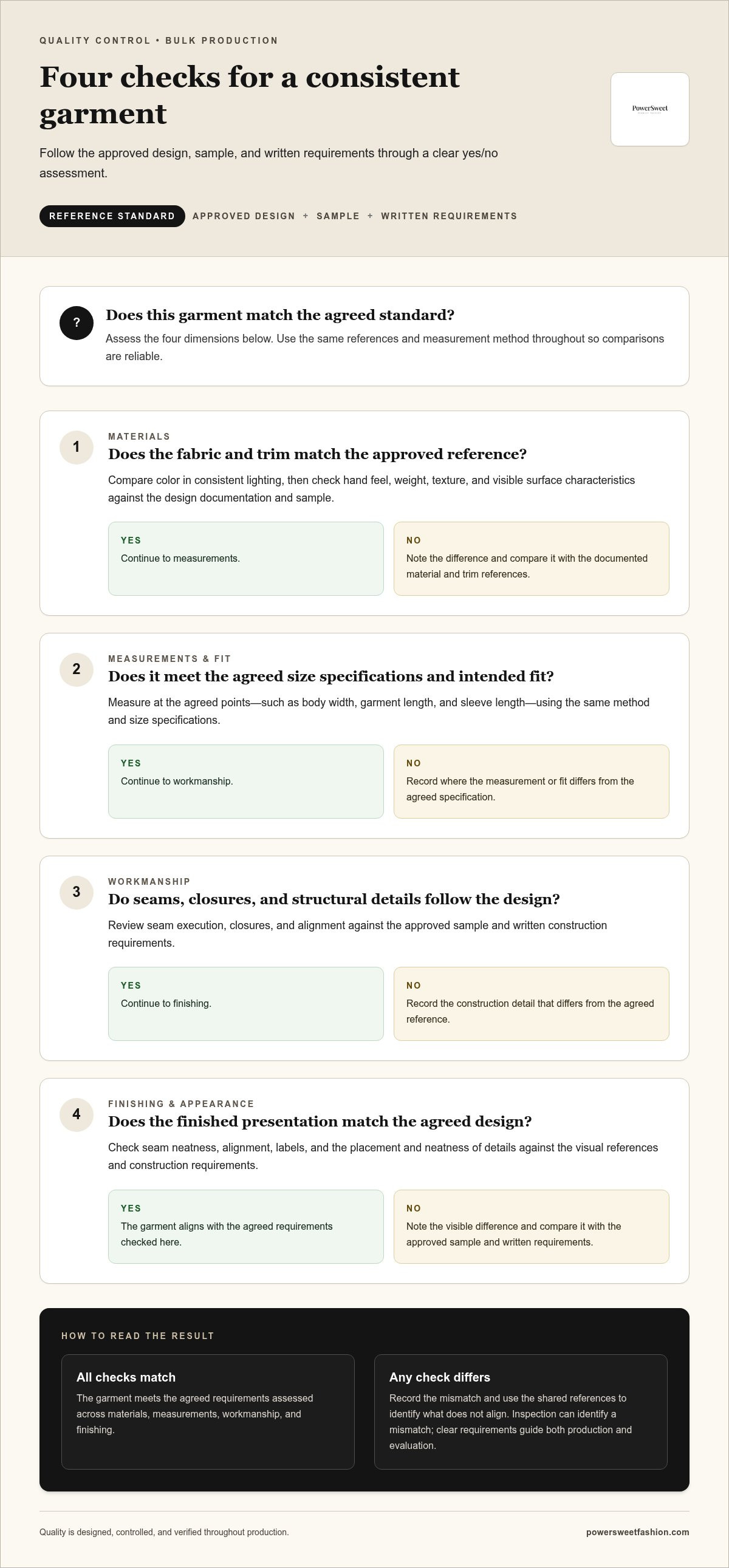
A useful assessment turns an overall impression into specific observations. Check each garment against the approved design, sample, and written requirements, then record where it matches or differs. Assess finished garments across four core dimensions: materials, measurements, workmanship, and finishing. Tailor the checks to the fabric’s behavior and the garment’s intended fit and function.
Check fabric and trims against the approved design
Compare production materials and trims with the design documentation and approved sample. Check color in consistent lighting, then compare hand feel, weight, and visible surface characteristics with the agreed reference. Note clear differences, such as a noticeably different texture or a trim that doesn’t match the specified appearance. Visual review can identify variation, but it can’t establish technical performance unless that requirement has also been defined.
Assess fabric in the context of the style because it affects how a garment drapes, holds its shape, and feels against the body. A lightweight fabric in a flowing design has different priorities from a structured material intended to create a defined silhouette. For brands working with delicate textiles, sourcing from established suppliers like Trade80Silks UK helps ensure consistent quality and weave before production starts. Record fabric and trim references alongside the agreed expectations for consistency. This keeps material assessments tied to the design instead of personal preference.
Review fit, measurements, seams, and finishing
Measure garments at the same points and against the same size specifications agreed for the style. Use a consistent method: measuring from different points or in different ways makes comparisons unreliable. Then inspect workmanship and finishing, including seam execution, closures, labels, and the placement and neatness of details. Compare each feature with the approved sample and construction requirements rather than relying on a general impression of polish.
Materials: Compare fabric and trims with the approved design and sample, noting color, hand feel, weight, and visible surface differences.
Measurements: Use the agreed points and size specifications to assess whether the garment matches its intended fit.
Workmanship: Review seams and closures for consistency and alignment with the design’s construction requirements.
Finishing: Check labels and other details for placement, neatness, and consistency with the approved reference.
Separate visual differences from issues that affect fit, function, or construction. A small variation in appearance may matter if the design requires a consistent look. A measurement deviation matters if it changes the intended fit. In each case, evaluate the difference against the agreed requirement. Record what you observe and where, so the production team can assess the same issue against the same reference.
Garment-specific checks make garment manufacturing quality easier to discuss between a brand and its production team. For custom clothing, connecting fabric sourcing, sample development, and quality control helps keep assessments tied to the product references. Explore PowerSweet Fashion’s garment production support as part of that process.
Where garment quality is built: from materials to final inspection
Finished garments reflect decisions made throughout production. Final inspection can identify issues, but it can’t undo a mismatch that began with an incorrect material, pattern, or construction detail. Effective garment manufacturing quality depends on connected checks, with each stage using the design references and approved requirements to guide the next.
Checks at each stage give the team opportunities to spot deviations while they’re limited to a material batch, cut component, or sewing operation. They also give the brand a clearer view of how the approved design translates into bulk production, instead of relying on finished-garment inspection alone.
Connect approved samples and production specifications
An approved sample makes the design tangible before bulk production begins. It provides a physical reference for appearance, fit, materials, and construction, while the pattern and measurement specifications define key production details. Together, these references help teams compare bulk garments with the intended result. If a material or construction detail changes, document the change and its approval so production doesn’t rely on conflicting references.
Use stage-based checks to catch issues earlier
Checks should follow the garment’s progress. They serve different purposes: in-process reviews monitor work as it develops, while final inspection assesses completed pieces against agreed requirements.
Material receipt: Compare incoming fabric and trims with documented references, and note visible differences before they move into production.
Development: Align the approved sample, pattern, and measurement specifications. Record agreed revisions before bulk work begins.
Cutting: Review cut components against the pattern and check that pieces are prepared consistently before assembly.
Sewing: Review construction as garments take shape, looking for differences from specified seams, placements, and assembly details.
Finishing and final review: Check completed garments for consistent finishing and assess them against the approved sample and requirements.
Finding a deviation earlier gives the team a chance to address it before it affects more units. For example, if sewn pieces differ from the approved construction reference, reviewing them during sewing creates an opportunity to clarify the requirement before more garments follow the same approach. Record the observation and any agreed adjustment.
At final review, compare bulk garments with the approved sample and apply the measurement and construction specifications. The sample is a physical and visual reference, but it shouldn’t replace written requirements. If the sample and specifications appear to conflict, resolve the difference with the production team before assessing finished pieces against an assumption.
Materials, pattern making, sample development, bulk production, and quality control are connected, so continuity between these stages matters. The end-to-end clothing production guide explores how the wider workflow connects development to finished garments.
How to set measurable garment quality standards and acceptance criteria
Quality expectations become usable when they’re written in a form both the brand and production team can apply. A specification should connect measurements, materials, construction, and appearance to clear assessment methods. This turns garment manufacturing quality from a broad goal into shared production criteria.
Agree on acceptance criteria before inspection begins, so every reviewer knows what to check and how to assess a difference. Without that agreement, one person may treat a detail as a defect while another sees it as acceptable variation. Set the standard first, then apply it consistently during production and review.
Create a usable garment quality specification
Bring the relevant references together in one accessible specification. These can include the tech pack, measurement chart, material details, construction notes, and approved sample. Give each reference a clear purpose: measurements define dimensions, construction notes explain how components are assembled, and the sample communicates the intended appearance and handling.
Measurements: Name each measurement point and record the target value and acceptable range for each size.
Materials: Identify fabric and trim references, including the visual or physical characteristics that matter to the design.
Construction: Describe required seam, closure, and placement details in consistent terms.
Visual references: Use sample details or reference images to clarify appearance, alignment, and finish.
Set priorities according to the impact of each requirement. A measurement that affects intended fit, a closure needed for function, or a visible detail central to the design may need especially clear criteria. Consistent terminology and labeled reference images help reduce differences in interpretation, particularly when several people review the same garment.
Understand tolerances, defects, and sampling plans
A tolerance is the agreed acceptable variation around a specified measurement. Define it for each relevant measurement instead of assuming one range fits every point or garment. Then establish defect categories based on how a deviation affects the product:
Critical defects: Issues that make a garment unsafe or unusable for its intended purpose, as defined by the brand.
Major defects: Problems that materially affect fit, function, construction, or the agreed specification.
Minor defects: Limited deviations that affect appearance but don’t materially change fit or function.
These categories are a framework, not automatic labels. Document examples relevant to the style and state how each category will be treated during acceptance. A sampling-based plan can also be used to review a production lot. AQL and ISO 2859-1 can provide sampling references, but they aren’t garment certifications or universal legal requirements. A sampling result doesn’t mean every unit has been checked, so specify the sampling approach and acceptance thresholds in advance.
Written criteria support a focused review and a shared understanding of production expectations. Discuss garment quality requirements with PowerSweet Fashion as part of your custom production planning.
How PowerSweet Fashion supports quality across custom garment production
Consistent garment manufacturing quality depends on keeping decisions connected from development through bulk production. PowerSweet Fashion is a custom women’s clothing manufacturer serving fashion brands worldwide. Its work spans fabric sourcing, pattern making, sample development, bulk production, and quality control, linking key stages in a garment’s production.
This continuity gives a brand and production team a shared basis for discussing the garment: the chosen material, pattern, approved sample, and finished pieces. PowerSweet Fashion was founded in 2008, and its services support brands as they move from design references toward production.
Keep development decisions connected to bulk production
Material and pattern decisions shape a product before bulk production begins. Fabric sourcing connects the design to material choices, while pattern making translates the intended silhouette and fit into a production reference. Sample development brings those decisions together in a physical garment that the brand can assess against its expectations.
Sample approval is a useful point for alignment. It helps clarify the intended appearance, fit, materials, and construction before bulk work proceeds. Keep the approved sample connected to the relevant pattern and written specifications so the team can use consistent references during production. The sample development guide offers more detail on sampling in apparel production.
If the brand approves a material or construction change, document it so the original sample and updated production direction aren’t treated as interchangeable. Clear records give everyone a common reference for reviewing the garments, without relying on memory or assumptions. This creates a transparent handoff between development and bulk manufacturing, with requirements defined for each project.
Make quality expectations part of the production partnership
Start the collaboration with complete project references: design files, measurement specifications, material details, construction notes, and the approved sample. Share the acceptance criteria too, including how fit, function, appearance, and workmanship will be reviewed. If an approved detail changes, record the revision and ensure the production team is working from the current direction.
Quality is shared work. A brand brings its product vision and requirements, and the production team applies those references through the garment-making process. Open communication helps resolve interpretation questions before they become mismatched expectations. PowerSweet Fashion also gives clients the opportunity to visit the factory, meet the production team, and oversee quality-control work in person.
With fabric sourcing, pattern making, sample development, bulk production, and quality control connected, brands can discuss quality throughout production. To apply clear specifications and development references to your next custom clothing project, discuss your custom garment project with PowerSweet Fashion.
Put your next production brief into action
Start with one upcoming style and gather the references that will guide its development. Bring together the design files, the details that matter most to the customer, and any decisions that still need discussion. This gives your production conversation a clear starting point and helps turn creative direction into shared requirements.
Strong garment manufacturing quality begins with that alignment. Specify what the garment needs to do, which design details are essential, and how you’ll assess whether the result meets your expectations. Treat the brief as a working document and update it when decisions change, so everyone follows the same direction.
A well-prepared project makes production decisions clearer. If you’re ready to develop your ideas with a manufacturing partner, start a conversation about your custom garment production project. Move your vision forward with clear priorities and a production plan shaped around your requirements.
Frequently Asked Questions
What is garment manufacturing quality?
Garment manufacturing quality is how reliably production delivers clothing that meets the brand’s agreed requirements and suits its intended customer. A workwear garment may need dependable closures and ease of movement, while a fashion top may place greater emphasis on silhouette and appearance. The standard should reflect the product’s purpose, not a generic idea of “good quality.” Clear requirements make that standard easier to communicate and assess.
Is garment quality the same as quality control?
No. Garment quality describes the result, while quality control refers to the checks used to assess that result. A brand might define a particular pocket position as essential to the design; a quality-control check then compares finished pieces with that requirement. The distinction matters because inspection can only assess requirements that have been made clear. Define both the intended product standard and how the team will check it.
Can garments pass a visual inspection but still have fit or measurement issues?
Yes. A garment can look neat while a waist, sleeve, or body measurement falls outside the agreed specification. Visual checks help assess appearance and visible workmanship, but they don’t replace measurement checks at relevant points. A well-finished sleeve, for instance, could still be too short for the intended fit. Assess appearance and dimensions separately, using the agreed size chart and measurement method.
How much inspection is appropriate for a bulk garment order?
The right inspection approach depends on order size, product complexity, and the impact of a missed defect. A brand might combine checks during production with a final review, or agree on sampling for a finished lot. Inspecting every unit and inspecting a sample provide different levels of coverage. Set the approach, defect definitions, and decision thresholds with the manufacturing team before production review begins, then apply them consistently.
What happens when bulk garments differ from an approved sample?
First, compare the difference with the current written specification and any approved revisions. The sample may show the intended look, but updated instructions can replace a detail shown in an earlier version. Record the specific deviation, such as a changed trim or altered placement, and identify which units are affected. Then align with the production team on whether the difference is acceptable, needs correction, or requires an updated reference.
Is AQL mandatory for every clothing production order?
No. AQL is a sampling reference that brands and manufacturers may choose to use when setting an inspection plan; it isn’t automatically required for every order. If you choose a sampling approach, agree on the lot, sample size, defect categories, and acceptance rules in advance. AQL describes a statistical sampling method, not a promise that every garment in the order has been inspected or is defect-free.
Does a quality certification guarantee that every garment meets a brand's specifications?
No. A certification relates to its own scope and requirements; it doesn’t automatically establish that every finished garment matches a particular brand’s measurements, construction, or appearance criteria. Product-specific expectations still need to be documented and assessed. For example, a brand should define its fit points and acceptable variation rather than assume a certificate covers them. Treat certification and garment inspection as distinct parts of quality assurance.


Comments