%20(1).png)
China Garment Factory: 2026 Sourcing & Production Guide

Can a china garment factory turn your women’s apparel design into repeatable bulk production without losing the fit, fabric, or finish you approved? The answer depends on more than production speed. Clear specifications and well-managed handoffs shape every stage, from material sourcing and pattern making to sample approval and quality control.
It’s reasonable to worry that a sample may not match the finished order, or that a factory’s process won’t suit your brand’s needs. A dependable production relationship makes each step visible and gives both sides clear points to review before work moves forward.
This guide explains how a women’s clothing project progresses from design handoff to bulk manufacturing, what to assess when evaluating production fit, and what to prepare before work begins. You’ll also see how fabric sourcing, pattern development, sampling, and quality checks connect to the final garments. PowerSweet Fashion develops samples in 10 days and completes bulk production in 15 to 20 days. With a clear process and the right information in hand, you can make better decisions at every stage.
Table of Contents
What Does a China Garment Factory Do for a Fashion Brand?
A garment factory turns a brand’s product specifications into finished clothing. A china garment factory can work from a design brief, measurements, construction details, and material choices to develop patterns, make samples, and produce an approved order.
A factory’s role differs from a sourcing agent’s. An agent may coordinate communication or connect a brand with suppliers, while the factory carries out garment-making work. A retailer sells clothing to customers and isn’t necessarily involved in developing or manufacturing it. These models serve different needs, so clarify who handles each task and where approvals sit.
Factory fit depends on the product category, order structure, and development support the project requires. A collection of coordinated women’s styles may need fabric sourcing, pattern making, and sample development alongside production. A repeat order based on an established pattern may place greater emphasis on consistent execution. China’s broader textile ecosystem provides useful sourcing context, as outlined in China's Textile Industry Overview.
How a garment factory fits into a fashion brand’s supply chain
The factory connects a brand’s design decisions to physical garments. Depending on the project, the work may link fabric sourcing, pattern making, sample development, and bulk production. Each stage translates decisions into details the next stage can use. The brand still owns the product brief and approves key choices, including materials, fit, and the sample used as the production reference. Clear approvals keep creative direction with the brand while giving the production team practical instructions.
What makes a women’s apparel factory a better project fit?
Women’s apparel projects can involve varied silhouettes, fabric behavior, fit expectations, and size specifications. A lightweight blouse and a structured dress, for example, may need different construction methods and pattern details. Coordinating styles across a collection also means aligning materials, measurements, and finishing expectations so the garments work together. Assess fit against the actual product requirements, not broad claims about capability. Brands weighing these needs can explore this custom women’s clothing manufacturer guide.
Order structure matters, too. Consider whether you’re developing new designs, refining existing samples, or producing approved styles, and whether the project needs support with materials and patterns. These details help establish which production capabilities are central to the work. For a women’s fashion brand, the right factory relationship translates design intent into clear production instructions and includes reviews at the points that matter.
How a China Garment Factory Moves a Design into Bulk Production
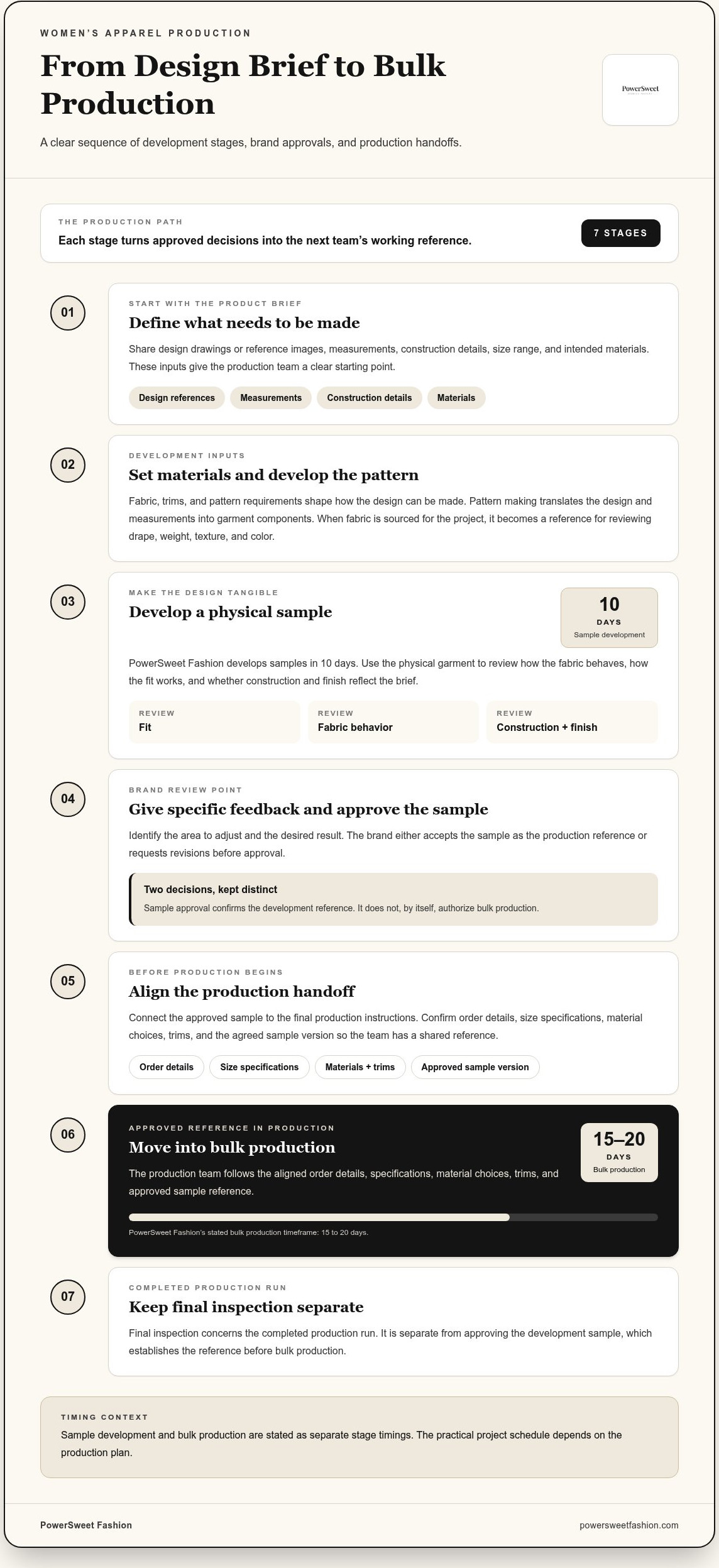
Bulk production works best when decisions are recorded before the next stage begins. A china garment factory uses a sequence of handoffs to turn a design idea into instructions, materials, a sample, and finally a production run. The brand stays involved, reviewing development and approving the references the production team will follow.
The order of these steps matters. If a fabric choice changes after pattern development, or a fit adjustment isn’t recorded before production, the team may be working from different expectations. A clear process makes decisions visible before they affect the next stage.
From design brief and fabric sourcing to sample development
Development starts with the product brief: design drawings or reference images, measurements, construction details, size range, and intended materials. Fabric, trims, and pattern requirements help define how the design can be made. If fabric sourcing is part of the project, the selected material becomes an important reference for evaluating drape, weight, texture, and color.
Pattern making translates the design and measurements into garment components. Sample development then makes those choices tangible. A physical sample lets the brand review how the fabric behaves, how the garment fits, and whether the construction and finish reflect the brief. Make feedback specific: identify the area to adjust and the desired result instead of relying on general comments such as “make it fit better.”
PowerSweet Fashion develops samples in 10 days. Sample approval is a development decision: the brand either accepts the sample as the reference for moving forward or provides revisions before doing so. Further process detail is available in this end-to-end clothing production guide.
From approved sample to bulk production and quality control
Before bulk production begins, connect the approved sample to the final production instructions. Confirm that the order details, size specifications, material choices, trims, and agreed sample version are aligned. This handoff gives the production team a shared reference for making garments across the order, rather than relying on memory or an outdated design version.
Bulk production is a separate authorization from sample approval. Approving a sample confirms the development reference; it doesn’t replace the decision to proceed with the order. Final inspection is separate as well. It concerns the completed production run, while quality control supports the project’s production requirements. Keeping these decisions distinct helps everyone understand what has been reviewed and approved.
PowerSweet Fashion completes bulk production in 15 to 20 days. A project’s practical schedule depends on its production plan. Brands developing custom women’s apparel can see how fabric sourcing, pattern making, sampling, and quality control connect through PowerSweet Fashion’s production support.
How to Compare China Garment Factories for Your Brand’s Needs
A useful comparison starts with your product and production plan, not a factory’s headline capacity. Capacity alone can’t establish whether a factory is the right fit for a project. Look for details tied to your garments, development needs, order structure, communication, and quality oversight.
Use the same criteria for each china garment factory you assess. Separate details that can be documented for your project from broad promotional statements or testimonials.
Product fit: Compare experience with your garment category, construction details, materials, and size range. A factory suited to simple styles may not be the best match for a collection with varied silhouettes or complex construction.
Sourcing support: Note whether fabric sourcing is part of the production relationship and how material choices connect to your designs. Match this support to your project’s fabric requirements.
Development: Compare pattern making and sample development support. A clear development process helps turn design intent into a sample your team can review and approve.
Quality control: Look for a clear explanation of quality responsibilities and how the agreed product requirements inform production oversight. Treat a general quality claim as a starting point, not project-specific evidence.
Communication: Assess whether project details, decisions, revisions, and approvals are explained clearly. Consistent communication helps keep the brand and production team aligned as work progresses.
Match factory capabilities to product and order requirements
Map your garments to the work involved: category, construction complexity, material needs, and size range. Then consider the order structure, including the number of styles and how they’ll be produced. Low minimum order quantities can help brands plan smaller production runs, test styles, or manage a collection without committing to an unsuitable order size. The low MOQ manufacturing guide explores this planning approach.
Assess quality visibility, communication, and production evidence
Look for practical evidence, including project-specific process details, clear sample approval responsibilities, and direct explanations of quality control. Testimonials and broad claims can provide context, but they don’t replace details about your order. A factory visit can make the work more visible. At PowerSweet Fashion, clients can meet the production team and oversee quality control at the factory.
Treat certificates as evidence with a defined scope, not as automatic proof of every production claim. For any named certificate, review the holder, validity, covered activities or locations, and whether it applies to the order in question. A credential may cover a specific entity or activity rather than every garment or process.
Finally, distinguish verifiable project facts, such as documented development steps and responsibilities, from statements about scale or reputation. A side-by-side review of these criteria makes it easier to see which production relationship matches your women’s apparel project.
What to Prepare Before Starting a China Garment Factory Project
A focused project brief gives the production team something concrete to interpret, price, develop, and review. It doesn’t need to answer every design question before work begins. Clearly separate confirmed requirements from choices you’re open to refining during development.
Precise product specifications create smoother production handoffs by giving the brand and factory the same reference for each decision. Before starting a china garment factory project, organize the essentials below and note what remains flexible.
Build a production-ready brief and tech pack
Start with the information that defines the garment and order. Share it in a tech pack or another organized format, using clear labels and consistent units for measurements.
Design: Include sketches or reference images, front and back views where useful, and notes on the intended silhouette.
Construction: Describe seams, closures, pockets, lining, hems, and other details that affect how the garment is made.
Materials: Specify chosen fabrics, trims, colors, and finishes where decided. If you’re still comparing options, identify desired qualities, such as drape or texture, instead of presenting a preference as final.
Quantities: Provide planned quantities by style, color, and size when known, along with any flexibility in the order structure.
Sizing: Supply garment measurements for the reference size, the full size range, and grading expectations. State how measurements should be taken so the team is comparing like with like.
Timing: Share target dates for sampling, approvals, and production, and flag any dates that are fixed.
This level of detail reduces guesswork without locking every design choice too early. A sample development and pattern making guide can help clarify how design information supports development.
Set approvals, communication, and quality expectations
Decide who on your team can approve materials, fit, sample revisions, and release to production. A named decision-maker helps avoid conflicting feedback. Keep comments consolidated, dated, and tied to specific garment details. For example, identify the exact measurement or seam that needs adjustment, then describe the intended change.
Separate essential requirements from sample-stage decisions. The garment category, intended size range, order plan, and non-negotiable design features should be clear at the start. Details such as a final fabric option or a fit adjustment can be refined through sampling, provided the open decision is recorded and approved before it affects production.
Define what quality means for your product. Document the approved sample and the garment details that matter most to your brand, such as measurement expectations, material, construction, and finish. These references support shared expectations without assuming a factory’s internal inspection process.
Have a women’s apparel design ready to develop? Explore custom clothing production with PowerSweet Fashion.
How PowerSweet Fashion Supports Custom Women’s Clothing Production
PowerSweet Fashion is a China-based custom women’s clothing manufacturer serving fashion brands worldwide. As a china garment factory partner, we connect the development and production steps that turn a brand’s design brief into finished women’s apparel. Your team provides direction and approvals, while our production team supports the process with coordinated services.
An end-to-end partner for custom women’s apparel
Each part of production answers a different need. Fabric sourcing connects material choices to the design. Pattern making translates the intended shape and measurements into garment components. Sample development gives your team a physical version to review, while bulk production follows the approved product details. Quality control supports attention to agreed requirements as garments are made.
Connecting these stages helps reduce gaps between creative decisions and production instructions. For example, when a fabric choice informs pattern development and sampling, the team can review the material and garment together rather than treating them as unrelated decisions. For a collection with multiple women’s clothing styles, coordinated handoffs also help keep each style’s requirements visible as the project progresses.
PowerSweet Fashion offers low minimum order quantities, which can support brands planning production at a smaller scale. Order planning still needs to reflect the project’s styles, materials, and quantity requirements. Sharing those details early helps align development and production with the brand’s plan while keeping fit, construction, and finish in view.
Collaboration continues through review and approval. Your team supplies the brief and feedback; the production team uses those decisions to guide development and manufacturing. Clear records of approved details help everyone work from the same reference as the project moves from sample to finished garment.
Meet the production team and move your project forward
A factory visit can make the people and work behind a production plan more visible. Clients can visit the factory, meet the production team, and oversee quality control. Seeing the team and production environment in person can connect project discussions with the practical work of making the garments.
PowerSweet Fashion develops samples in 10 days and completes bulk production in 15 to 20 days. These timelines give fashion brands practical context as they plan development and production. Clear product details and timely approvals help keep handoffs organized as work advances.
For a custom women’s clothing project, bring together your design information, material preferences, sizing, quantities, and target dates. These details give the team a useful starting point for discussing the production path and development needs.
Turn Your Design Direction into a Clear First Step
Your next move doesn’t need to be a finished tech pack. Start by choosing one women’s apparel design and outlining what must stay true to your concept, what you’re open to refining, and what decisions your team needs to make before production. That gives the first conversation a practical focus and helps turn creative direction into a workable project plan.
A china garment factory partnership works best when both sides can build on clear priorities. Bring your design references, initial sizing, material ideas, and target dates, then use the development process to resolve open questions together. Each decision can move the design closer to a production-ready garment without losing sight of your brand’s intent.
Ready to take that first step? Start a conversation about your production project and move your women’s apparel idea toward development with confidence.
Frequently Asked Questions
Can I visit a China garment factory before production?
Yes. PowerSweet Fashion’s clients can visit the factory, meet the production team, and oversee quality control. A visit can help you understand the people and production environment behind your order. Use the time to discuss your project brief, review relevant development details, and agree who will handle communication and approvals. Bringing a short list of open decisions can keep the discussion focused and help your team prepare for the next stage.
How much does custom garment sampling cost?
Custom garment sampling costs vary with the design and development work involved, including pattern requirements, materials, trims, and construction details. A simple prototype and a garment with more complex components require different work. Before assessing a sample’s scope, organize the design references and specifications you already have, and mark the decisions still under consideration. This helps clarify what the sample needs to demonstrate and which details may need review during development.
What happens if a bulk garment differs from the approved sample?
Compare the garment with the approved sample and written product requirements, then document the specific difference. For example, note whether the issue concerns a measurement, fabric, seam, or finish, and include clear photographs or measurements where useful. Keep affected pieces separate while you and the production team review the information and determine the next step. For a china garment factory project, dated records of approvals and revisions help establish which version should be used as the reference.
How can I protect my clothing designs when working with a factory?
Keep dated copies of your design files, specifications, patterns, approvals, and project communications. Share only the materials needed for the work through agreed channels, and document ownership and confidentiality expectations in writing before development starts. For instance, label files with the style name, version, and date so older drafts aren’t mistaken for current instructions. Intellectual property rules vary by jurisdiction, so seek advice from a qualified professional if you have specific legal concerns.
Can a China garment factory source fabric and trims for a clothing brand?
Yes, custom manufacturing projects can include fabric and trim sourcing alongside garment production. PowerSweet Fashion offers fabric and trim sourcing for custom women’s apparel. To guide material selection, describe the qualities that matter to the design, such as color, weight, texture, or performance, and identify relevant trim details. If you have a preferred material or reference swatch, include it with the brief so the production team can understand how the components need to work together.
Are factory certifications proof that every garment meets my requirements?
No. A certificate doesn’t automatically show that every product in an order meets your specifications. Its meaning depends on the named holder, scope, validity period, and applicable requirements. For example, a certificate related to a facility or management system isn’t necessarily evidence that a garment matches your chosen fabric or measurement specifications. Review what the document covers, then set product-specific expectations in your project records and assess finished garments against those agreed requirements.


Comments