%20(1).png)
Small Batch Clothing Manufacturers in China: 2026 Guide

What if your first production run is more than a smaller bulk order? It can be a controlled test of your product, process, and quality standards. For brands searching “small batch clothing manufacturers china,” the challenge is finding a workable minimum while keeping communication clear and making sure the approved sample matches the finished garments.
Before committing, clarify what affects the minimum order, which production steps come first, and how quality will be checked. A small run still needs a precise brief and an agreed workflow. Defining those fundamentals helps prevent avoidable revisions and gives the production team clear standards to follow.
This 2026 guide covers how to plan and manage a small clothing batch in China, from fabric and pattern decisions through sample review, production, and inspection. You’ll learn what to include in your brief, how sampling fits into the process, and what to review before approving a run. The goal is a practical workflow that turns an initial concept into a well-controlled production batch.
Table of Contents
What small-batch clothing manufacturing in China means for a fashion brand
How small-batch clothing production moves from brief to finished garments
How to assess quality and production trade-offs in a small batch
How to prepare your brand for a small clothing production run
How PowerSweet Fashion supports small-batch clothing production
What small-batch clothing manufacturing in China means for a fashion brand
Small-batch production is a limited run of finished garments. There’s no single quantity that defines it for every factory or project. The right scale depends on the product and what you need the run to prove. A brand might use a first batch to test fit, assess customer demand, or see whether production matches the approved design before planning a larger order.
A small production run is a limited quantity of sale-ready garments made to evaluate a product or meet focused demand. A sample or prototype is a development piece used to assess and refine the design before production. The distinction matters: a sample helps you make decisions about the garment, while a production run tests those decisions across multiple pieces. The clothing industry spans interconnected stages, so planning materials and construction early helps align development with production.
When a small production run makes sense
A limited run can help you test a new design or refine a product using feedback on fit, fabric, construction, and customer response. It also lets your team assess how approved specifications translate into finished garments. Starting with fewer styles can simplify material planning and focus sample reviews. But a smaller order isn’t automatically faster or more economical: setup work and material requirements still affect the plan.
What determines a manufacturer’s minimum order
Minimums vary by project. Fabric availability is one factor: a material may have a supplier minimum or require a larger purchase than the garment order itself. Custom dyeing and trims can have separate quantity requirements. Garment construction matters too, since complex details may require more development and coordination. When comparing small batch clothing manufacturers china, distinguish the factory’s minimum for making garments from the supplier’s minimum for materials. Ask for both to be reflected in the production plan.
Style count adds another layer. Multiple styles may need different fabrics, trims, patterns, and samples. That means more decisions and reviews, even if the total garment quantity stays limited. A focused run of one style can keep those moving parts manageable. Start by defining what you want the batch to prove, then align the style, materials, and construction choices with that goal.
How small-batch clothing production moves from brief to finished garments
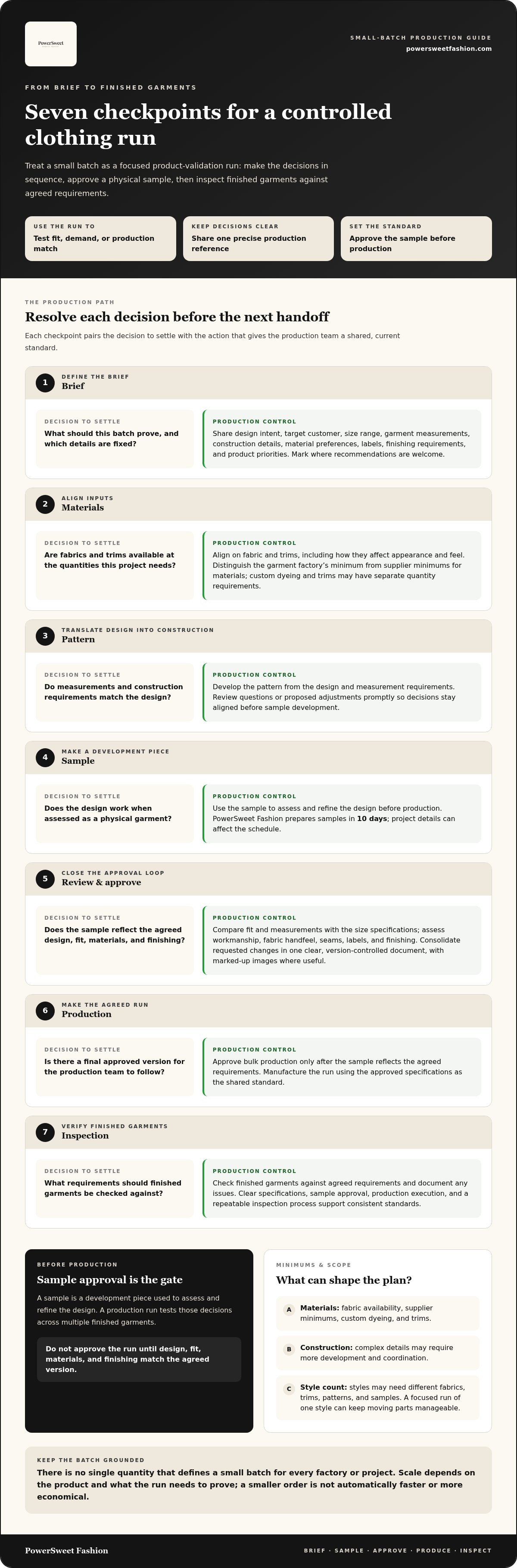
A clear sequence connects design decisions to the garments being made. For brands working with small batch clothing manufacturers china, a tech pack gives the production team a shared reference for measurements, materials, construction, and finishing. It reduces interpretation gaps, but timely brand feedback is still essential at approval points.
Prepare a production brief and tech pack
Start with design references and the intended size range. Include garment measurements, construction details, fabric and trim preferences, labels, and finishing requirements. Mark which details are fixed and where you’re open to recommendations. Our sample development and pattern-making guide explains how early specifications support a coordinated development process.
Then move through the production workflow in order:
Brief: Share the design intent, target customer, size range, and product priorities.
Materials: Align on fabric and trims, considering availability and how they affect the garment’s appearance and feel.
Pattern: Develop the pattern from the design and measurement requirements. Review questions or proposed adjustments promptly.
Sample: Make a development garment so you can assess the design in physical form.
Approval: Compare the sample with the brief, record requested changes, and approve the final version before production.
Production: Manufacture the agreed run using the approved specifications.
Inspection: Check finished garments against the agreed requirements and document any issues.
Review samples before approving production
Compare fit and measurements with the size specifications, then assess workmanship, fabric handfeel, seams, labels, and finishing. If something needs correction, consolidate comments in one clear, version-controlled document. Identify the garment area, describe the requested change, and add marked-up images where useful. This helps the production team work from current instructions rather than conflicting notes.
Approve bulk production only after the sample reflects the agreed design, fit, materials, and finishing. That checkpoint gives the brand and production team a shared standard for the run. PowerSweet Fashion prepares samples in 10 days. Project details can affect the schedule. For broader context on fashion-market shifts that may inform product planning, see McKinsey’s State of Fashion report.
PowerSweet Fashion coordinates sourcing, pattern making, sampling, and production for custom women’s clothing production.
How to assess quality and production trade-offs in a small batch
A smaller order doesn’t automatically make garments more consistent, and it doesn’t prevent consistency either. Quality depends on clear specifications, sample approval, production execution, and a repeatable inspection process. For brands working with small batch clothing manufacturers china, make each check specific enough for the team to compare finished pieces with an agreed standard.
Build a quality checklist around the approved sample
Use the approved sample and its documented specifications as your references. Check measurable details against the agreed measurement tolerances, then review construction and visible finishing. A checklist can include:
Measurements: Compare key points of measure with the specification and record any differences.
Construction: Review seam placement, stitching, and other specified construction details.
Trims and labels: Confirm they match the approved requirements and are positioned as documented.
Visible finishing: Look for loose threads, uneven finishes, stains, or other visible defects.
Separate objective checks from decisions that involve preference. Measurements and label placement can be assessed against stated requirements. Drape, colour impression, and preferred fit may need a shared visual or physical reference because people can interpret them differently. Describe defects clearly and add an image where useful; record the correction and check it again. This makes reviews more consistent across garments and gives the production team actionable feedback.
Approved specifications make quality review more repeatable by giving every inspection the same reference point. They also help distinguish a production issue from a preference that wasn’t clearly defined before the run.
Balance variety, complexity, and production control
One focused style usually means fewer samples and fewer separate specifications to review. Add styles, colourways, or fabric types, and coordination grows: each variation may introduce different material decisions, fit checks, or finishing details. Variety can make sense, but it increases review work and the risk of feedback being applied to the wrong version.
For a first run, simplifying the range can make sample feedback and production checks easier to manage. Keep the design choices that are essential to the product, and document each approved variation clearly. This lets your team assess execution without multiplying review points unnecessarily. For a broader view of the stages that connect development to delivery, see the end-to-end clothing production guide.
How to prepare your brand for a small clothing production run
A well-prepared run starts before production. Clear priorities, settled material choices, and timely approvals help your team and the production team work from the same plan. This matters when coordinating with small batch clothing manufacturers china, because fabric and trim decisions can affect what needs to be sourced and reviewed before garments are made.
Confirm design, materials, and production priorities
Separate must-have design features from flexible preferences. Identify which construction details define the garment and which material alternatives might be acceptable. Align fabric, trims, labels, and size information with the brief and approved sample. Early material decisions give production planning a firmer basis; later changes may require additional coordination or affect the schedule. A fabric-sourcing guide can help you consider material choices before finalizing the plan.
Use this pre-production checklist to confirm the essentials:
Specifications: Finalize design references, measurements, size range, construction, labels, and finishing details.
Materials: Record the selected fabric and trims, along with any agreed alternatives.
Sample: Review fit, workmanship, and details against the brief, then approve the final version in writing.
Priorities: Mark critical requirements separately from preferences that can be adjusted.
Decisions: Name who can approve changes and keep current documents and decisions together.
Plan communication and quality checkpoints
Agree on who owns each approval and how feedback will be recorded. Keep comments specific, dated, and tied to the current version of the brief or sample. Timely responses at decision points help prevent teams from working from outdated instructions. Set review stages together, such as sample assessment and finished-garment inspection, rather than assuming one fixed protocol suits every style or project.
A factory visit can make communication more direct. PowerSweet Fashion’s clients can meet the production team in person and oversee quality control, connecting written standards with the people and work on site.
PowerSweet Fashion’s bulk production takes 15-20 days. This is a company-provided timing, not a guaranteed schedule; project details can affect the timeline. Finalized materials, approvals, and priorities give the production plan a clearer starting point. Learn about small-batch clothing production with PowerSweet Fashion.
How PowerSweet Fashion supports small-batch clothing production
Small-batch work still requires coordinated decisions from development through final inspection. PowerSweet Fashion is a custom women’s clothing manufacturer in China, serving fashion brands globally. Founded in 2008, the company brings fabric sourcing, pattern making, sample development, production, and quality control into one workflow. Connecting these stages helps align the design brief, selected materials, sample feedback, and production requirements.
Brands researching small batch clothing manufacturers china need more than a production slot. They need a partner who can turn product requirements into a sample, incorporate clear feedback, and carry approved details into the run. PowerSweet Fashion also welcomes factory visits, where clients can meet the production team and oversee quality control. This connects written specifications with the people carrying out the work.
From sample development to production
Pattern making turns design and measurement requirements into a garment structure. Sample development gives the brand a physical piece to review for fit, materials, construction, and finishing before production begins. PowerSweet Fashion prepares samples in 10 days. Project requirements can affect the schedule. For more context on planning smaller production quantities, read the low-MOQ women’s clothing manufacturing guide.
After sample approval, the agreed details guide production and quality checks. Fabric sourcing supports material planning, while pattern and sample development connect those choices to the intended garment. Quality control provides a stage for reviewing production against approved requirements. Project details affect schedules, so the production plan should account for the design, materials, and feedback process rather than relying on one timing in isolation.
Start with a clear production conversation
Prepare a concise brief with your concept, product category, design references, specifications, size information, and production priorities. Flag which details are essential and which can be adjusted. Include material preferences or references if you have them. This gives the team a clear starting point for coordinating sourcing and manufacturing around your project, and makes open questions easier to resolve early.
You don’t need every decision to be final before starting a conversation. A focused brief helps identify next steps, clarify what needs development, and organize the path from sample to production. Share your clothing production brief with PowerSweet Fashion.
Turn your first production run into a clear next step
A small batch works best as a managed product-validation run. Define what you want to test, document specifications and material choices, then approve a sample before production. Consistent quality depends on comparing finished garments with clear, agreed standards, not simply on keeping the order small.
Choosing among small batch clothing manufacturers china also means looking for a workflow that connects development with production. Founded in 2008, PowerSweet Fashion supports custom women’s clothing projects through fabric sourcing, pattern making, sample development, production, and quality control. Clients can visit the factory to meet the production team and oversee quality control.
Bring your concept, product specifications, and production priorities together as a starting point. Share your clothing production brief with PowerSweet Fashion to begin a practical conversation about your run.
Frequently Asked Questions
What counts as a small-batch clothing order?
A small batch is a limited production run, but there’s no single quantity that defines it for every garment or factory. Minimums can depend on fabric sourcing, trims, construction, and the number of styles or colourways. For a useful production discussion, share your target quantity alongside the product design and material plan. That context helps distinguish a manageable run from a project with additional sourcing or production requirements.
Can clothing manufacturers in China produce small orders?
Yes. Some manufacturers work with smaller production runs, and PowerSweet Fashion offers low minimum order quantities for custom women’s clothing. The practical minimum depends on the design and materials. A straightforward garment using available fabric may need different planning from a complex style with custom materials or several colourways. When comparing small batch clothing manufacturers china, describe your product specifications and target quantity together to build a project-specific production plan.
How do I prepare a tech pack for a small clothing run?
A useful tech pack includes garment measurements, the size range, fabric and trim details, construction notes, labels, and finishing requirements. Add annotated reference images when they clarify design intent, such as a seam detail or label placement. Date revisions and consolidate feedback after sample review so the production team can identify the current version. A complete tech pack gives sampling, approval, and later quality checks a shared reference.
Does a small production run guarantee lower costs?
No. A smaller quantity doesn’t automatically mean a lower per-unit cost or a better commercial outcome. Material sourcing, garment construction, and the number of styles can all affect the production plan. Start by defining the run’s purpose, such as testing fit or customer demand, then evaluate the complete project scope. Don’t assess the opportunity from a minimum-order figure alone; consider what the batch needs to establish for your brand.
How long does small-batch clothing production take in China?
Production timing depends on the design, materials, sample decisions, and manufacturing requirements, so one timeline won’t apply to every project. PowerSweet Fashion prepares samples in 10 days, and bulk production takes 15-20 days. These are company-provided timings, not universal guarantees. Project details and the speed of feedback and approvals can affect the schedule, so account for the full development and production workflow when planning.
How can I maintain quality when producing a small clothing batch?
Use the approved sample and written specifications as references for production review. Compare garments against agreed measurements, construction details, trims, labels, and finishing requirements. Record issues clearly, including which detail needs correction, and keep sample revisions and approvals organized so everyone works from the same version. A smaller order still needs defined quality checkpoints. Limited quantity alone doesn’t replace a clear process for inspecting and documenting results.


Comments