%20(1).png)
Consistent Garment Fit: A Practical Guide for Fashion Brands

An approved sample can fit perfectly, yet customers may notice differences when bulk garments arrive. Consistent garment fit depends on more than getting one sample right. Brands need clear standards that carry fit intent through pattern changes, size grading, and repeat production.
If you’ve struggled to turn subjective fit comments into practical pattern adjustments, or seen customers experience unexpected differences between sizes or styles, the issue may be the process rather than the fit session itself. Make expectations specific, test them across the size range, and check that they hold through production.
This guide explains how to define fit standards your team and manufacturing partner can follow, gather useful feedback, and catch deviations before they affect a bulk run. It also shows how pattern making, sample development, and quality control work together to support predictable fit across styles, sizes, and repeat orders. A repeatable workflow makes fit decisions easier to communicate and carry from the first sample to finished garments.
Table of Contents
What Consistent Garment Fit Means for a Fashion Brand
A size label is a starting point, not a fit specification. Two garments with the same size label can fit differently across brands, and styles within one brand may be designed to sit differently on the body. For a fashion brand, consistent garment fit means each product delivers repeatable fit performance against documented specifications, rather than relying on a label to communicate the whole experience.
Quotable definition: Consistent garment fit is the repeatable way a garment fits and performs against a brand’s documented specifications, independent of its size label.
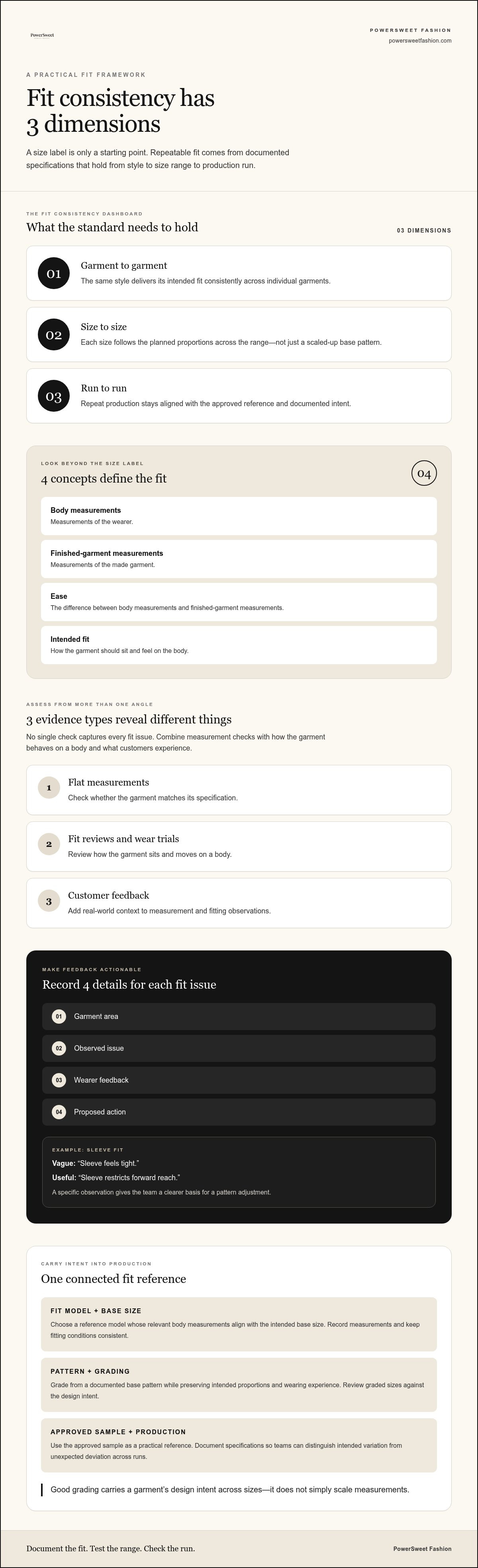
Consistency has three dimensions: the same style should deliver its intended fit from garment to garment; each size should follow the planned proportions across the range; and repeat production runs should stay aligned with the approved reference. When customers encounter unexpected differences, confidence can weaken and feedback becomes harder to interpret. A comment such as “this feels smaller” is difficult to act on unless the team can connect it to a particular measurement, fit area, or garment version.
Fit consistency versus standardised sizing
A size label doesn’t establish a universal fit. Brands set their own fit intent for their target customer and product design, so the same label may describe different proportions or levels of room. Keep four concepts distinct: body measurements describe the wearer; finished-garment measurements describe the made garment; ease is the difference between those measurements; and intended fit explains how the garment should sit and feel. Documenting these choices gives teams a practical reference beyond the label.
Where garment fit can vary
Variation can appear at the style, size, or production-run level, and not every difference is a defect. A relaxed shirt and a close-fitting shirt may intentionally have different ease. Within one style, a larger size should change according to the brand’s grading plan, not simply become a scaled-up version with proportions that feel wrong. Pattern grading describes how a base pattern is adjusted to create other sizes, making those planned changes central to range consistency.
Fit can also shift between batches. Fabric behaviour, such as stretch or drape, and construction choices can influence how a garment sits, even when the design appears unchanged. A change in shoulder balance may affect how a top hangs; rise can alter how trousers sit; sleeve length can change reach and proportion. The useful question is whether a difference matches the brand’s documented intent. Clear specifications help teams distinguish intentional variation from an unexpected deviation and turn feedback into a practical adjustment.
How Fit Models, Patterns, and Grading Shape Consistent Garment Fit
A fit model gives the team a repeatable reference for evaluating a garment, not a stand-in for every customer. Start by choosing a model whose relevant body measurements align with the brand’s intended base size. Record those measurements and keep fitting conditions consistent, including posture and underlayers. Pair the model’s observations with the target customer profile and the garment’s intended use, so fit decisions reflect more than one person’s preference.
Base-size choices set the starting point for pattern evaluation. They determine which body proportions the first pattern is developed around, so document the selected measurements, intended ease, and silhouette. Published references such as ASTM International’s Standard Tables of Body Measurements can inform body-measurement decisions, but a brand still needs to define its own fit intent.
Turn fitting feedback into pattern decisions
Useful feedback identifies what the garment does, where it happens, and what change may address it. Record the garment area, the observed issue, the wearer’s feedback, and the proposed action. For example, note that a sleeve restricts forward reach rather than recording only “sleeve feels tight.” Then decide whether the change is local to that pattern piece or could affect balance and fit across the full size range. This creates a clear record for the next sample and connects fit observations to practical pattern making.
Grade with the design intent in view
Grading applies planned measurement changes to a base pattern to create other sizes. It needs to preserve the garment’s intended proportions and wearing experience, not just increase or decrease measurements uniformly.
Quotable guidance: Good grading carries a garment’s design intent across sizes, rather than simply scaling its measurements. A sleeve, shoulder, or rise may need a considered change as sizes progress; applying the same adjustment everywhere can shift the silhouette or balance. Review graded sizes against the intended fit, and record the reason for each adjustment. That record helps the team distinguish a correction to one size from a rule that should apply across the range.
Pattern making, sample development, and fit review work best as connected steps: observations guide pattern revisions, and revised samples show whether those changes deliver the intended result. Brands developing this process can explore pattern making and sample development to turn fit decisions into production-ready garments.
How to Assess Garment Fit and Identify the Right Testing Method
No single check captures every fit issue. Flat measurements show whether a garment matches its specification, while fitting and wear tests reveal how it sits and moves on a body. Customer feedback adds real-world context, but it can be subjective. For consistent garment fit, choose a combination based on the garment’s complexity, the consequences of a poor fit, and the time and resources available.
Flat garment measurements: Compare key points on the garment with its specifications. This can identify dimensional differences, but not comfort, drape, or movement.
Fit-model reviews: Assess how the garment sits on a wearer and reveal visual balance or pressure points. One model’s experience can’t represent every customer.
Structured wear trials: Show how fit performs during selected movements and activities. They provide useful observations, but don’t establish how every wearer will experience the garment.
Customer feedback: Can highlight recurring concerns during actual use. Comments need context and consistent prompts before they can guide a pattern or specification change.
A measurement discrepancy shows that a garment differs from its specification; a wear-test fit issue shows how it performs on a person during use. Either finding can matter, but the distinction helps a team investigate the right cause instead of treating every fit concern as a measurement error.
Use wear trials to evaluate fit in motion
Choose movements that match how the garment is meant to be worn. A top might be assessed while reaching and raising the arms; trousers might be checked while sitting and walking. Give each assessor the same prompts, then record ease, comfort, mobility, and visible garment behaviour separately. For example, note whether a hem shifts during movement separately from whether the wearer finds the length comfortable. Consistent prompts make observations easier to compare.
Make fit feedback specific and actionable
Replace “too tight” with details: where the garment feels restrictive, during which movement, and what the wearer notices. Record preference separately from a potential construction or measurement problem. A wearer may prefer more room even when the garment matches its specification. That’s valuable feedback, but it calls for a different decision than a garment that restricts movement unexpectedly.
After gathering observations, group related findings and rank proposed actions by impact. A concise review might list the affected area, the evidence, the proposed pattern or specification change, and whether the change needs further testing. This keeps revisions focused and gives the next sample a clear purpose. Match the depth of assessment to the risk: a simple garment may need measurement checks and a focused fit review, while a more complex design may warrant structured trials across several movements.
A Repeatable Workflow for Consistent Garment Fit
Fit standards work only when they travel with the garment from design through production. A repeatable workflow gives the brand and manufacturing team shared checkpoints, so each decision is documented and the approved sample remains a practical reference, not just a visual target.
1. Define fit intent. Record the intended silhouette, ease, key finished-garment measurements, and target size range. Mark measurement points and state how measurements should be taken so different team members assess the garment consistently.
2. Align references before sampling. Keep design images, technical specifications, and construction details consistent. If a reference shows a relaxed shape but the specification calls for a close fit, resolve the mismatch before it creates conflicting sample feedback. Sample development turns design decisions into a physical garment that the team can assess.
3. Review the sample and record revisions. Compare the sample with the agreed fit intent and measurements, then capture each change as a specific pattern or construction action. Review the revised sample against the same criteria. Approve it only when the team has agreed which version and specifications will guide production.
4. Preserve the approved reference. Keep the approved sample, measurement sheet, construction notes, and revision decisions together. Identify the approved version clearly so the brand and manufacturing partner can refer to the same standard during bulk production and future repeat orders.
5. Check production garments and review outcomes. Compare selected garments from production with the documented measurements and approved reference. Log any deviation, the action taken, and the final decision. Use customer or quality feedback to identify whether the specification, pattern, or production reference needs updating for the next run.
Keep the process collaborative. The brand’s fit intent needs to become clear specifications that pattern and production teams can apply. When a measurement differs, record the affected point and agreed next step rather than relying on an informal comment. This creates a traceable link between sample approval and production review, helping the team make consistent decisions across orders.
For a broader view of how sampling fits into the production journey, explore a guide to end-to-end clothing production. To put these checkpoints into practice with support across pattern making, sample development, and quality control, work with PowerSweet Fashion on fit-led production.
How a Manufacturing Partner Helps Maintain Fit at Scale
Fit intent needs to move clearly from the brand’s design team to the people developing patterns, samples, and production garments. A manufacturing partner can work from shared specifications, but those documents need to translate design language into practical instructions. “A relaxed shoulder” may mean different things to different people; a marked measurement, reference image, and note about the intended silhouette give the team a clearer basis for action.
Build a clear fit handoff between brand and factory
Keep fit intent, reference samples, measurement charts, and revision notes together in one working record. Identify the current sample or specification version, and document why each revision was made. This reduces the risk of teams acting on outdated measurements or conflicting comments.
When feedback differs, first clarify who is wearing the garment, which area is being discussed, and what the design is meant to achieve. One reviewer may want more ease for movement, while another is describing a measurement that doesn’t match the specification. Those are different issues and may call for different decisions. A professional guide to choosing a custom women’s clothing manufacturer can help brands consider how a partner communicates and carries decisions through development.
Turn fit standards into a repeatable production relationship
Pattern making and sample development put agreed fit decisions into the garment. Bulk production then needs to follow the approved references, while quality control can help monitor whether production garments align with agreed specifications. Quality control supports fit development; it doesn’t replace the need to define and approve fit intent during sampling.
Make the handoff practical. If a design comment leads to a pattern adjustment, record the affected area and intended change. If a measurement is revised, update the shared specification so the production team works from the same information. After production review, record deviations, actions, and decisions that may matter for a repeat order. This feedback loop helps keep expectations aligned as a product moves from sample to bulk production.
PowerSweet Fashion supports custom women’s clothing production with pattern making, sample development, bulk production, and quality-control services. The company connects these stages so brands can carry fit decisions into manufacturing through clear, collaborative communication. Explore PowerSweet Fashion’s manufacturing support for your next production project.
Carry Your Fit Standards Through Every Production Run
Reliable fit doesn’t come from an approved sample alone. It depends on documenting fit intent, testing garments with methods suited to the design, and carrying decisions into production through clear specifications and checkpoints. That’s how consistent garment fit becomes a repeatable process across sizes, styles, and orders.
Keep the approved sample and fit decisions accessible to everyone involved. Pair pattern making and sample development with quality control, so agreed expectations inform both garment development and production review. When feedback is specific and recorded, teams can act on it and carry useful decisions into future orders.
PowerSweet Fashion supports custom women’s clothing production, including pattern making, sample development, and quality control. Clients can also visit the factory to meet the production team and oversee quality control. Explore PowerSweet Fashion’s custom clothing manufacturing support and take the next step toward a fit process your team can build on.
Clear standards and collaborative decisions give your designs a stronger path from sample to finished garment. Start with the fit intent, then keep every production handoff aligned.
Frequently Asked Questions
What does consistent garment fit mean for a clothing brand?
Consistent garment fit means garments repeatedly match the brand’s documented fit specifications. It applies within a style, across its size range, and between production runs. A size label alone doesn’t define fit: brands also need to specify measurements, ease, and intended silhouette. Clear standards help teams assess samples and production garments against the same expectations, making fit decisions easier to communicate and customer feedback easier to act on.
How can a brand maintain consistent fit across different sizes?
Maintain fit across sizes by setting a clear base-size fit, documenting measurements and intended ease, then applying planned grading rules across the range. Review graded sizes against the design intent rather than assuming that scaling measurements alone will preserve the fit. Use consistent measurement methods and record approved changes. Checking samples or garments from more than one size can help identify where proportions or wearing comfort diverge from expectations.
Why can bulk garments fit differently from an approved sample?
Bulk garments can differ from an approved sample if production doesn’t follow the same pattern, measurements, materials, or construction decisions. A change in fabric behaviour or an overlooked sample revision may also affect how the finished garment sits. Keep the approved sample and current specifications together as production references. Reviewing selected production garments against documented measurements can help teams identify a deviation and record the appropriate corrective action.
How many fit models does a clothing brand need?
There’s no fixed number of fit models that suits every brand. One well-briefed model can provide a consistent reference for developing a base size, while additional wearers or structured trials can help reveal how fit performs beyond that reference. The right approach depends on the size range, garment complexity, and fit risks. Record the model’s relevant measurements and fitting conditions so reviews remain comparable.
What is the difference between garment measurements and body measurements?
Body measurements describe a person’s body, while garment measurements describe the finished clothing laid flat or measured according to specified points. The difference between them is ease, which contributes to the intended fit. For example, a garment designed to sit loosely needs more room than the body measurements alone would indicate. Keep these measurement types distinct in charts and specifications to prevent teams from comparing unlike figures.
Can one fit model represent every customer in a size range?
No. A fit model is a useful reference for evaluating a garment, but one person can’t represent every customer’s body shape, proportions, preferences, or movement. Use the model to assess the intended base-size fit, then consider grading reviews, wear trials, and customer feedback to identify other fit needs. Keep observations specific, including the garment area and activity, so teams can distinguish a broader pattern issue from an individual preference.
How can a manufacturer help improve garment fit consistency?
A manufacturer can help carry fit decisions from pattern making and sample development into bulk production by working from clear specifications, reference samples, and revision notes. Quality control can then monitor whether production garments align with agreed standards; it doesn’t replace fit development and sample approval. PowerSweet Fashion supports custom women’s clothing production, including pattern making, sample development, bulk production, and quality-control services, helping brands connect development decisions with production checks.


Comments