
Recycled Polyester Clothing Manufacturer: A 2026 Brand Guide

A recycled-content label isn’t enough to make a garment a strong choice. Brands also need evidence behind the claim, fabric suited to the intended look and performance, and production controls that carry the brief from sourcing through bulk. Choosing a recycled polyester clothing manufacturer means aligning all three before the design is locked.
If you’re considering recycled polyester, it’s worth asking where the fibre comes from, what its limitations are, and whether the finished garment will meet your quality standards. This guide covers key sourcing considerations, trade-offs to assess, and fabric characteristics to specify for your women’s apparel design.
You’ll also learn how to turn a documented material brief into a sample and production plan. PowerSweet Fashion connects fabric sourcing with pattern making, sample development, and quality control. Samples are ready in 10 days, and bulk production takes 15-20 days, giving your team clear planning points as the garment moves from concept toward production.
Table of Contents
What Does a Recycled Polyester Clothing Manufacturer Actually Make?
Recycled polyester clothing is apparel made with polyester fibre produced from recovered material rather than newly sourced fossil-based feedstock. A recycled polyester clothing manufacturer turns a brand’s design and material requirements into fabric choices, garment patterns, samples, and production specifications.
The abbreviation rPET means recycled polyethylene terephthalate. PET is a type of plastic used in items such as beverage bottles. When recovered and processed into polyester fibre, it can be used to make apparel fabric. Bottles are one possible source, but not the only one. Recycled inputs may also include discarded polyester textiles or manufacturing leftovers.
How Does Recycled Polyester Become Apparel Fabric?
The process depends on the feedstock and processing method. In broad terms, recovered material is collected and sorted, then prepared for further processing. It may be cleaned and converted into material suitable for fibre production. That material is formed into fibre or yarn, which can be knitted or woven into fabric and finished for garment use.
Some processes mechanically break material down before remaking it into fibre; others use chemical processing. These are different routes, not interchangeable descriptions of one universal method. Input quality, sorting, processing, and fabric construction can all vary. A brand’s specification should therefore identify the intended recycled input and fabric requirements rather than relying on “rPET” alone.
Recycled polyester uses recovered feedstock, while virgin polyester is made from newly sourced raw materials. This distinction describes the material source, not the full environmental impact of producing or using a garment.
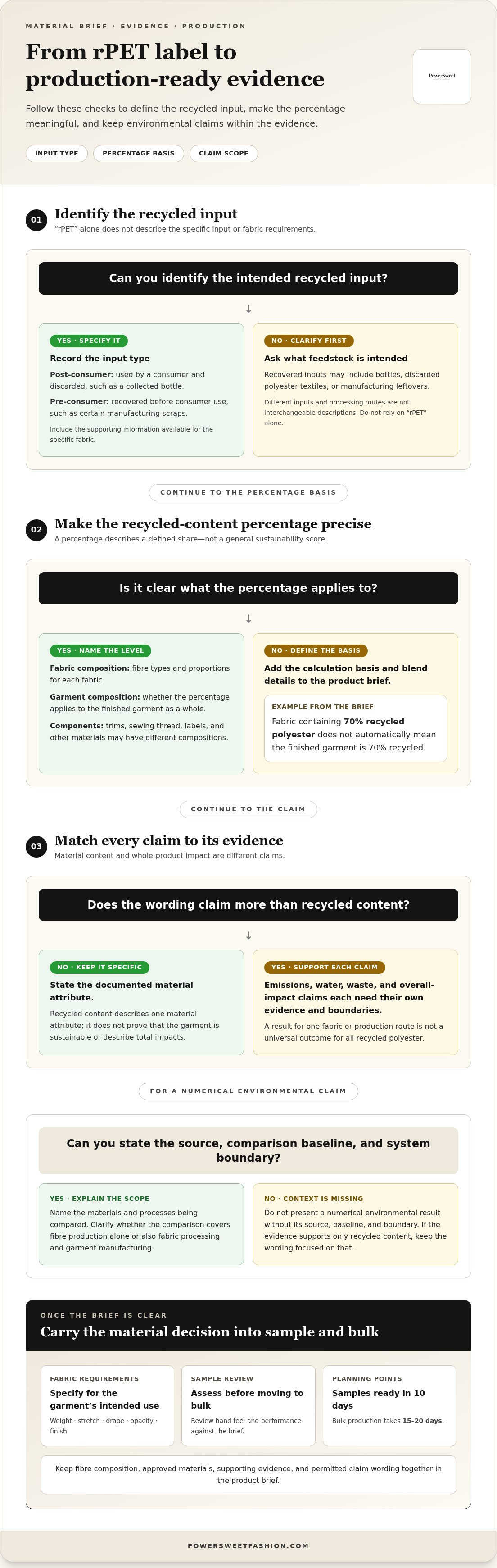
Two feedstock terms are useful in a sourcing brief. Post-consumer material has been used by a consumer and discarded, such as a collected bottle. Pre-consumer material is recovered before consumer use, such as certain manufacturing scraps. The terms describe different points in the material’s life, but don’t by themselves establish the same level of traceability. Record the input type and the supporting information available for the specific fabric.
What Should a Brand Mean by Recycled-Content Percentage?
A recycled-content percentage is a defined share of a material or product. It isn’t a general sustainability score, and the figure only makes sense when its calculation basis is clear. A fabric described as containing 70% recycled polyester, for example, may refer to the fibre composition of that fabric. It doesn’t automatically mean that 70% of the finished garment, including every component, is recycled.
Keep the relevant levels distinct in the product specification:
Fabric composition: State the fibre types and proportions for each fabric.
Garment composition: Define whether the intended percentage applies to the finished garment as a whole.
Components: Note that trims, sewing thread, labels, and other materials may have different compositions.
Put the calculation basis, blend details, and approved wording in the product brief. This gives sourcing and production teams a shared reference for fabric selection and for recording material information through sampling and bulk production.
Recycled Polyester’s Sustainability Benefits and Trade-Offs, Without the Hype
Recycled polyester can reduce reliance on virgin feedstock by putting recovered material to use. That’s a meaningful sourcing consideration, but it isn’t a complete measure of a garment’s environmental performance. Results depend on the type and origin of the input, how it’s processed, the energy used, and what the comparison includes. A claim based on one production stage shouldn’t be presented as a conclusion about the whole garment.
Recycled content alone doesn’t prove that a garment is sustainable; it describes one material attribute, not the product’s total impacts. Make more credible decisions by separating what you can document, such as fibre content, from broader claims that require wider evidence.
Which Environmental Claims Need Context?
Different claims answer different questions. A recycled-content statement describes the material. An emissions claim compares greenhouse gas impacts. Water, waste, and overall-impact claims each need their own evidence and boundaries. These statements aren’t interchangeable, and a result for one fabric or production route shouldn’t be treated as a universal outcome for all recycled polyester.
Before using a numerical environmental claim, identify its source, comparison baseline, and system boundary. Clarify whether the comparison covers fibre production alone or also includes fabric processing and garment manufacturing. State which materials and processes are being compared, and don’t present a result without that context. If the evidence only supports a recycled-content claim, keep the wording focused on recycled content.
What Are the Main Limitations of Recycled Polyester?
Recycling depends on recoverable material, suitable sorting, and processing routes that can turn inputs into usable fibre. Those conditions vary. Material recovery can also be constrained by input quality and the complexity of the waste stream. A garment made from mixed fibres or multiple components may be harder to separate for recycling than a simpler construction, so recycled content doesn’t automatically create a closed loop.
Polyester garments can also release microfibres during washing. The scale and consequences depend on factors such as fabric construction and use, so avoid unsupported claims about how much a particular garment sheds or what its effects will be. Treat fibre choice as one part of the design brief, alongside durability, care, construction, and end-of-life considerations.
Define the claim: Say whether you’re describing recycled content or a broader environmental outcome.
Keep evidence aligned: Match each claim to documentation covering the relevant material and production stages.
Consider the whole garment: Account for blends, trims, construction, expected use, and possible recovery routes.
A documented brief helps turn material goals into production decisions. A fabric sourcing and sample development workflow connects material choices with a physical garment review, so your team can assess the specification alongside construction and quality.
How to Match Recycled Polyester Fabric to a Women’s Garment
Start with the garment’s purpose, not the recycled-content label. A fabric that works for a softly draped blouse may not suit a structured skirt or fitted active top. Weight, construction, stretch, opacity, and surface finish all affect how the material looks and feels once it’s cut and sewn.
Fabric construction matters alongside recycled content because it shapes the garment’s hand feel, drape, opacity, and performance. Fibre content alone can’t predict those outcomes. Two fabrics with similar polyester blends can behave differently because of their weight, knit or weave, finishing, or yarn structure. A recycled polyester clothing manufacturer can connect fabric sourcing with the garment’s construction needs, but your brief should make the design priorities clear.
Which Fabric Characteristics Should a Brand Specify?
Build the specification around observable requirements. Record the fibre composition and recycled-content target, then describe the fabric characteristics that influence the finished design. Keep appearance, comfort, and function separate so the team can assess each requirement instead of treating “good quality” as a single subjective standard.
Appearance: Note colour, surface finish, opacity, and the intended drape or silhouette.
Comfort: Describe the desired hand feel and stretch or recovery for the intended fit.
Construction: Identify the fabric weight and whether the design calls for a knit or woven structure.
Use: Explain how and where the garment is intended to be worn, including movement or coverage needs.
For example, a close-fitting design may need enough stretch for movement, while a loose silhouette may depend more on drape and weight. These are starting points, not universal fabric rules. If the sample involves a trade-off, such as a lighter feel versus greater opacity, state which characteristic takes priority.
How Can Sampling Test Fabric Suitability?
Review the physical sample against the design brief. Check drape on the intended silhouette, feel against the skin, opacity under suitable lighting, colour, and how the fabric works with seams, hems, and other construction details. Where fit or movement matters, assess the garment on a person or form that reflects the intended fit. Record observations while the sample is available.
A comparison log makes decisions easier to repeat. For each fabric sample, note its composition, weight, construction, and finish, then record observations about drape, stretch, opacity, colour, and sewing compatibility. Mark each requirement as met, needs adjustment, or not suitable. This creates a clear record of why a fabric was selected and what to revise before approval.
Separate fabric changes from pattern or fit changes. If a garment feels too stiff, for instance, record whether the issue comes from the material’s hand or from the design’s ease and construction. Note the agreed adjustment and review it in the next sample before approving bulk production. This sample development clothing manufacturer guide offers more context for organizing the review process.
How to Specify and Verify Recycled Polyester for Production
A clear recycled-polyester specification connects the material claim to the fabric, approved sample, and production records. When working with a recycled polyester clothing manufacturer, create one usable reference that sourcing, pattern making, sampling, and quality-control teams can follow.
Build that reference in sequence. Carry each decision forward so the bulk plan matches the material and garment reviewed at the sample stage.
Set the design brief. Describe the garment, its intended use, silhouette, and performance priorities. State whether the recycled-content target applies to the fabric or to a broader part of the finished garment.
Define fabric requirements. Record target fibre composition, construction, weight, colour, finish, stretch, and any other characteristics needed for the design. Specify blend proportions rather than relying on a general “recycled polyester” description.
Identify evidence and claim wording. List the documents needed to support the recycled-content statement and note the exact wording the brand intends to use. Keep broader environmental claims separate, since recycled-content evidence alone doesn’t substantiate them.
Review and approve the sample. Compare the physical garment with the brief. Record accepted material details and agreed changes to fit, finish, or construction before approving the specification for production.
Keep production records aligned. Retain the approved specification, material evidence, sample approval, and relevant production records together. If a material or detail changes, document the revision so the final records reflect the material used.
What Belongs in an rPET Apparel Specification?
Make the document specific enough to guide sourcing and sampling. Record target fibre composition, fabric construction, colour, finish, and garment application. Identify the supporting documents expected for a recycled-content claim and write down its intended calculation basis. Set sample approval checkpoints for material, appearance, fit, and construction. Move the confirmed specification into bulk only after the team has recorded which sample and material details are approved.
How Should Brands Review Traceability and Quality Controls?
Keep material documents connected to the approved fabric and the garment’s production records. If a supplier references a certification, verify the current standard name, scope, and relevant transaction documentation for the material and claim. Requirements can vary, so don’t assume a certification reference covers every component or claim. Certification alone doesn’t establish the finished garment’s full environmental impact.
PowerSweet Fashion’s quality-control service is part of its custom clothing production workflow, helping keep approved specifications connected to garment review. For wider context on how material decisions fit into production stages, see this end-to-end clothing production guide.
The production process starts with a documented fabric brief and clear material requirements. Explore custom apparel production with PowerSweet Fashion.
From Recycled-Polyester Brief to Bulk Apparel with PowerSweet Fashion
A recycled-polyester concept becomes production-ready through clear decisions, sample review, and a documented handoff to bulk. At PowerSweet Fashion, fabric sourcing, pattern making, sample development, and quality control connect the design intent to custom women’s apparel.
What Should a Brand Prepare Before Starting?
A focused brief gives the production team a shared set of priorities. Gather the information that will shape fabric selection and garment development before sampling begins:
Design references: Share sketches, images, or existing garments that communicate the intended look and construction.
Garment details: Describe the style, silhouette, size range, colour, finish, and intended wear conditions.
Material goals: State the recycled-content target, desired composition, fabric characteristics, and any blend requirements.
Order expectations: Include expected quantities and any planned colour or size breakdowns to inform production planning.
Claim support: Identify the recycled-content wording you intend to use and the documents needed to support it.
Be specific about which details are fixed and where the team can recommend adjustments. That distinction helps align fabric sourcing with pattern making and sample development, while keeping the material target connected to the garment. It also reduces the risk that a fabric decision made during sampling conflicts with the approved product brief or brand messaging.
How Does PowerSweet Fashion Support the Production Journey?
Work progresses through connected stages. PowerSweet Fashion aligns the design brief with fabric requirements, sources suitable materials, and develops the pattern and sample for review. You can assess the garment’s fit, construction, and finish before confirming the production specification. Quality control supports the move into bulk, with the approved sample and material details serving as shared references for the production plan.
Samples are ready in 10 days, and bulk production takes 15-20 days. Use these timelines as planning points while coordinating reviews and production. The sample stage remains essential for resolving design or material changes before bulk begins. PowerSweet Fashion also offers low minimum order quantities, with project terms shaped around the order and design.
For additional context on selecting a production partner for a women’s apparel project, explore this custom women’s clothing manufacturer guide. It shows how partner selection fits into the wider manufacturing decision.
Discuss your custom apparel project with PowerSweet Fashion to map the steps from sourcing and sampling to bulk production.
Turn Your Material Brief Into a Clear Next Step
Make the material decision practical by bringing together the design intent, evidence needed to support the recycled-content claim, and garment qualities your team wants to approve. This gives a recycled polyester clothing manufacturer a clear starting point for aligning sourcing, development, and production with your priorities.
A well-defined brief gives the production team room to help resolve material and construction decisions while keeping your brand’s requirements visible at each stage. It also gives your team a clear basis for reviewing the sample and deciding what’s ready to move forward.
Your collection can start with a thoughtful material choice and a clear path to the garment you want to create. Discuss your custom recycled-polyester apparel project with PowerSweet Fashion and take the first step toward a production plan shaped around your design.
Frequently Asked Questions
Is recycled polyester the same as rPET?
In apparel sourcing, rPET commonly refers to recycled polyethylene terephthalate used to make polyester fibre. Supplier documents may use the abbreviation for the recovered plastic input or for the fibre or fabric made from it. For clear product records, identify the material level being described. For example, specify recycled-polyester yarn in the main fabric rather than relying on “rPET” alone.
Can recycled polyester fabric be printed or dyed?
Yes, recycled polyester fabric can be dyed or printed, but the result depends on the fabric and finishing process. Before approving a colour for production, review a sample or strike-off made on the intended fabric. Check the shade, print detail, and how the colour looks under relevant lighting. A recycled polyester clothing manufacturer can align material and garment sample reviews with your brand’s colour requirements.
Does recycled polyester need different garment-care instructions?
Not automatically. Care instructions should be based on the finished garment, including its fabric construction, dyes, finishes, and any blended fibres or attached components. Use the care method evaluated for the actual sample rather than assuming all recycled-polyester garments need the same treatment. For a new fabric or finish, a wash trial can help reveal changes in appearance, fit, or surface before care wording is finalized.
What happens if recycled polyester is blended with another fibre?
The garment takes on the combined material composition, so its properties and care needs may differ from those of a polyester-only fabric. For example, a cotton-polyester blend may feel and behave differently from a fabric made entirely of polyester. Record each fibre and its share in the specification, and consider how the blend affects the garment’s intended care and potential end-of-life sorting.
Can recycled polyester be used in lightweight women’s clothing?
Yes. Lightweight women’s clothing can use recycled polyester when the selected fabric’s weight, construction, opacity, and drape suit the design. A sheer blouse and an opaque lightweight lining have different requirements, even if both use polyester. Review the actual fabric in a garment sample, since a swatch alone won’t show how it hangs, covers, or moves once cut and sewn.
How much recycled polyester can a garment contain?
A garment can use recycled polyester as its entire main fabric or as part of a fibre blend. The finished garment’s total recycled share may differ because sewing thread, labels, linings, and trims can use other materials. State whether your percentage refers to a specific fabric or to the garment overall, and keep the calculation basis consistent in product records and customer-facing wording.
Is recycled polyester biodegradable?
No, recycled polyester is not generally considered readily biodegradable under ordinary conditions. Recycling changes the source of the polyester, not the basic nature of the fibre. That distinction matters for product messaging: don’t describe recycled content as meaning a garment will break down naturally after disposal. Consider durability, care, material combinations, and the garment’s intended end-of-life route when making design decisions.



Comments