
OEM vs ODM Clothing: How to Choose the Right Production Model

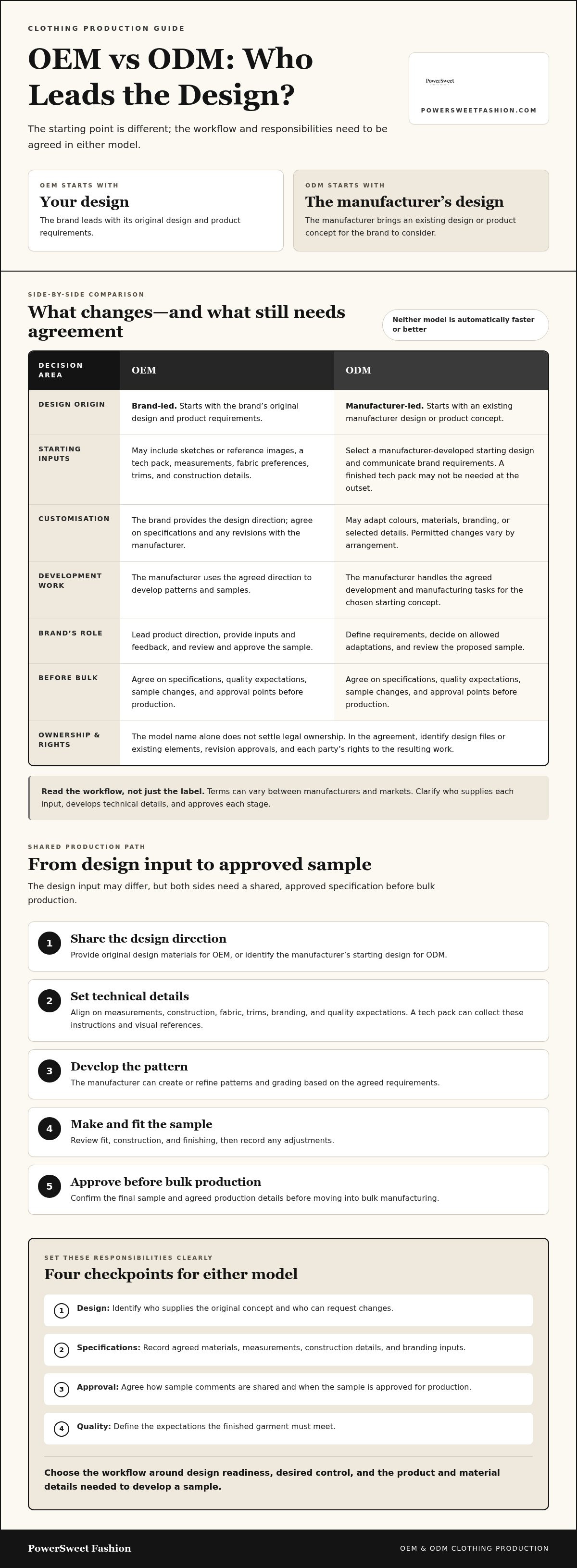
The quickest path to production isn’t always the right one for your brand. With OEM vs ODM clothing, the key distinction is who leads the design: OEM starts with your specifications, while ODM starts with a manufacturer’s existing design or concept that you can select or adapt.
Speed, cost, and creative control all matter, but the better fit depends on how developed your design is and how much control you want over the finished garment. If the production model doesn’t match your team’s readiness, design decisions, sample requirements, and production expectations can become unclear.
This guide explains how OEM and ODM differ, who contributes design and technical details, and how to choose a workflow for your brand. You’ll also learn what to prepare before requesting a sample or quote, from a tech pack and design references to fabric, trims, and quantity requirements. A clear starting point makes it easier to develop a distinct design or adapt an existing one.
Table of Contents
OEM vs ODM Clothing: Who Owns the Design?
OEM production follows the brand’s design. ODM starts with a design or product concept developed by the manufacturer. That distinction sets the direction for development, but it doesn’t settle every question about who owns the design, which changes are allowed, or who approves each stage. Define those responsibilities in the project agreement.
The terms can vary between manufacturers and markets, so don’t rely on the label alone. Compare the actual workflow: who supplies the design, who develops the garment’s technical details, and what each party is responsible for delivering. A useful starting point is the general meaning of Original Equipment Manufacturer (OEM), then clarify how the production model applies to your clothing project.
In plain English: OEM starts with your design; ODM starts with the manufacturer’s design. In either model, both sides need to agree on specifications, quality expectations, sample changes, and approval points before bulk production. Clear inputs make differences in interpretation easier to catch before they affect production.
What does OEM clothing manufacturing mean?
In OEM clothing manufacturing, the brand leads with an original design and its product requirements. Inputs might include sketches or reference images, a tech pack, measurements, fabric preferences, trims, and construction details. The manufacturer uses the agreed direction to develop patterns and samples, then produces the garment after the brand reviews and approves the sample. For example, a women’s apparel label might provide a design concept and fit requirements while the manufacturer handles patternmaking and sample construction.
What does ODM clothing manufacturing mean?
In ODM, the manufacturer brings an existing design or product concept for the brand to consider. Depending on the arrangement, the brand may adapt elements such as colours, materials, branding, or selected details. The design starting point differs from OEM, but branding and production execution are separate decisions. A brand may apply its identity to a manufacturer-developed design while the manufacturer handles the agreed development and manufacturing tasks. Define permitted changes before sampling, as they vary between arrangements.
Look beyond the model name
Design origin doesn’t automatically establish legal ownership of every design element or later modification. Set out responsibilities in the agreement, including which design files or existing elements are being used, who can approve revisions, and what rights each party has to the resulting work. This is especially important when a project combines a manufacturer’s base concept with brand-created changes.
Production inputs matter, too. A brand-led design may require more detailed technical direction from the brand. A manufacturer-led starting point may not require a finished tech pack at the outset, but the brand still needs to communicate its requirements and review the proposed sample.
Design: Identify who supplies the original concept and who can request changes.
Specifications: Record agreed materials, measurements, construction details, and branding inputs.
Approval: Agree how sample comments will be shared and when the sample is approved for production.
Quality: Define the expectations the finished garment must meet.
Once these points are clear, OEM vs ODM clothing becomes a practical workflow choice rather than a confusing label. You can see which decisions your team needs to lead and which production tasks the manufacturer will handle.
How OEM and ODM Clothing Production Work from Design to Sample
Both OEM and ODM involve a series of handoffs, from the initial design input to an approved sample and bulk production. The brand sets the product direction and confirms requirements. The manufacturer may translate those requirements into patterns, coordinate materials, develop samples, and prepare production. The exact division depends on the agreement, so clarify who supplies each input and who approves each stage.
A tech pack helps turn a design idea into instructions a production team can use. A tech pack is the working document that translates a garment design into technical instructions for development and production. It can bring together measurements, construction notes, materials, trims, and visual references. Clear details make assumptions easier to spot and resolve before sampling.
Share the design direction. Provide original design materials for OEM or identify the manufacturer’s starting design for ODM.
Set technical details. Align on measurements, construction, fabric, trims, branding, and quality expectations.
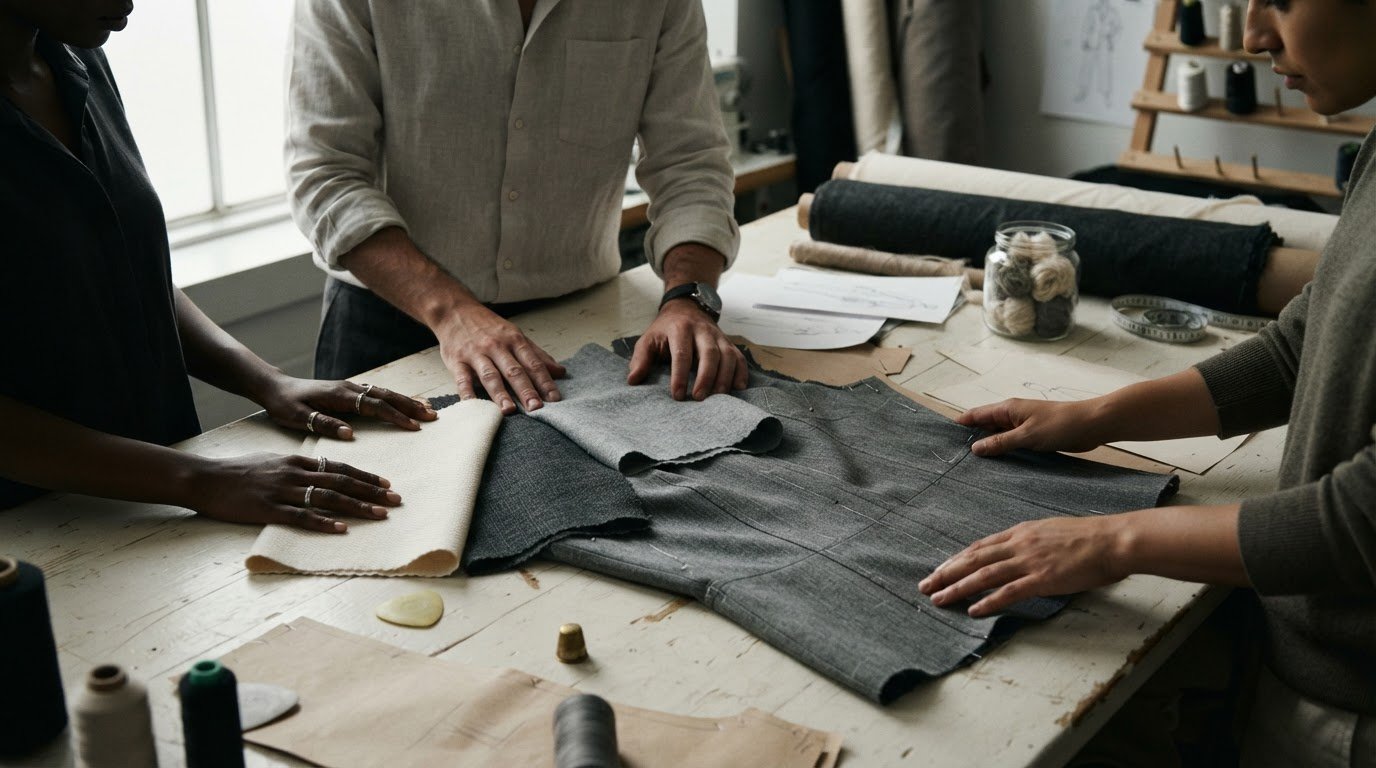
Develop the pattern. The manufacturer can create or refine patterns and grading based on the agreed requirements.
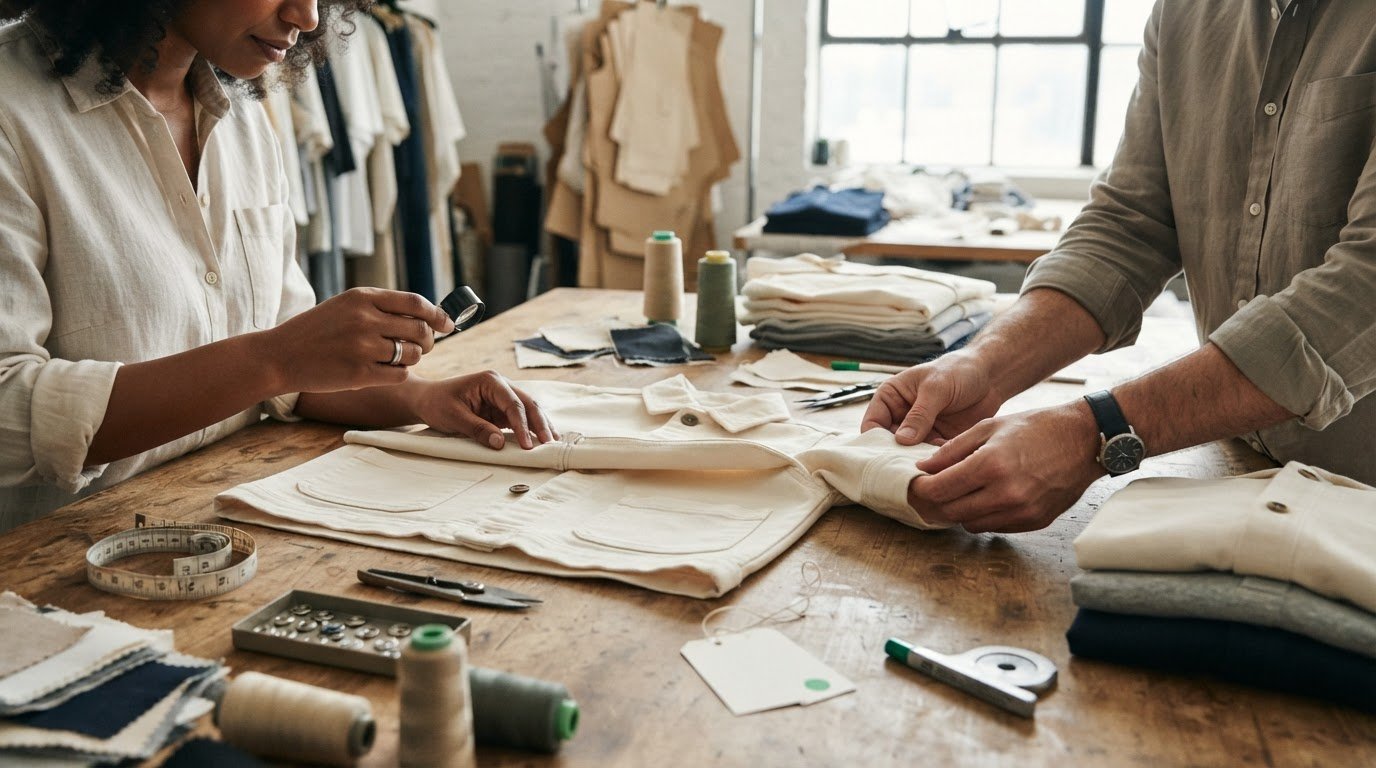
Make and fit the sample. Review fit, construction, and finishing, then record any adjustments.
Approve before bulk production. Confirm the final sample and agreed production details before moving into bulk manufacturing.
Decision-making is collaborative. The brand provides direction, feedback, and approvals; the manufacturer applies production expertise to develop the pattern, sample, and garment. That’s the practical handoff at the heart of OEM vs ODM clothing: design inputs may come from different parties, but both need a shared, approved specification.
What should a brand prepare for an OEM project?
Gather design references, construction details, measurements, fabric preferences, and trim choices where available. A complete tech pack is useful, but it isn’t the only way to start. If you don’t have a pattern, pattern creation can turn your design direction into a production-ready specification. Patternmaking and grading support consistent development across the required size range.
For more context on the steps between the first sample and approval, the article on sample development with a clothing manufacturer can help. Keep your notes specific: identify the area to change, describe the intended result, and include marked-up images or measurements when useful.
How does the sample stage support approval?
A sample gives the brand and manufacturer a garment to assess together. Use fitting to review fit and construction, and check the finishing against the agreed direction. Record comments clearly so revisions are actionable, then review the updated sample before authorizing bulk production. PowerSweet’s sample production turnaround is 5-7 days. For a client-led workflow from design inputs through sampling and production, explore custom women’s clothing production.
OEM vs ODM Clothing: Compare Control, Development, and Brand Fit
The right model depends on more than who supplies the first sketch. When comparing OEM vs ODM clothing, consider how much design direction your team is ready to provide, which decisions you want to control, and how much development the product needs. Material choices, construction details, and sample requirements shape the workflow, so the model name alone won’t tell you what production involves.
This comparison describes typical starting points, not a fixed division of work for every project. A complex garment, a specific fabric choice, or detailed construction requirements can call for substantial development in either model. Agree on sample scope, materials, approvals, and production responsibilities before work begins. For broader partner and production considerations, a guide to custom women’s clothing manufacturing can help frame the next steps.
When is OEM a stronger fit for a fashion brand?
OEM can suit a brand with an original design and a clear vision for how the garment should look and function. It gives the brand more room to direct design decisions, but effective direction depends on communicating requirements and reviewing development carefully. A tech pack can make those conversations clearer by recording design and technical details in one reference.
When might ODM suit a brand’s starting point?
ODM may suit a brand that doesn’t yet have a complete original design and prefers to start with a manufacturer’s existing concept. The brand can then focus on the adaptations allowed for that design and how its identity will be applied. Don’t assume every arrangement allows the same changes or assigns ownership in the same way. Define permitted adaptations and design rights in the agreement.
Private label is related, but it isn’t a synonym for OEM or ODM. It generally describes selling a product under a brand’s own label. On its own, it doesn’t specify who originated the design or how much product development the manufacturer handles. Clarify both the design model and branding arrangements. With those responsibilities mapped, brands can also compare production support, sampling, and quality processes across custom women’s clothing manufacturing.
How to Choose Between OEM and ODM for Your Clothing Brand
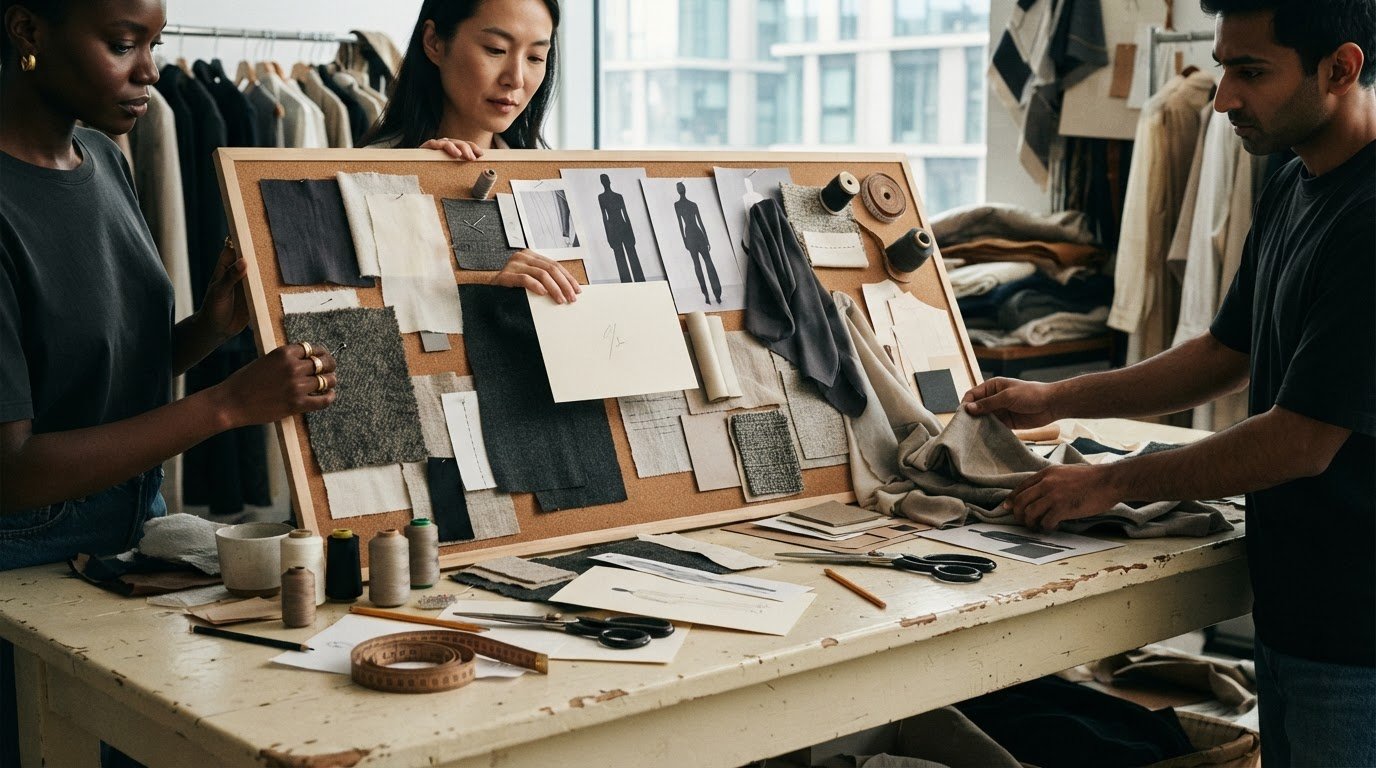
Make the decision in sequence. First decide who should originate the design. Then assess how much development work is ready, define the control your brand needs, and map the production support required. This keeps the choice grounded in the garment you plan to make rather than assumptions about either model.
Identify design ownership. Decide whether your brand is bringing its own design or starting from a manufacturer’s existing concept.
Assess development readiness. Take stock of the materials you have, such as references, a tech pack, pattern, or sample. Any missing items can be developed as the project progresses.
Define control. Set out which design, material, and branding decisions your team needs to make and approve.
Map production support. Identify the development and manufacturing tasks needed to take the product from initial inputs through bulk production.
Product complexity affects the information needed for accurate sampling. A garment with detailed construction, several components, or specific fit requirements may need more precise instructions than a simpler design. Material choices matter too: share fabric and trim preferences early so the team can align on development details. Specific requirements make it easier to decide what the sample needs to demonstrate.
Does your brand already have a production-ready design?
A concept, a tech pack, a pattern, and a sample are different levels of preparation. A concept communicates direction; a tech pack captures technical instructions; a pattern supports garment development; and a sample gives the team a physical garment to review. A missing item doesn’t have to stop the project. Share what’s available, identify what still needs development, and build the specification step by step.
For a broader view of how sourcing, development, and manufacturing connect, use an end-to-end clothing production guide to map the workflow. It can help your team look beyond the initial design and prepare the information needed at each handoff.
Which decisions and responsibilities should be agreed?
Put the division of responsibilities in writing before sampling advances. Design ownership, material selection, sample approval, and production quality are related, but they aren’t the same decision. Clarify who supplies or selects each item, who reviews changes, and what standard the approved garment must meet. Intellectual-property terms are contract-specific, so record the agreed terms in the project documents rather than assuming they follow automatically from an OEM or ODM label.
Keep a controlled record of specifications and revisions. For each change, note what is being revised and approve the updated sample or instruction before bulk production. This gives the brand and manufacturer a shared reference and reduces the risk of working from different versions of the design.
If your design direction is ready for development, plan your custom women’s clothing production through a workflow that connects sourcing, patternmaking, sampling, fitting, and bulk production.
PowerSweet's OEM-Oriented Custom Women's Clothing Production
PowerSweet Fashion's custom women’s clothing production follows a client-led workflow. Your design inputs guide development, while our team connects fabric and trim sourcing, patternmaking and grading, sampling and fitting, and bulk production and finishing. Labels, tags, and packaging are also part of the workflow. This approach suits brands developing their own product direction and seeking manufacturing support, rather than starting with a manufacturer’s existing ODM design.
PowerSweet Fashion has operated since 2008 and has a team of more than 200 people. Sample production takes 5-7 days, and bulk production takes 15-25 days. On-time delivery is non-negotiable. Design inputs and approvals guide each handoff from development through production.
What does a client-led production workflow include?
We start with the brand’s design and technical inputs, then align development work with the garment. Fabric and trim sourcing supports material choices, while patternmaking and grading translate the design into a workable specification. Sampling and fitting give the team a garment to review before bulk production and finishing. This sequence keeps the brand’s direction central while connecting development and manufacturing tasks.
For a quote, share the pattern, tech pack, and fabric. If you don’t have a pattern, PowerSweet Fashion can create one before issuing a quote. These inputs give the production team a clear basis for understanding the garment and its requirements. If you’re assessing order scale alongside production planning, the guide to low MOQ women’s clothing manufacturing provides context on minimum order quantities. PowerSweet Fashion’s MOQ is as low as 50 pieces per style and color, with size variations.
Sampling is a working checkpoint, not just a preview. Use fitting to review the garment and communicate adjustments clearly, then make sure the approved details carry through to bulk production. PowerSweet Fashion’s sample development and fitting connect with later production stages, helping keep design decisions and manufacturing inputs aligned.
How does PowerSweet support production confidence?
Quality checks matter throughout production. PowerSweet Fashion’s multi-step QC checks fit, measurements, stitching, seams, and finishing. These checkpoints focus attention on garment details that affect how the approved product is made. PowerSweet Fashion is SMETA 6.1 audited, BSCI monitored, and Global Recycled Standard certified.
A focused manufacturing conversation can start with the materials and documents you already have. Share your pattern, tech pack, and fabric to request a quote, or share your design direction if pattern creation is needed first. We connect sourcing, pattern development, sampling, fitting, and production around the project’s requirements.
Turn Your Production Decision into a Clear Brief
Turn your OEM vs ODM clothing decision into a working brief your manufacturing team can act on. State who owns the design, which choices are fixed, where flexibility remains, and what approvals are needed before production. A clear brief gives both sides a shared reference and connects creative decisions to practical development requirements.
You don’t need every detail resolved before starting the conversation. Bring the materials you have, flag decisions that are still open, and use the first discussion to align on the development path. Separate confirmed requirements from options you’re considering so the team knows where it can proceed and where your input is needed. This creates a focused starting point without locking your brand into assumptions that haven’t been agreed.
Share your pattern, tech pack, and fabric to discuss custom production. If you’re still developing a pattern, include your design direction so the conversation can begin with the right inputs. Move your product vision forward one clear decision at a time.
Frequently Asked Questions
What is the main difference between OEM and ODM clothing?
The main difference is who brings the starting design: OEM follows a brand’s design, while ODM begins with a manufacturer’s existing design or concept. That distinction doesn’t settle who owns later changes or approves specific details. Document the design source, permitted revisions, branding, sample sign-off, and rights to the resulting work. The agreement, not just the model label, defines the working responsibilities.
Is OEM clothing manufacturing better for a fashion brand with original designs?
OEM can suit a fashion brand with original designs because the brand leads the product direction and has more say over design decisions. It isn’t automatically right for every label. Consider whether your team can provide useful references, measurements, construction details, or a tech pack, and whether it can review samples and give clear feedback. Missing technical inputs can be developed as part of the process.
Can a clothing brand combine OEM and ODM production?
Yes. A brand may use different starting points across its products or bring its own design elements to an existing manufacturer-developed concept. The scope depends on the arrangement. For example, a brand might develop an original design for one style and adapt an existing concept for another. Put design ownership, allowed changes, branding, approvals, and responsibilities for each product in writing.
How much does OEM clothing manufacturing cost?
OEM manufacturing costs depend on project inputs, including the pattern, materials, and garment construction. A quote needs those details, not just the model name. PowerSweet provides a quote after receiving the pattern, tech pack, and fabric. If you’re still developing the technical package, organize available design references and material details first. This gives the quoting process a clear basis without relying on broad estimates.
What happens if a brand does not have a pattern for OEM production?
Not having a pattern doesn’t prevent a brand from starting an OEM project with PowerSweet. Share the design direction and available technical information. PowerSweet can create a pattern before issuing a quote, giving the garment a development reference. Prepare your tech pack and fabric information as well so the project inputs are ready to review.
Does ODM clothing let a brand customise the design?
ODM may allow a brand to adapt a manufacturer’s existing design, but the permitted changes depend on the arrangement. One project might allow branding and selected material choices, while another may define a different scope. Don’t assume that choosing ODM grants a particular level of customisation or ownership. Record allowed revisions, design rights, the approval process, and branding details in the agreement before development proceeds.
How long does clothing sampling and bulk production take with PowerSweet?
PowerSweet’s sample production turnaround is 5-7 days, and bulk production turnaround is 15-25 days. The sample stage gives the brand an opportunity to review the garment and communicate required changes before bulk production. Clear design inputs and approvals help both teams work from the same agreed specifications. Share your pattern, tech pack, and fabric with PowerSweet to discuss production.
Comments