%20(1).png)
Premium Dress Manufacturer: From Sampling to Bulk Production
- Powersweet Team

- Jul 17
- 11 min read
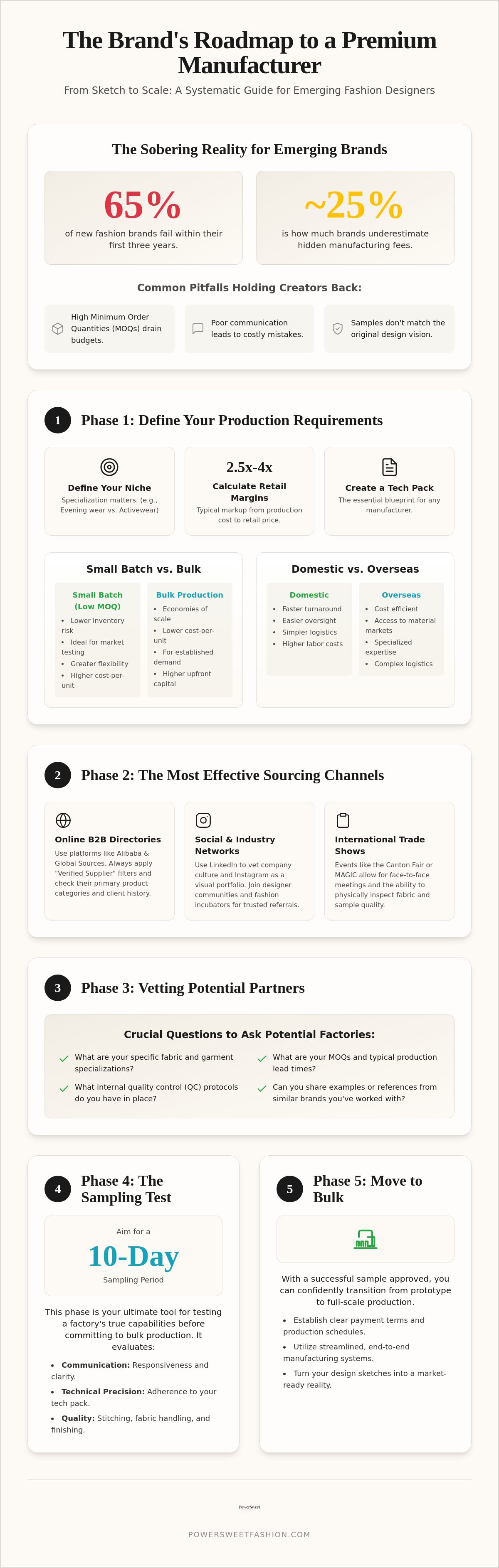
Did you know that 65% of emerging fashion brands fail within their first three years because they underestimate hidden manufacturing fees by nearly 25%? It's a sobering reality for designers who start with a vision but get lost in the logistical gap between a sketch and a finished garment. You likely worry about high minimum order quantities that drain your budget. Technical requirements like tech packs can feel like a foreign language. Finding a premium dress manufacturer shouldn't feel like a gamble with your brand's future. We know that the fear of poor communication or receiving a sample that looks nothing like your design often prevents talented creators from scaling.
You deserve a production partner that functions as an extension of your own team. This article provides a systematic roadmap for sourcing, vetting, and securing a reliable factory to bring your collections to life. We'll show you how to distinguish a high-quality facility from a subpar one. We will also explain why a 10-day sampling period is your best tool for quality assurance. By the end of this guide, you'll have a clear strategy to move from your initial concept to bulk production with total confidence. It's time to turn your design sketches into a physical reality that meets the highest industry standards.
Table of Contents
Defining Your Production Requirements Before You Search
Preparation is the foundation of a successful production run. You shouldn't start searching for a premium dress manufacturer until you've defined your technical and financial boundaries. This clarity prevents the common pitfall of mismatched expectations between a creative vision and industrial reality. It's about moving from an idea to a set of specifications that a factory can actually execute.
Begin by narrowing your niche. A factory specializing in structured evening wear might struggle with the elasticity of activewear or the delicate draping of resort wear. Once your niche is set, calculate your target price point and retail margins. Industry standards often suggest a 2.5x to 4x markup from production cost to retail price. Knowing these numbers helps you filter out factories that don't fit your business model.
Your most critical asset is the tech pack. This document acts as the blueprint for your design, containing every measurement, fabric specification, and stitch detail. Without a professional tech pack, you risk receiving samples that deviate significantly from your vision. It's the primary language of the global clothing industry, ensuring that your premium dress manufacturer understands exactly what you expect before the first needle drops.
Small Batch vs. Bulk Manufacturing
Volume dictates your strategy. Startups often seek a low MOQ women’s clothing manufacturer to test market demand without overextending capital. While the cost-per-unit for 50 units is naturally higher than for 500 units, the reduction in inventory risk often justifies the premium. Small-batch production offers the flexibility to pivot quickly based on customer feedback. This is essential for modern, fast-fashion cycles where speed to market is a competitive advantage.
Domestic vs. Overseas Manufacturing
Choosing a location requires a balance of speed and scale. Domestic manufacturing offers faster turnaround times and easier oversight, but it often comes with higher labor costs. Conversely, overseas production provides unparalleled cost efficiency and access to massive raw material markets. China remains a dominant force for any custom women’s clothing manufacturer due to its specialized expertise and integrated supply chains. When evaluating overseas partners, factor in shipping logistics and import duties to determine your total landed cost.
Where to Look: The Most Effective Sourcing Channels
Finding a premium dress manufacturer requires a shift from casual searching to professional procurement. You aren't just looking for a vendor; you're looking for a technical partner. The most efficient way to begin is by utilizing established B2B directories. Platforms like Alibaba and Global Sources offer a massive database of suppliers, but they require a disciplined approach to filtering. Without strict criteria, you can quickly become overwhelmed by thousands of results that don't match your quality standards.
Beyond digital directories, social media has become a powerful tool for visual and professional vetting. LinkedIn allows you to see the leadership and corporate culture of a factory, while Instagram often serves as a living portfolio for modern facilities. If your budget allows, international trade shows like the Canton Fair in Guangzhou or MAGIC in Las Vegas provide the opportunity to touch fabric samples and meet production teams in person. These face-to-face interactions often bypass months of digital back-and-forth communication.
Leveraging Online B2B Directories
Efficiency on platforms like Alibaba depends on your ability to use "Verified Supplier" filters. This status indicates that a third-party inspection company has audited the factory's premises and capabilities. Within the Apparel Manufacturing subsector, look specifically for factories that list "Women's Dresses" as a primary category rather than a secondary one. Review their transaction history and client feedback to ensure they have experience with global brands. If you're ready to start with a partner that prioritizes this level of transparency, PowerSweet Fashion provides the specialized expertise needed for custom women's apparel.
The Power of Industry Networks
Joining designer communities and fashion incubators can provide access to vetted referrals that aren't always visible on public directories. These networks often share honest experiences regarding factory communication and quality consistency. You may also consider using a sourcing agent to bridge the language gap, though direct factory contact usually offers better long-term cost benefits. Whenever possible, plan a visit to the facility. Seeing the production floor in person builds a level of trust that no digital profile can replicate; it confirms the factory's scale and commitment to quality assurance.
Vetting Potential Partners: Crucial Questions to Ask
Vetting a premium dress manufacturer requires more than a simple price inquiry. You need to verify their technical literacy before sending a deposit. Start by asking about their experience with specific high-end textiles like Lyocell or Crepe. These fabrics require specific tension settings and needle types to avoid puckering or snagging. If a factory cannot demonstrate a portfolio of work with these materials, they may not be the right fit for a premium brand.
Quality control (QC) is another non-negotiable topic. Inquire about their internal QC stages. Do they perform in-line inspections during the sewing process, or do they only check the final product? A reliable partner will have documented checkpoints at every stage of production. Additionally, transparency regarding finances is vital. Request a clothing production cost breakdown to ensure you aren't surprised by hidden fees for labeling, packaging, or fabric wastage. Finally, clarify the ownership of patterns and molds. Ensure that any intellectual property developed during your partnership remains legally yours.
Assessing Technical Capability and Niche Expertise
Determine whether the factory specializes in woven or knit garments. Some facilities are optimized for structured gowns; others excel at stretchy jersey fabrics. Ask about their specialized machinery for complex detailing like intricate embroidery or precision pleating. A factory's machinery list tells you exactly what they can handle without outsourcing. Always request a portfolio of previous work for brands with a similar aesthetic to yours to verify their craftsmanship.
Verifying Lead Times and Scalability
Reliability is measured in days. Ask for the standard turnaround for samples versus bulk orders. For example, a 10-day sample turnaround followed by a 15-20 day bulk production cycle is a strong indicator of an efficient operation. It's also important to understand how they handle peak seasons or holiday rushes. Ask about their maximum monthly production capacity to ensure they can scale as your brand grows. You don't want to outgrow your manufacturer after your first successful season.
The Sampling Phase: Testing the Relationship
The first physical prototype is more than just a proof of concept. It acts as a diagnostic tool for the entire partnership. While you evaluate the garment's quality, you must also assess the factory's ability to interpret your brand's DNA. A premium dress manufacturer should treat the sampling phase as a rigorous rehearsal for bulk production. This stage is your primary opportunity to mitigate risk before committing significant capital to a full run.
When you receive your prototype, evaluate the sample development clothing manufacturer process for technical accuracy against your tech pack. Does the fit align with your grade rules? Is the drape of the fabric consistent with your design intent? You should pay close attention to finishing quality, such as seam strength, zipper placement, and hem consistency. If the sample requires revisions, note how the factory handles your feedback. A partner that remains defensive about errors is unlikely to be reliable during the high-pressure environment of bulk production.
Why a 10-Day Sample Turnaround Matters
Speed in sampling directly impacts your bottom line. A 10-day sample turnaround allows you to finalize fabric and trim choices quickly, keeping your collection on schedule. This agility accelerates your time-to-market, which is vital in an industry driven by seasonal trends. The approved sample serves as the "gold standard" for bulk production, acting as the physical contract for every unit that follows.
Evaluating Communication and Responsiveness
Technical skill is useless without reliable communication. You should expect your factory to respond within 24 hours during the work week. Beyond mere responsiveness, a high-tier partner is proactive. They should suggest better construction methods or alternative trims that could improve the garment's durability or reduce costs without sacrificing quality. Ideally, the factory will provide a dedicated project manager to act as your single point of contact, ensuring that no detail is lost in translation. If you are ready to experience this level of professional oversight, you can start your sample development with PowerSweet Fashion today.
Moving to Bulk Production with PowerSweet Fashion
Transitioning from a prototype to a full collection requires a partner that understands the mechanics of scale. PowerSweet Fashion operates as your end to end clothing production partner, managing the entire lifecycle of your garment. We don't just sew; we coordinate every technical variable to ensure your bulk run matches your approved sample exactly. Our facility, established in 2008, provides the stability and experience needed to handle the complexities of the global fashion market. As a premium dress manufacturer, we prioritize reliability so you can focus on marketing and sales.
Location is a strategic advantage in the garment industry. Being based in Guangzhou gives us immediate access to the world’s most comprehensive fabric and trim markets. This proximity allows us to source high-quality materials faster and at more competitive rates than manufacturers in isolated regions. For fast-growing brands, we offer a 15-20 day bulk production timeline. This speed ensures you can restock bestsellers or launch new capsules without the months-long delays typical of traditional manufacturing cycles. We function as the engine that powers your creative vision with industrial efficiency.
Our Integrated Manufacturing Process
Our workflow is designed for precision and transparency. It begins with professional fabric sourcing and moves into meticulous pattern making and sizing tailored for your target global markets. We manage every stage internally, from the first stitch to final quality control checks. This vertical integration means we maintain total oversight of your project. It's how we eliminate the communication gaps that occur when a premium dress manufacturer outsources sub-processes like pleating or embroidery. You receive a finished product that is retail-ready and compliant with international standards.
Getting Started: Your First Production Run
Taking the first step is straightforward and systematic. You can start by submitting your tech pack to our team for an initial quote. We specialize in custom women's clothing and offer low MOQ flexibility to support emerging brands and limited-edition releases. Once the quote is approved, we move into the 10-day sampling phase to lock in your design. We invite you to contact our team for a professional consultation to discuss your specific production needs. We also encourage brands to visit our factory in person to oversee quality and meet the technical team dedicated to your brand's growth.
Scale Your Brand with Technical Manufacturing Excellence
Building a successful fashion label requires more than just creative flair; it demands a technical partner capable of executing complex designs at scale. You've learned that preparation through detailed tech packs and rigorous vetting of a premium dress manufacturer is the only way to safeguard your investment. By treating the sampling phase as a diagnostic test and prioritizing transparent communication, you eliminate the risks that often derail emerging brands.
Reliability in production isn't a luxury; it's the foundation of your retail success. With over 15 years of manufacturing expertise, PowerSweet Fashion provides the infrastructure needed to turn your sketches into market-ready collections. We offer a 10-day sample turnaround to keep your development moving at the speed of the global market. As specialists in premium women’s wear, we're committed to being the engine behind your brand's growth.
Partner with PowerSweet Fashion for your next collection and experience a streamlined path from concept to final delivery. We're ready to help you bring your next vision to life with precision and care.
Frequently Asked Questions
How do I know if a clothing manufacturer is reliable?
Reliability is often found in transparency and established history. Look for a partner with a physical facility and a proven track record, such as a factory founded in 2008. A reliable premium dress manufacturer will provide technical feedback on your tech pack rather than just accepting it without question. Check for third-party audits and request a portfolio of work for global brands to verify their craftsmanship.
What is a tech pack and why do I need one for a manufacturer?
A tech pack is a comprehensive blueprint containing measurements, fabric specifications, and stitch details for your garment. It serves as the primary communication tool that ensures the factory understands your vision exactly. Without one, you risk significant errors during the development phase. The manufacturer is forced to guess your requirements, which leads to wasted time and unnecessary capital expenditure on failed prototypes.
Can I find a manufacturer that accepts low minimum order quantities?
Yes, many modern factories now offer low MOQ flexibility to support startups and limited-edition releases. This approach allows you to test market demand without overextending your budget on unsold inventory. When you search for a premium dress manufacturer, prioritize those that explicitly mention flexible production in their services. This ensures you can scale your brand gradually as customer demand for your designs increases.
What is the average lead time for custom clothing production?
Standard industry lead times typically range from 10 days for a sample to 15-20 days for bulk production once the design is finalized. These timelines can vary based on fabric availability and design complexity. Efficient factories use integrated supply chains, like those in Guangzhou, to minimize delays in sourcing raw materials. Quick turnaround times are essential for brands that need to restock bestsellers during a busy season.
Should I work with a local or overseas clothing factory?
Local factories offer faster shipping and easier oversight; however, overseas factories often provide superior cost efficiency and access to massive raw material markets. China remains a global hub for custom women's apparel due to its specialized expertise and integrated logistics. Your choice should depend on whether you prioritize immediate proximity or the long-term scalability and material variety offered by international production hubs.
How much does it cost to get a clothing sample made?
Sample costs are generally higher than the per-unit price of bulk production because they involve individual pattern making and manual setup. While rates vary by design complexity, you should expect to pay a premium for this development phase. This investment is necessary to ensure the final product meets your quality standards. It's the most effective way to test a factory's technical capabilities before ordering a full run.
What happens if the bulk production quality doesn’t match the sample?
This is why you must establish a "gold standard" sample and clear quality control (QC) protocols before production starts. A professional manufacturer will have internal QC checkpoints to catch errors early in the process. If the final shipment deviates from the approved sample, your agreement should specify how the factory will handle repairs or replacements. Clear documentation prevents disputes over quality standards during delivery.
Do I need to visit the factory in person before ordering?
While not strictly mandatory in the digital age, visiting the facility builds long-term trust and allows you to audit the production floor. You can see the machinery, meet the technical team, and verify the scale of the operation. If a physical visit isn't possible, prioritize factories that offer transparency through video calls and detailed facility audits. Seeing the physical reality of the workspace provides peace of mind.


Comments