%20(1).png)
How to Find a Clothing Manufacturer: A Practical Guide

What if the best way to find a clothing manufacturer isn’t to start with a long list of factories, but with a clear plan for what you need made? If you’re working out how to find a clothing manufacturer, it’s normal to be unsure where to begin or how to explain your design, materials, and production goals. A vague brief can make it harder to compare capabilities and move confidently into sampling.
The right partner should fit your product and production needs, with a process you can understand from first inquiry to bulk manufacturing. This guide shows you how to prepare a production brief, assess a manufacturer’s capabilities and minimum order quantities, and evaluate communication, samples, quality control, and timelines. You’ll also learn how sampling can help refine a design before production begins. PowerSweet Fashion supports custom women’s clothing production, from fabric sourcing and pattern making through sample development, quality control, and bulk production. The company has operated since 2008, and its process starts with clear requirements and a collaborative approach.
Table of Contents
How to Find a Clothing Manufacturer by Defining What Your Brand Needs
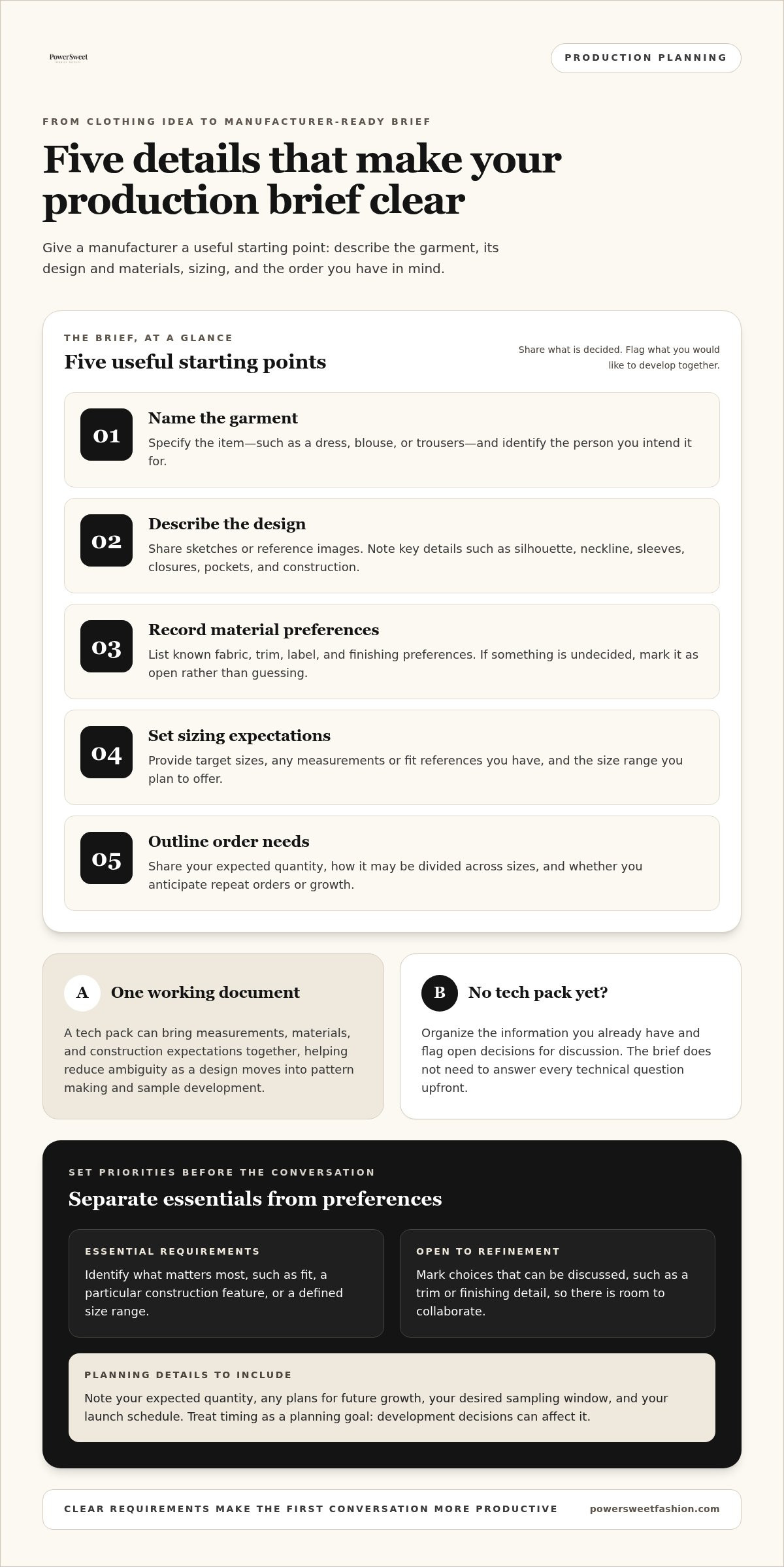
A design idea is a strong starting point, but it doesn’t give a manufacturer enough information to plan development or production. They need details about the garment, construction, materials, sizing, and order plan. Preparing those details makes how to find a clothing manufacturer a more focused process: you can explain what you need and have a useful first conversation.
A production-ready brief turns a clothing idea into specific details a manufacturer can use to plan development and production. It doesn’t have to answer every technical question upfront. Separate what you’ve decided from what you want to develop together.
Turn a clothing idea into a concise production brief
Start with the garment and the person who’ll wear it. Clothing categories have different production needs, so identifying the product helps frame the conversation. The overview of the clothing industry offers broader context. Use these steps to make your own project specific:
Name the garment category. Specify the item, such as a dress, blouse, or trousers, and identify the intended customer. For instance, brands planning custom branded apparel or printed work might look to providers like RAW Merch, whereas bespoke fashion lines require dedicated cut-and-sew manufacturers.
Describe the design. Share sketches or reference images, then note key features such as silhouette, neckline, sleeve shape, closures, pockets, and construction details.
Record material preferences. List any known fabric, trim, label, and finishing preferences. If a material or specification is undecided, say so rather than guessing.
Set sizing expectations. Provide target sizes and any measurements or fit references you have. State the size range you plan to offer.
Outline order needs. Give your expected quantity, how it may be divided across sizes, and whether you anticipate repeat orders or growth.
A tech pack can bring these details together in one working document. It typically communicates measurements, materials, and construction expectations, helping reduce ambiguity as a design moves into pattern making and sample development. If you don’t have one, organize the information you do have and flag open decisions for discussion.
Set priorities for quantity, timing, and development
Separate essential requirements from preferences. Fit, a particular construction feature, or a defined size range may be essential, while a trim choice or finishing detail may be open to refinement. This distinction shows where precision matters most and where there’s room to collaborate on the final garment.
State your expected order quantity and any plans for future growth. Include your desired sampling window and launch schedule as planning goals, not promised deadlines. Timing can depend on decisions made during development, so a realistic target gives both sides a basis for planning next steps. With a concise brief, you can compare your needs with a manufacturer’s process and make the first conversation more productive.
How to Assess a Clothing Manufacturer's Fit for Your Designs
A manufacturer’s profile or customer review can help you discover a potential production partner, but neither one shows how its process fits your garment. Compare each manufacturer’s stated capabilities with the requirements in your brief. The apparel manufacturing subsector includes connected processes for making garments, so assess the workflow rather than focusing on a single capability or an appealing listing.
Compare the capabilities that affect garment production
Use a simple comparison table to match each project need with evidence in the manufacturer’s stated process. Look for specific information: a clear description of sample development or quality control tells you more than a general claim about apparel experience.
Women’s apparel specialization can matter because the category, fit expectations, and construction details in your brief need to be understood together. A partner focused on custom women’s clothing can align pattern making and sample development with that category. Consider the full sequence, too: a workflow that connects fabric sourcing, pattern making, sampling, quality control, and bulk production can keep development steps coordinated.
Look for a clear, collaborative production process
A good fit also depends on how clearly the production process is explained. PowerSweet Fashion supports projects from fabric sourcing and pattern making through sample development, quality control, and bulk production. Samples are ready in 10 days, and bulk production takes 15-20 days. These timelines give brands a clear reference point when planning a project.
Communication is part of production fit. Details about materials, construction, and sample changes can lose clarity if decisions aren’t carried forward consistently. A collaborative process keeps those decisions visible as the garment moves from development toward production. PowerSweet Fashion has operated since 2008, and clients can visit the factory to meet the production team and oversee quality control.
Use reviews and directory listings as discovery clues, not rankings or proof that a factory matches your project. A positive review may describe a different garment, order plan, or development experience. Measure each option against your brief, then focus on whether its stated capabilities and process address your priorities. For brands developing women’s garments, PowerSweet Fashion’s custom clothing production brings development and production capabilities together under one manufacturing partner.
What Happens After You Find a Clothing Manufacturer?
Finding a potential partner is the start of a working process, not the finish line. After you explain your requirements, the design moves through material decisions, pattern making, sample development, review, approval, and bulk production. Understanding these stages helps you assess whether a manufacturer can carry your garment from concept into production. The stages connect different parts of the apparel and textile industry, and clear communication between brand and manufacturer helps keep the work aligned.
Sample development creates a garment prototype for review; bulk manufacturing produces the approved design in the agreed order quantity. The two stages serve different purposes. A sample lets both sides assess how the design translates into a physical garment before bulk production begins.
Use sample development to refine the design
The process begins with a discussion of requirements. Fabric sourcing helps identify materials for the garment, while pattern making translates its design and measurements into a pattern for development. These steps inform the initial sample. PowerSweet Fashion’s samples are ready in 10 days, giving the brand a defined point in the process to review the garment against its design and construction expectations.
Review the sample deliberately. Compare its proportions, fit, material, construction details, and finishing with the design information. Record feedback in specific terms, such as adjusting a measurement or clarifying a seam detail, rather than relying on broad comments like “make it fit better.” Precise, shared feedback helps resolve open questions while the garment is still in development.
Move from sample approval into bulk production
Once the sample is approved, the agreed specifications become the reference for bulk production. That shared reference helps align the brand and production team on the intended garment. PowerSweet Fashion’s bulk production takes 15-20 days. This is separate from the 10-day sample readiness timeline: sampling and bulk manufacturing are distinct stages.
Quality control is part of the wider manufacturing workflow, supporting attention to garment quality as the project moves from development toward production. Keep design decisions and sample feedback clear so expectations remain aligned as work progresses. At PowerSweet Fashion, clients can visit the factory to meet the production team and oversee quality control, connecting the project specifications with the people carrying out the work.
For a smoother handoff, keep approved design details, sample feedback, and final decisions together. This gives both sides a consistent reference as the project advances. PowerSweet Fashion supports fashion brands worldwide with custom women’s clothing production, from fabric sourcing and pattern making through sampling, quality control, and bulk manufacturing. Brands planning this sample-to-production journey can explore PowerSweet Fashion’s manufacturing process as they map their next steps.
How to Prepare for Your First Clothing Manufacturer Conversation
A focused first conversation starts with useful project information, not a perfect presentation. You don’t need every design decision finalized. You do need enough detail to explain the garment, identify what’s still open, and give the production team a clear view of your goals. For brands learning how to find a clothing manufacturer, this preparation makes it easier to discuss the path from development to production.
Share the details that make a project actionable
Gather materials that show what you’re making and what you need from the process. This concise checklist keeps key details at hand and helps the discussion move from concept to practical next steps.
Design files: Bring sketches, reference images, and any available tech pack details, including measurements or construction notes.
Garment information: Describe the item, intended customer, size range, fit goals, and construction features that define the design.
Materials: Note known fabric preferences and any trim, label, or finishing choices. Clearly mark decisions that are still open.
Order plan: Share your expected quantity and how you expect it to be divided across sizes, if known.
Timing: Explain your desired sampling window and launch schedule as planning goals, rather than assumed production commitments.
Separate confirmed requirements from areas where you’re open to development. For example, you may have approved a silhouette and size range while still exploring fabric options. This distinction helps protect essential design intent while leaving room to refine details through sourcing and sampling.
Connect the brief to development and sourcing
Once the project details are clear, they can guide the next steps. Fabric sourcing can support material decisions, while pattern making translates the design and measurements into a pattern. Sample development then turns those requirements into a physical garment prototype for review. For a closer look at how these stages work together, explore the sample development and pattern making guide.
PowerSweet Fashion brings fabric sourcing, pattern making, sample development, and quality control into its custom women’s clothing production process. A sample gives the brand and production team a tangible reference to assess against the design before bulk manufacturing. Quality control supports the wider production workflow and keeps attention on the garment as it moves forward.
Order quantity is useful context, too. PowerSweet Fashion offers low minimum order quantities, which can suit brands planning an initial production run while considering longer-term growth. Share both your starting quantity and your anticipated direction so the conversation accounts for your current project and potential future needs.
With your files, priorities, quantities, and timing organized, you can make the first discussion more specific and collaborative. Explore PowerSweet Fashion’s end-to-end clothing production to see how development and manufacturing can connect under one partner.
Find a Clothing Manufacturer That Can Support Your Brand From Sample to Bulk
The right manufacturing partner should fit more than a garment category. Look for alignment between your brief, the factory’s production capabilities, its communication process, and the steps it uses to develop a design before bulk manufacturing. That practical match is central to finding a clothing manufacturer who can support your brand as its needs evolve.
PowerSweet Fashion is a custom women’s clothing manufacturer serving fashion brands worldwide. Its end-to-end production services include fabric sourcing, pattern making, sample development, quality control, and bulk production. Bringing these stages together can help keep design decisions connected as a garment moves from concept to production.
Why an end-to-end partner can simplify production
Each stage informs the next. Material choices affect how a garment is developed; pattern making turns design requirements into a production pattern; sampling creates a prototype to assess; and quality control supports attention to the finished garments. With these capabilities in one workflow, brands have a connected path from development through bulk production. PowerSweet Fashion has operated since 2008, supporting fashion brands through this process.
The production team matters, too. Clients can visit the factory to meet the team and oversee quality control, offering a direct view of the people and facility behind their project. To understand how the stages connect in more detail, explore the end-to-end clothing production guide.
Take the next step with PowerSweet Fashion
Start with a concise project outline. Share the garment designs or references you have, your key requirements, the materials you know you want or need help sourcing, and your expected order quantity. Include your target sampling and launch schedule as planning information. Clear inputs make it easier to discuss the development workflow and how it fits your production needs.
PowerSweet Fashion’s samples are ready in 10 days, and bulk production takes 15-20 days. These are separate stages with distinct timelines, useful context as you plan from sample review to manufacturing. Low minimum order quantities can also support brands planning an appropriate starting run while considering future growth. For additional guidance on choosing a partner for women’s apparel, read the custom women’s clothing manufacturer guide.
A strong partnership starts with a clear brief and continues through open communication, sample development, and agreed production details. If you’re ready to discuss your garment designs, requirements, and expected quantities, share your project with PowerSweet Fashion and take the next step toward production.
Turn Your Clothing Concept Into a Clear Next Step
The next move doesn’t need to be a finished collection or a perfect production plan. Start with one garment you want to develop and the decisions you’ve already made. A focused first project gives you a practical way to build a working relationship, understand how development decisions are handled, and plan what comes next.
That’s the useful shift in learning how to find a clothing manufacturer: move from searching in the abstract to discussing a real design with clear priorities. Bring your references, note which details are fixed and which can evolve, and be clear about your expected order quantity and goals. Those inputs give the production conversation a firm starting point without locking you into decisions you’re not ready to make.
PowerSweet Fashion works with fashion brands worldwide to develop custom women’s clothing. If you’re ready to turn an idea into a project discussion, share your designs and start a production conversation. Your next collection can begin with one clear brief and a collaborative first step.
Frequently Asked Questions
How do I find a clothing manufacturer for a new brand?
Start by defining the garment you want to make, including its key design details, materials, expected quantity, and target timing. Then compare that brief with a manufacturer’s production capabilities and development process. If you’re learning how to find a clothing manufacturer, focus on how the work will move from your requirements to a sample and then bulk production. A concise brief makes the first discussion specific and productive.
What should I send a clothing manufacturer to get started?
Send design references or an available tech pack, along with the garment category, size range, material preferences, construction details, estimated quantity, and target schedule. Mark decisions that are final and distinguish them from details you want to develop together. For example, you might have settled on a silhouette but still need to discuss fabric options. Clear inputs help frame the conversation around sourcing, pattern making, sample development, and production planning.
How can I tell if a clothing manufacturer is right for my designs?
Look for a match between your garment requirements and the manufacturer’s workflow, including materials, order needs, and development support. Review how sampling, sourcing, quality control, and communication fit together. A directory listing can help you discover a manufacturer, but it won’t show whether its process suits your design. Use your brief to guide the discussion, and note how clearly the manufacturer responds to the details that matter most.
Should I order a sample before bulk clothing production?
Sample development gives you and the manufacturer a physical prototype to review before bulk production. Use it to assess design details, materials, fit, and construction against your brief. For example, reviewing how a neckline or closure appears on the garment can raise questions that are hard to settle from a sketch alone. Record specific feedback and agree on the specifications to carry forward. A sample supports informed decisions, but it doesn’t guarantee a particular bulk outcome.
How long does clothing sampling and bulk production take?
Timelines vary by manufacturer and project, so treat them as planning information rather than a universal standard. At PowerSweet Fashion, samples are ready in 10 days, while bulk production takes 15-20 days. These are separate stages: sampling creates a prototype for review, and bulk production is a distinct manufacturing phase. Build your schedule around both steps, leaving room to review the sample and settle design decisions before production.
Can a clothing manufacturer help source fabric and trims?
Some manufacturers provide material sourcing alongside garment development and production. PowerSweet Fashion offers fabric sourcing as part of its end-to-end services. Sourcing connects a garment’s material requirements with its development and can inform the sample as design decisions take shape. Share what you know about fabric and trims, such as preferred materials or functional needs, and identify anything still undecided. Use the brief to guide choices so they suit the garment and project.
Can a clothing manufacturer work with a small or growing fashion brand?
Yes. Share your expected order quantity and growth plans when discussing production fit, so the conversation reflects both your current needs and your direction as a brand. PowerSweet Fashion offers low minimum order quantities, which can support brands planning an appropriate starting run. There isn’t one production plan that fits every label; the right approach depends on the garment requirements and intended order. Being clear about quantity makes those needs easier to discuss.
Comments