%20(1).png)
Women's Clothing Production Lead Time: The 2026 Guide to Agile Manufacturing

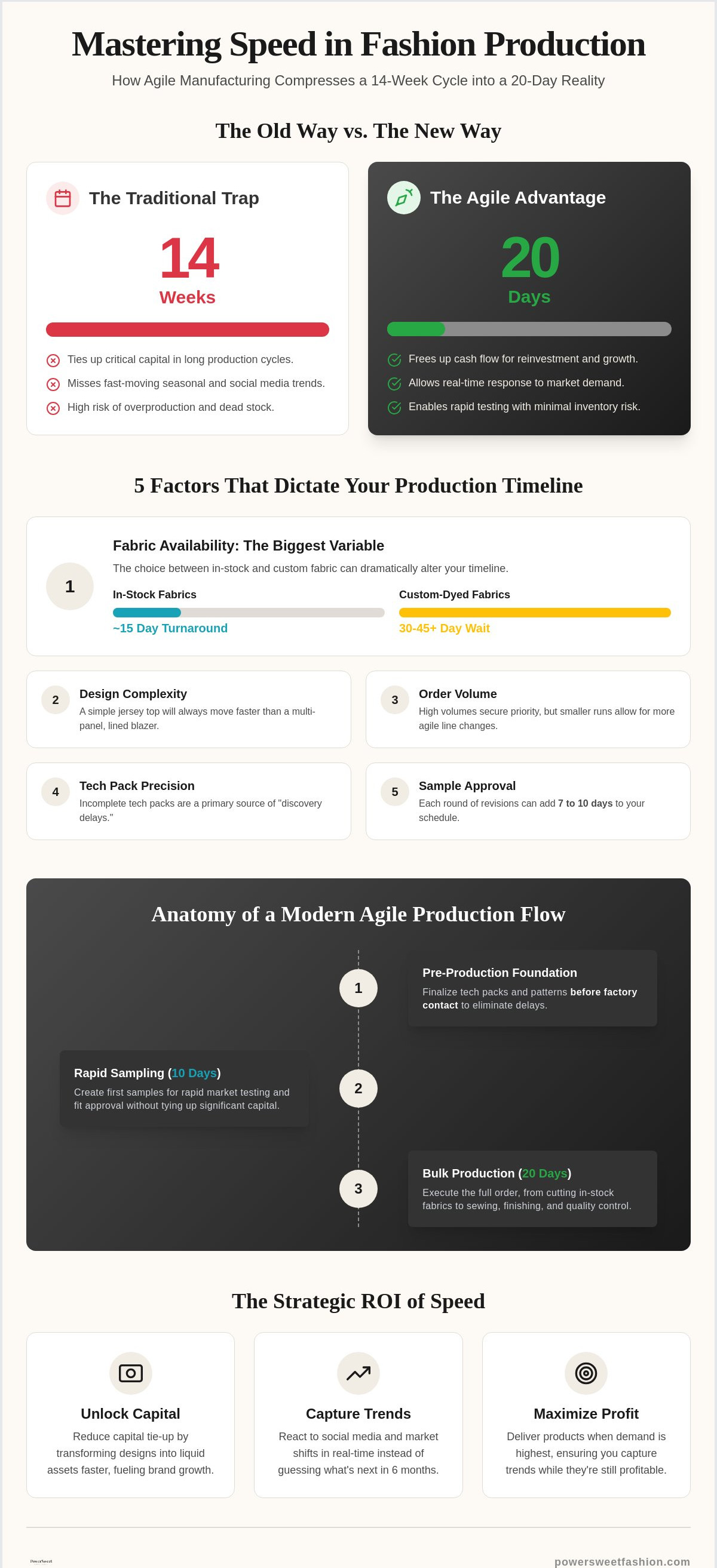
In 2026, a traditional 14-week manufacturing cycle isn't just a slow process; it's a direct threat to your brand's liquidity. While the U.S. apparel market has reached $583.2 billion, the brands winning the most market share are those that have moved past the "unit price trap" to prioritize speed. We understand the pressure of missing seasonal windows because of manufacturing delays or seeing your capital tied up in long production cycles. You need more than a factory; you need a pragmatic partner who views women's clothing production lead time as a strategic variable you can control.
We're here to help you master the mechanics of agile manufacturing. By the end of this guide, you'll know exactly how to compress your bulk production to a predictable 20-day cycle and secure 10-day sample turnarounds for rapid testing. We'll break down the critical role of tech pack precision and explain how to handle new 2026 requirements, such as the CPSC eFiling mandate and California’s SB 707. This is your roadmap to a more responsive, transparent, and profitable production journey.
Table of Contents
What is Women's Clothing Production Lead Time in 2026?
In the fast-moving fashion market of 2026, the definition of success has shifted from purely aesthetic appeal to logistical precision. At its core, women's clothing production lead time is the total duration from the moment a tech pack is finalized to when finished garments are ready for dispatch. It's the heartbeat of your supply chain. If you're wondering What is Lead Time? in a broader industrial sense, it encompasses the latency between initiation and execution. However, in our manufacturing context, it represents the critical window where your capital is at risk.
The market dynamics of 2026 don't allow for the traditional 90-day production windows that once dominated the industry. Ultra-fast fashion and rapid social media cycles have compressed these timelines significantly. While traditional cycles often stretch to 14 weeks, agile manufacturing has reduced this to a 15–30 day reality. This compression isn't just about speed; it's about survival. Brands that can't pivot quickly end up with dead stock and missed trends. Digital supply chains have replaced the old 90-day standard with a 20-day reality by integrating fabric sourcing and pattern making into a single, streamlined workflow.
It's vital to distinguish between sampling lead time and bulk production lead time. Sampling is your R&D phase. It involves pattern making and prototype creation, typically aiming for a 10-day benchmark for a first sample. Bulk production is the industrial execution. This is where the scale of your order meets the efficiency of the sewing line. Managing these two distinct phases with precision is what separates a growing brand from one that's constantly struggling with backorders.
The Components of the Production Clock
The production clock starts with material sourcing and trim procurement. This phase is often the primary cause of delays, especially if you're chasing custom-dyed fabrics with 30-day minimums. Once materials are secured, we move to pattern making and sample development. In an agile system, the benchmark for a first sample is 10 days. Finally, the process enters bulk cutting, sewing, and finishing. Each phase is a cog in a larger machine that must be perfectly synchronized to meet a 20-day dispatch goal.
Why 'On-Time' Delivery is the New Luxury
Holding massive amounts of safety stock is a drain on resources. In 2026, the ROI of agile manufacturing comes from reducing capital tie-up. Shorter windows allow brands to react to social media trends in real-time rather than guessing what will be popular six months in advance. Ultimately, lead time is the velocity at which your design concepts transform into liquid capital, directly dictating the health of your brand's cash flow. Reliable, on-time delivery ensures you aren't just chasing trends, but capturing them while they're still profitable.
The 5 Main Factors Affecting Your Apparel Timeline
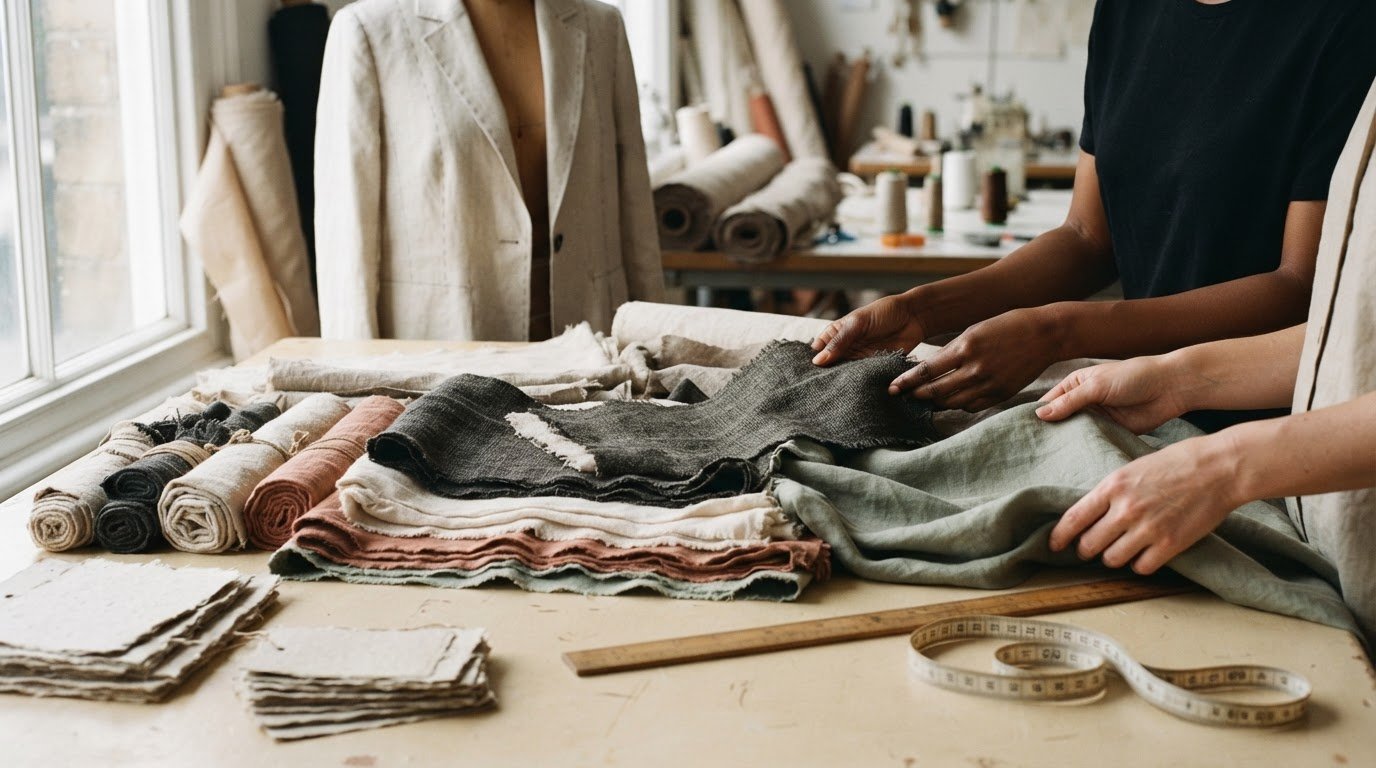
Controlling your women's clothing production lead time requires a deep understanding of the variables that stall the manufacturing engine. While some delays are environmental, most are rooted in the logistical choices made during the pre-production phase. Fabric availability is the most significant pivot point. Utilizing in-stock textiles can result in a 15-day turnaround, whereas custom-dyed fabrics often require a 30 to 45-day wait for the dye house alone. If your brand relies on unique seasonal colors, this must be factored into your initial calendar to avoid missing retail windows.
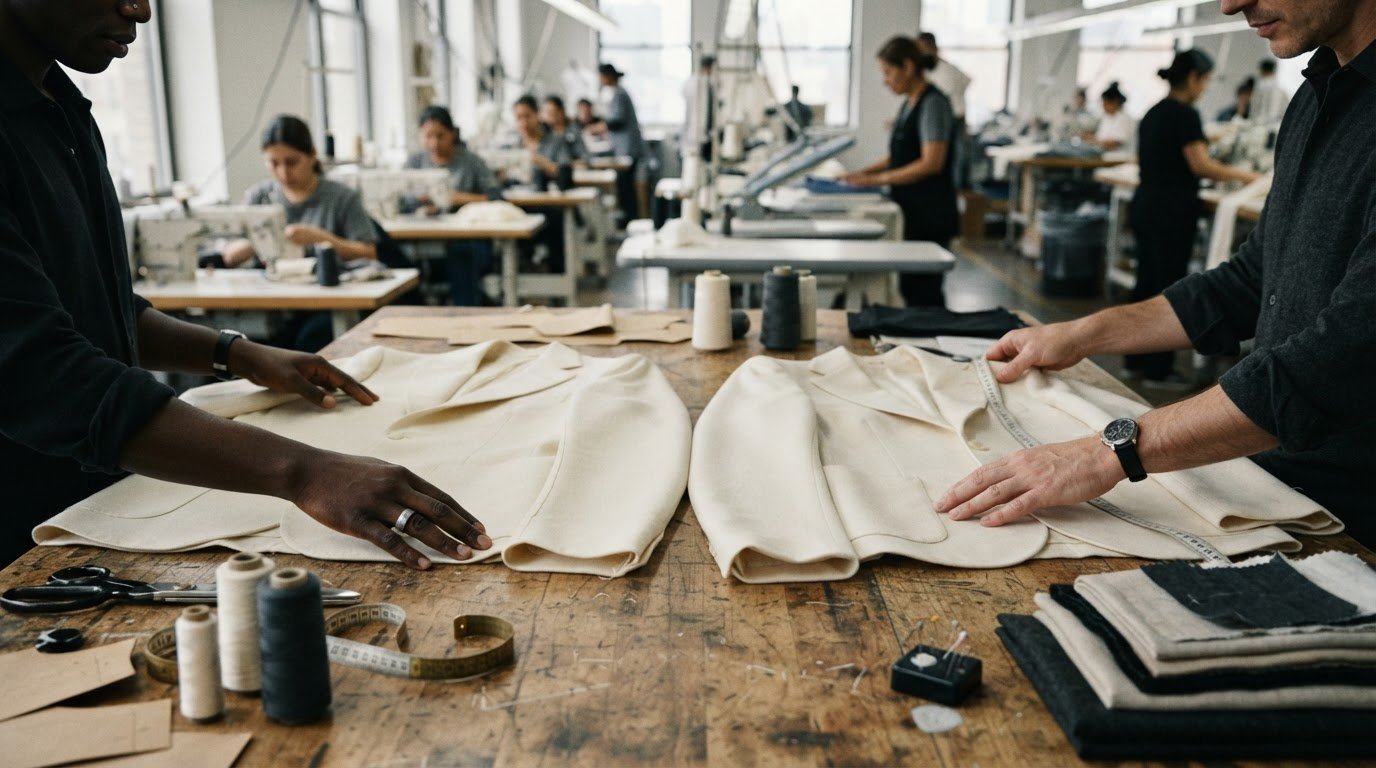
Design complexity and order volume also dictate the velocity of the sewing line. A minimalist jersey top moves through the factory significantly faster than a multi-panel blazer with internal lining and complex topstitching. Similarly, factory scheduling is a balancing act. While high-volume orders often secure priority slots, smaller runs allow for more agile line changeovers. The key is to communicate your volume needs early so the factory can allocate the necessary labor and machinery well in advance of your start date.
The transition from sample to bulk is where many brands lose momentum. Sample approval cycles are the silent timeline killers of the fashion industry. Every round of revisions adds 7 to 10 days to the schedule. To keep your project on track, aim for "first-sample accuracy" by providing comprehensive data from the start. If you're looking to streamline this process, our team at PowerSweet Fashion specializes in rapid sample development to bridge the gap between design and delivery.
The 'Tech Pack' Bottleneck
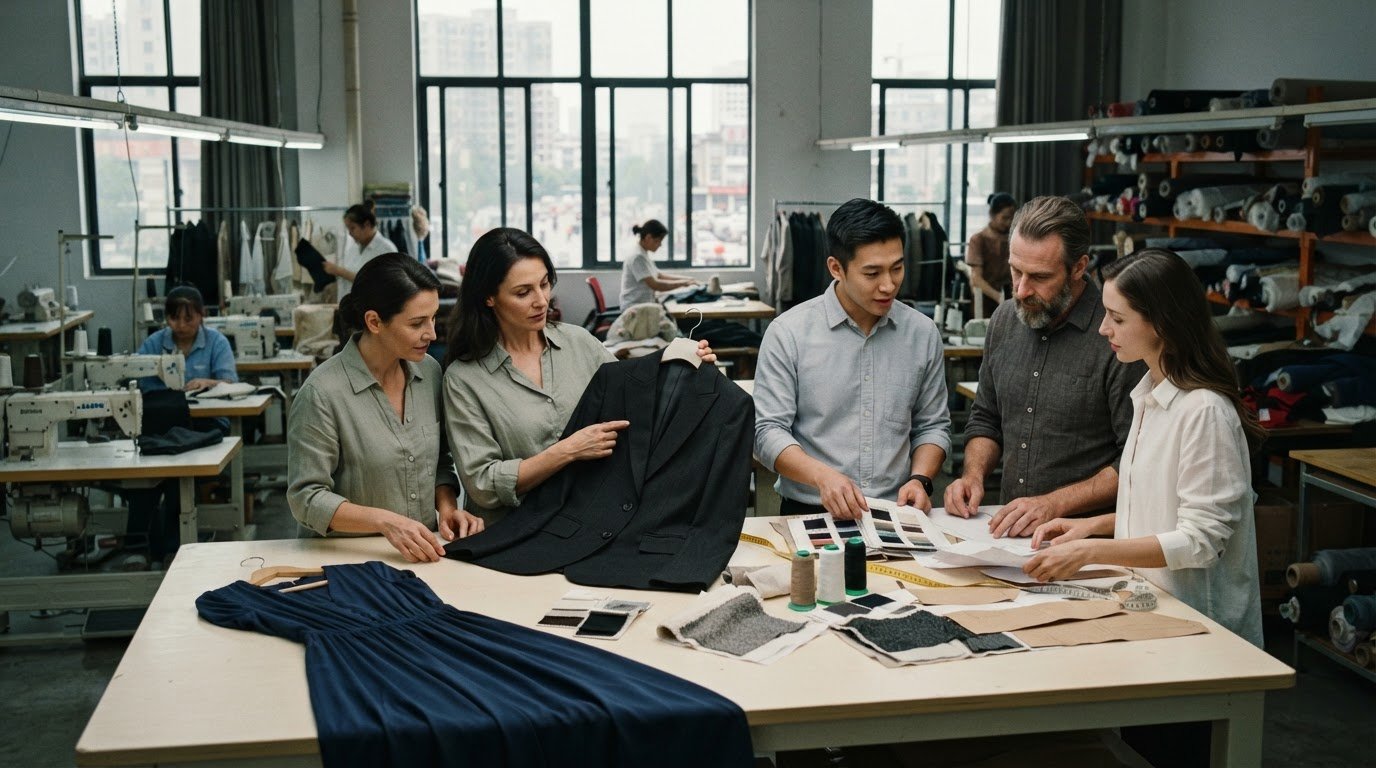
Incomplete tech packs are a primary cause of friction, often adding 14 or more days to a project's start date. A factory cannot quote accurately or cut fabric without precise measurements, seam specifications, and bill of materials. Professional pattern making is the foundation of speed. When patterns are executed correctly the first time, you eliminate the "back-and-forth" that drains your resources. We recommend reviewing a Quality Control Checklist to ensure your documentation is factory-ready before you hit the "start" button.
Raw Material and Trim Sourcing
Proximity to the supply chain is a massive competitive advantage. When a factory is located near textile hubs, raw material sourcing is reduced from weeks to mere days. However, custom trims like branded buttons, specialized zippers, or woven labels can still trigger delays. These small components often have their own independent lead times. To bypass these hurdles, consider pre-approving a library of "house" fabrics and trims. This allows the factory to move straight from pattern finalization to bulk cutting without waiting for external shipments.
Traditional vs. Agile Production: A Lead Time Comparison
The gap between legacy manufacturing and modern agile systems has never been wider. Traditional "Enterprise" cycles typically operate on a 60-day production window, excluding shipping. This model relies on massive bulk orders and long-term forecasting, which often results in overstocking and missed trends. In contrast, the agile model targets a 15–20 day women's clothing production lead time. This isn't just about working faster; it's about working smarter by eliminating the bureaucratic and logistical friction that plagues larger factories.
Low Minimum Order Quantities (MOQs) play a pivotal role in this speed. Smaller batches allow for faster line changeovers. When a factory doesn't have to commit a sewing line to a single style for three weeks, it can pivot between designs in hours. This flexibility is essential for brands that need to refresh their collections monthly rather than seasonally. While some critics argue that speed compromises quality, the reality is that agile systems often have higher oversight because the batches are manageable. Quality control is integrated into every station rather than being a final, isolated step.
Cost implications are also misunderstood. While the per-unit price in an agile system might be slightly higher than a 10,000-unit run in a legacy factory, the total cost of ownership is often lower. You aren't paying to store unsold inventory or discounting dead stock at 70% off. Speed prevents capital from being trapped in a warehouse. It transforms your supply chain into a lean, responsive asset that generates revenue faster.
The 15–20 Day Bulk Production Model
Specialized women's wear factories achieve these timelines by optimizing their sewing lines for specific garment categories. By focusing on a narrow range of construction techniques, teams become exceptionally efficient. The "End-to-End" advantage is the secret weapon here. When sourcing, sampling, and bulk production happen under one roof, you eliminate the weeks of transit time usually spent moving materials between vendors. For a deeper look at how this structure works, see our End to End Clothing Production Guide.
Why Agile Brands Win in 2026
Agile brands win because they don't have to guess what customers want six months in advance. They can order closer to their launch date, reducing the risk of market shifts. This "Test and Repeat" strategy allows you to drop a small batch, analyze sales data, and restock the winners within three weeks. A 20-day production cycle offers the optimal balance by allowing enough time for multi-stage quality checks without losing the competitive edge of speed. This responsiveness turns your supply chain into a marketing tool that keeps your brand relevant and your cash flow healthy.
How to Reduce Lead Times: Strategies for Fashion Brands
Speed is a result of preparation, not rushing. Reducing your women's clothing production lead time requires shifting from a reactive mindset to a proactive one. The most effective way to eliminate "discovery delays" is to finalize your tech packs before the factory even opens your email. When a manufacturer receives a complete bill of materials and precise grading, they move directly to line scheduling. This preparation alone can shave 14 days off the front end of your project.
Utilizing "In-Stock" fabric libraries is another high-impact strategy. Custom-dyeing textiles often adds 30 days to a timeline. In contrast, using available fabrics allows for a 15-day turnaround target. If your brand relies on rapid drops, sourcing from existing stock is the only way to stay ahead of trend cycles. Consolidation also matters. Switching between multiple vendors for labels, zippers, and fabric creates logistical bottlenecks. By keeping your supply chain under one roof, you eliminate the transit gaps that slow you down.
The feedback loop is where many brands lose control. Implementing a "48-hour rule" for sample feedback ensures the momentum of the sewing line isn't lost. When you respond quickly, the factory can keep your patterns in the active queue. If you're ready to compress your timelines, you can start your production journey with us and see the agile model in action.
Streamlining the Sampling Process
A 10-day sample turnaround is the gold standard for agile brands. Achieving this requires "Pattern Ready" designs where technical specifications are locked before the first cut. Digital prototypes can also reduce the number of physical sample rounds needed. By visualizing fit and drape in a digital environment, you catch major errors before shipping a single piece of fabric. This reduces the "back-and-forth" that often adds weeks to the pre-production phase.
Managing the Transition to a New Partner
The first order with a new factory often takes longer. This is the calibration phase where both parties learn communication styles and quality standards. You can optimize the second order by documenting every revision and technical adjustment during the first run. This creates a repeatable blueprint for future speed. If you're currently struggling with a slow manufacturer, our Switching Clothing Manufacturers Guide provides a professional framework for a seamless transition to a faster partner.
PowerSweet Fashion: Redefining Lead Times for Women's Wear
At PowerSweet Fashion, we don't treat speed as a marketing slogan; we treat it as an industrial requirement. We've built our facility to support a 15–20 day women's clothing production lead time for bulk orders. This commitment allows our clients to move from concept to commerce while their competitors are still waiting for fabric swatches. Our location-agnostic end-to-end service means we handle the heavy lifting of logistics, allowing global brands to focus entirely on their creative vision and market growth.
The secret to our velocity lies in the human element behind our machinery. We employ professional pattern makers and dedicated production teams who oversee every stitch on the sewing line. By keeping these experts under one roof, we eliminate the communication gaps that lead to errors and costly delays. Our Low MOQ model acts as a powerful engine for fast-growing influencer and boutique brands. It enables you to test the market with smaller batches and restock successful styles before the trend fades, ensuring your capital is never trapped in dead stock.
Our End-to-End Production Process
We've optimized every stage of the journey to shave days off the clock. From initial fabric sourcing to final quality control, our workflow is designed for maximum efficiency without sacrificing stability. You won't be left in the dark during the process. We provide transparency through real-time updates, giving you the reassurance that your collection is on track for its launch date. For a full overview of our capabilities and how we maintain these standards, read our Custom Women's Clothing Manufacturer Pillar.
Start Your 20-Day Production Cycle Today
Getting started is simple and direct. You can submit your tech pack through our portal for a rapid quote, allowing us to assess your project's technical requirements immediately. We believe in "Open-Door Transparency," so we invite you to visit our facilities and meet the team behind your garments. Seeing our operation in person provides a grounded sense of the meticulous care and industrial scale we apply to every order. When you're ready to move past the delays of traditional manufacturing, partner with PowerSweet Fashion for agile production and take control of your supply chain velocity.
Accelerate Your Brand's Growth with Agile Manufacturing
In 2026, market responsiveness is the only sustainable competitive advantage. We've explored how transitioning from legacy 60-day cycles to a streamlined 15–20 day women's clothing production lead time protects your cash flow and allows you to capture trends in real-time. Success in this landscape requires more than just a manufacturer; it demands a partnership built on technical precision and supply chain transparency.
By focusing on tech pack precision and utilizing in-stock fabric libraries, you can eliminate the bottlenecks that traditionally stall production. Our team of specialist women's wear pattern makers is ready to translate your creative vision into high-quality garments with the speed your brand deserves. Our 15–20 day bulk production and low MOQ flexibility provide the stability you need to scale without the risk of overstocking or missed seasonal windows.
Get Your 10-Day Sample Started with PowerSweet Fashion
Take the first step toward a more responsive supply chain today. We're ready to help you build a more profitable and agile future for your fashion brand.
Frequently Asked Questions
What is the average lead time for custom women's clothing?
Average lead times vary depending on the manufacturing model you choose. Traditional enterprise cycles typically require 8 to 14 weeks. However, agile manufacturers in 2026 have compressed this to 15 to 30 days for bulk orders. This shorter window covers the time from tech pack finalization to dispatch, allowing brands to respond to market shifts much faster than legacy systems allow.
Can a clothing manufacturer really deliver bulk orders in 15 days?
Yes, a 15-day bulk delivery is achievable through specialized agile production lines. This speed is possible when a factory utilizes "in-stock" fabric libraries and has an integrated supply chain that keeps sourcing, sampling, and sewing under one roof. By eliminating the transit time between multiple vendors and optimizing the sewing line for specific garment categories, we meet these aggressive targets without sacrificing construction quality.
How does MOQ (Minimum Order Quantity) affect my production timeline?
Lower MOQs generally enable faster production timelines because they allow for quicker line changeovers. When a factory doesn't need to dedicate a single sewing line to one style for several weeks, it can pivot between different designs in a matter of hours. This flexibility is the engine behind agile manufacturing, making it easier for boutique brands to test small batches and restock winners within a 20-day cycle.
What are the most common causes of manufacturing delays in apparel?
Sourcing raw materials and incomplete tech packs are the two most frequent causes of delays. If a brand requests custom-dyed fabrics or specialized trims, the timeline can extend by 30 days or more. Similarly, "discovery delays" occur when a factory receives documentation that lacks precise measurements. These issues force the factory to pause production until the technical specifications are clarified and patterns are corrected.
How can I speed up the sampling process for my clothing line?
You can accelerate sampling by providing "Pattern Ready" tech packs and adhering to a strict feedback schedule. Implementing a 48-hour rule for sample revisions ensures the momentum isn't lost. Digital prototyping also helps by allowing you to visualize fit and drape before cutting physical fabric. This approach often reduces the number of sample rounds needed, helping you hit a 10-day sample turnaround target consistently.
Does 'Rush Production' compromise the quality of finished garments?
Speed doesn't inherently compromise quality if the factory uses an agile oversight model. In these systems, quality control is integrated into every station of the sewing line rather than being a final, isolated step. Because batches are smaller and more manageable, supervisors identify and correct errors in real-time. This ensures that a compressed women's clothing production lead time remains consistent with high industry standards.
What information do I need to provide to get an accurate lead time estimate?
To receive an accurate estimate, you must provide a finalized tech pack that includes a comprehensive bill of materials and grading specifications. We also need to know your desired fabric type, trim requirements, and total order volume. Providing this data upfront allows us to check current factory capacity and material availability, ensuring that the timeline we quote is grounded in the physical reality of our production schedule.
Why do fabric sourcing issues often cause the longest delays?
Fabric sourcing causes delays because textiles are often manufactured to order rather than held in stock. Custom colors or specialized weaves require independent production runs at the mill, which can add 4 to 6 weeks to your schedule. In 2026, global supply chain disruptions can further complicate this. Utilizing a manufacturer's existing fabric library is the most effective way to bypass these external variables and secure a faster turnaround.
Comments