%20(1).png)
Boutique Clothing Manufacturer: The 2026 Guide to Scaling Your Fashion Brand

High minimum order quantities are no longer just a hurdle. They are a direct threat to your brand's agility in a market that moves faster than ever. Finding a reliable boutique clothing manufacturer shouldn't feel like a gamble with your company's future. You likely recognize the frustration of sourcing a perfect design only to be told you must commit to hundreds of units before testing the market. This traditional barrier stalls growth and leaves your capital trapped in inventory while trends pass you by.
Scaling a fashion brand requires a partner that values precision over sheer volume. We'll show you exactly how to transition from wholesale reselling to custom manufacturing with a partner that supports low MOQs and rapid growth. This approach ensures you maintain consistent quality while meeting the technical demands of modern production without the risk of mass-market inconsistencies. It is about creating a system that responds to your creative vision rather than restricting it.
We will examine the essential logistics for 2026, including the July 8 CPSC eFiling requirements and the impact of the 10% Section 122 reciprocal tariff. You will learn how to build a resilient supply chain that balances technical excellence with the speed your customers demand. This guide provides the framework to move beyond the limitations of bulk sourcing and take full control of your production journey.
Table of Contents
Why Boutique Brands are Moving from Wholesale to Custom Manufacturing in 2026
Defining the Boutique Clothing Manufacturer: Agility, Quality, and Low MOQs
Wholesale Sourcing vs. Custom Manufacturing: Which is Right for Your Boutique?
The Boutique Manufacturer Vetting Checklist: Ensuring Production Quality
Why Boutique Brands are Moving from Wholesale to Custom Manufacturing in 2026
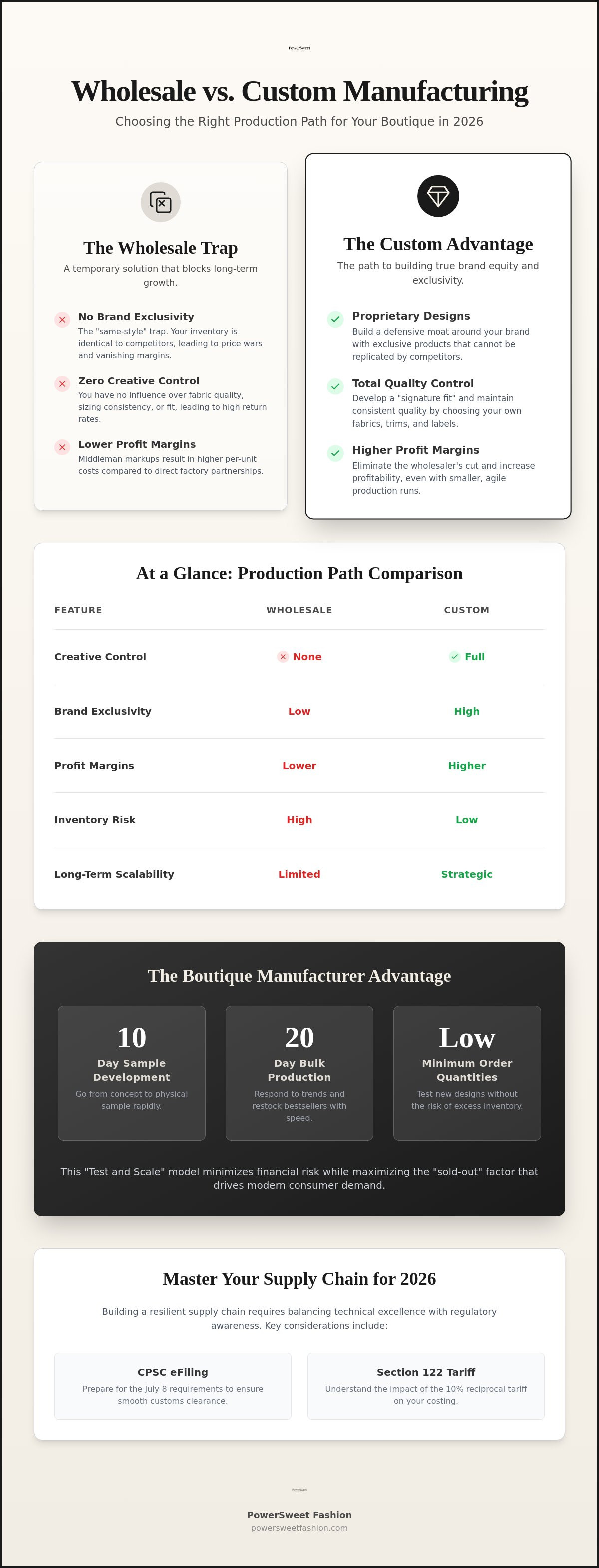
Wholesale is a race to the bottom. It forces you to compete on price because your inventory is identical to every other shop on the digital street. In 2026, the "same-style" problem has reached a breaking point. When consumers see the same dress on five different websites, brand loyalty vanishes. This saturation is driving a massive shift toward custom production. Successful brands are moving away from open-market catalogs to build a defensive moat through original design. The global clothing manufacturing sector is currently valued at over $460.6 billion, yet the most significant growth is happening within agile, small-scale production cycles. Boutique owners are realizing that true brand equity isn't found in a reseller's catalog. It is built through proprietary fits and exclusive fabrics.
2026 is officially the year of the "Micro-Brand." These are smaller, highly focused labels that use agile manufacturing to outmaneuver fast-fashion giants. While massive retailers struggle with overproduction and inventory waste, micro-brands use a boutique clothing manufacturer to release small, high-demand collections. This strategy minimizes financial risk while maximizing the "sold-out" factor that drives modern consumer behavior. By controlling the production journey from the first stitch, you ensure your brand stands for something unique. You aren't just selling clothes; you're selling a product that can't be found anywhere else.
The Limitations of the Wholesale Model
Wholesale sourcing offers speed but sacrifices control. You have zero influence over fabric quality or sizing consistency, which leads to high return rates and customer dissatisfaction. Additionally, middleman markups result in higher per-unit costs compared to direct factory partnerships. The biggest risk remains the lack of exclusivity. If a competitor buys the same inventory and cuts their price, your margins disappear instantly. Wholesale is a temporary solution that often blocks long-term scaling.
The Strategic Advantage of Custom Design
Custom manufacturing allows you to develop a "signature fit" that becomes your brand's calling card. When a customer knows your trousers fit them perfectly every time, they stop looking at competitors. Direct factory partnerships also unlock higher profit margins by eliminating the wholesaler's cut. You gain the power to choose specific trims, custom labels, and sustainable fabrics that align with your brand values. Brand exclusivity in 2026 is the strategic ownership of proprietary designs and material specifications that prevent competitors from offering identical products through open wholesale channels. This control transforms your boutique from a retail shop into a legitimate fashion house.
Defining the Boutique Clothing Manufacturer: Agility, Quality, and Low MOQs
A boutique clothing manufacturer is defined by its ability to handle low-to-mid volume production without compromising on technical precision. Unlike mass-market factories that require thousands of units to start a line, these specialized partners focus on agility. This model supports the "test and scale" inventory strategy. It allows you to release a design, gauge customer response, and restock based on actual data rather than guesswork. High-precision manufacturing at a smaller scale is the engine behind the most successful niche brands in 2026.
The "Low MOQ" myth suggests that small batches result in lower quality. This is incorrect. In reality, smaller production runs often allow for more rigorous quality control at every stage. A dedicated partner manages on-demand manufacturing processes that prioritize the integrity of the garment over sheer output speed. You get the same high-end finish found in luxury retail, but at a volume that suits your current growth stage. This ensures your brand maintains a reputation for excellence from the very first collection.
The Core Pillar: Low Minimum Order Quantities (MOQs)
Low MOQs are the foundation of financial flexibility. They allow boutiques to launch diverse collections with minimal upfront capital. Instead of sinking your entire budget into one style, you can spread your investment across multiple designs. While per-unit pricing is typically 20-30% higher for low MOQ orders compared to mass production, the reduction in inventory risk makes it a more profitable choice for growing labels. You can explore the technical nuances of this in our guide to custom clothing production small batch. This approach ensures your cash flow remains liquid for marketing and customer acquisition.
Speed to Market: The 10-Day Sample Rule
Capturing a trend requires speed. The 10-day sample rule is the industry benchmark for brands that want to remain relevant on social media. Rapid sample development allows you to move from a technical sketch to a physical garment in less than two weeks. Once the sample is approved, a 15 to 20 day bulk production cycle follows. This fast-track system reduces the need for massive upfront inventory forecasting. You can respond to viral moments in real-time. If you want to accelerate your timeline, our team at PowerSweet Fashion specializes in rapid prototyping to get your vision onto the rack faster. By shortening the gap between concept and delivery, you minimize the risk of holding outdated stock.
Wholesale Sourcing vs. Custom Manufacturing: Which is Right for Your Boutique?
Choosing between wholesale and custom production is a strategic pivot that defines your brand's financial health. Wholesale sourcing requires an immediate investment in finished goods. You pay for what exists on the shelf. In contrast, a boutique clothing manufacturer requires an upfront investment in sample development and pattern making. While these setup fees can seem daunting, they are the price of ownership. When you own the patterns, you own the brand. This distinction is critical for labels looking to move beyond the limitations of pre-made inventory.
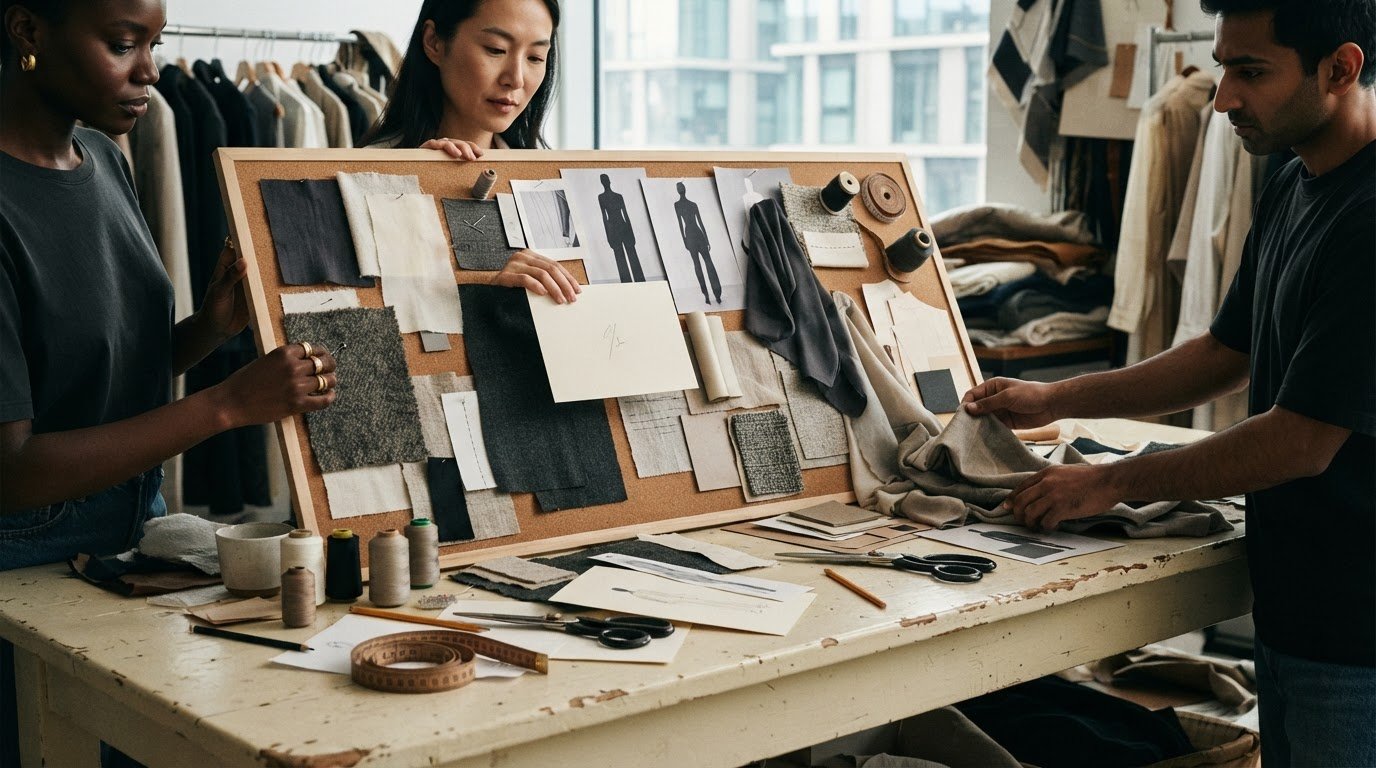
Creative control is the most visible differentiator. Wholesale limits you to the fabrics and trims chosen by another company. With custom production, you select the specific technical details, such as the GSM of your jersey or the exact composition of your linen. This level of specificity is vital when vetting a clothing manufacturer for high-end collections. It ensures your product feels premium compared to mass-produced alternatives. It also allows you to implement custom labels and branded hardware that reinforce your identity at every touchpoint.
Risk management also shifts between these models. Wholesale risk is tied to inventory leftovers; if a style doesn't sell, you are stuck with dead stock that you didn't design. Custom manufacturing risk is tied to production delays. However, agile partners minimize this through streamlined schedules and clear communication. The ability to scale from 50 units to 5,000 units is only possible when you have a direct line to the factory floor.
When to Stick with Wholesale
Wholesale remains a viable entry point for startups with zero design experience. It allows you to test market demand for specific categories like loungewear or evening gowns without the complexity of fabric sourcing. Many successful brands utilize a "Blended Model." They source basics like plain t-shirts via wholesale while investing in custom "hero pieces" that carry their unique brand DNA. This balances low-risk inventory with high-impact design while you build your audience.
When to Switch to Custom Manufacturing
You're ready to switch when your customers start asking for specific modifications or when you can't find the quality you need on the open market. Transitioning to your own production line is a major milestone for any growing label. Utilizing end to end clothing production simplifies this switch by managing everything from the initial sketch to the final quality check. By cutting out the wholesale middleman, you maximize your profit margins and gain total control over your supply chain.
The Boutique Manufacturer Vetting Checklist: Ensuring Production Quality
Vetting a boutique clothing manufacturer requires a shift from surface-level questions to technical scrutiny. You aren't just looking for a vendor; you're looking for a partner that protects your brand's reputation. A reliable factory should offer transparency through every stage of the process, from initial sourcing to final packing. Establishing this relationship early prevents the quality inconsistencies that plague mass-market production. It's about finding a "safe pair of hands" that treats your creative vision with industrial precision.
Quality control protocols are the backbone of a successful partnership. You should look for a factory that implements a multi-stage QC process. This includes an initial check of raw materials, an "in-line" inspection during the sewing process, and a final 100% inspection before the goods are packed. This methodical approach ensures that small errors don't become expensive bulk mistakes. Transparency is key here. A professional partner will provide inspection reports and welcome factory visits, whether in person or via digital video tours, to build empirical trust.
Technical Vetting: From Tech Packs to Patterns
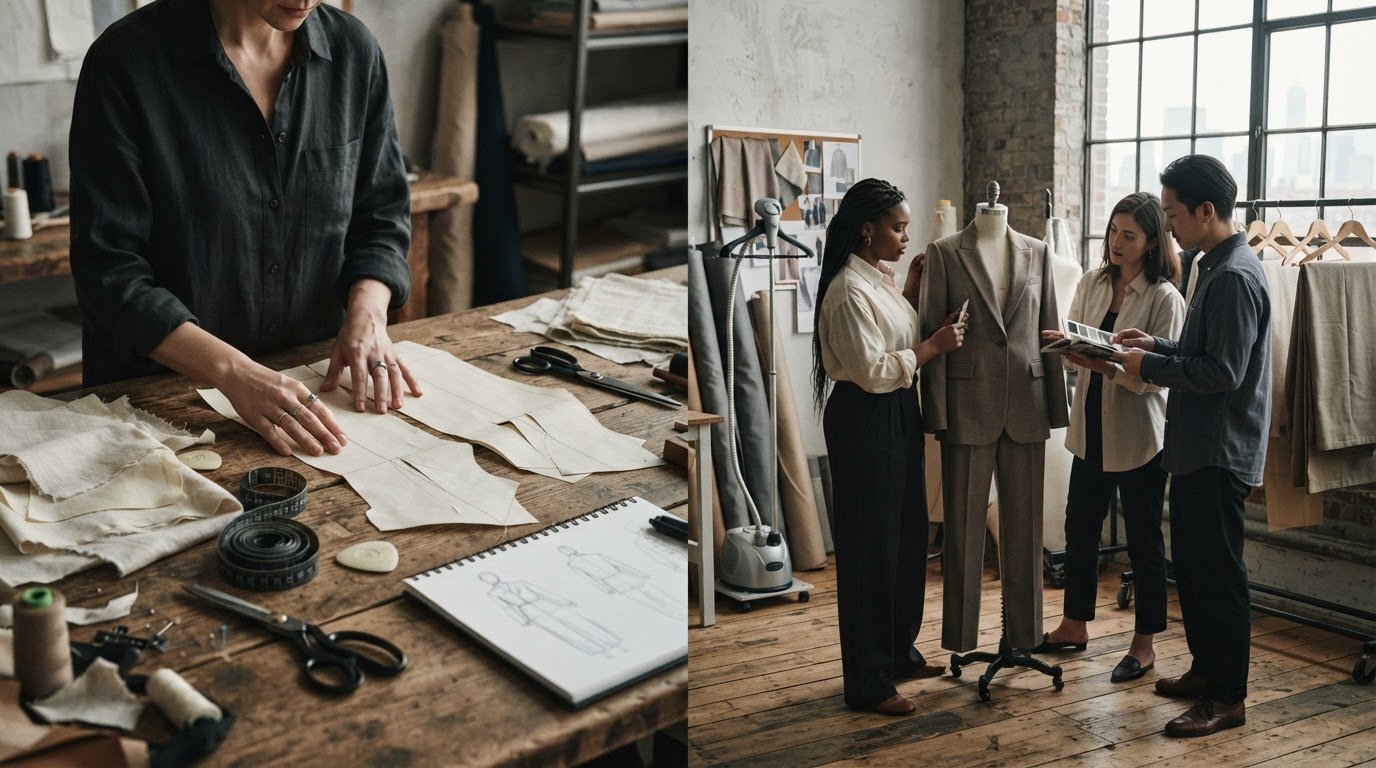
Fit is the most common reason for returns in the women's fashion industry. To avoid this, ensure your manufacturer provides comprehensive in-house pattern-making services. While many brands provide their own tech packs, a factory that understands the physical mechanics of a pattern can catch errors before they reach the cutting table. Fabric choice is equally vital for achieving a high-end feel. Whether you require the soft drape of Lyocell, the textured elegance of Crepe, or the structured durability of Oxford fabric, your partner must have the sourcing network to find them. Always verify if the manufacturer offers fabric testing for shrinkage and colour fastness. These technical steps ensure the garment looks as good after ten washes as it did on the rack.
Operational Vetting: Lead Times and Communication
In 2026, agility is your greatest asset. Standard industry lead times for boutique-scale production typically range from 15 to 20 days for bulk orders following sample approval. If a factory quotes significantly longer, they might be outsourcing your work to a third party, which increases the risk of quality drift. Modern factories use integrated communication tools to keep you updated on progress in real-time. This eliminates the "black box" of manufacturing. You should feel comfortable asking for updates at any point in the production journey. If you're ready to evaluate a potential partner, follow our professional guide to choosing a custom women's clothing manufacturer for a deeper dive into industry standards.
Building a brand is a joint venture that relies on reliable execution. If you want a partner that treats your designs with meticulous care, contact our production team today to begin your technical vetting process.
PowerSweet Fashion functions as the strategic engine for your creative vision. We've seen every challenge in the industry and have developed a streamlined system to handle them. As a specialized
boutique clothing manufacturer
, we empower boutique owners by offering low MOQ production that removes the traditional financial barriers to entry. This flexibility allows you to test new designs with minimal risk and reinvest your capital into customer acquisition. We don't just take orders; we build a stable production journey that supports your long-term growth. Our operational rhythm is built for the controlled urgency of the modern fashion cycle. We maintain a strict 10-day sample development cycle and a 20-day bulk production schedule. This responsiveness ensures you can capture viral trends while they're still relevant. Our end-to-end service is comprehensive. It covers everything from expert fabric sourcing and pattern making to final quality control services. We're proud of our transparency and invite you to visit our production facility to meet the people behind the machines. Seeing the physical reality of our manufacturing process helps bridge the gap between digital concepts and tangible quality.
Expertise in Women's Apparel
We've developed deep expertise in high-precision production for custom women's dresses, blouses, and tops. By leveraging high-quality materials, we elevate your brand's aesthetic and ensure your products stand out in a saturated market. Our location in Guangzhou provides us with unparalleled access to the world's most comprehensive textile and trim supply chains. This proximity allows us to source premium materials quickly and efficiently. It's a significant win for your boutique because it reduces lead times and provides access to innovations in fabric technology that haven't hit the mass market yet. We act as the safe pair of hands that ensures your creative vision is executed with meticulous care.
Getting Started: The Path to Your First Collection
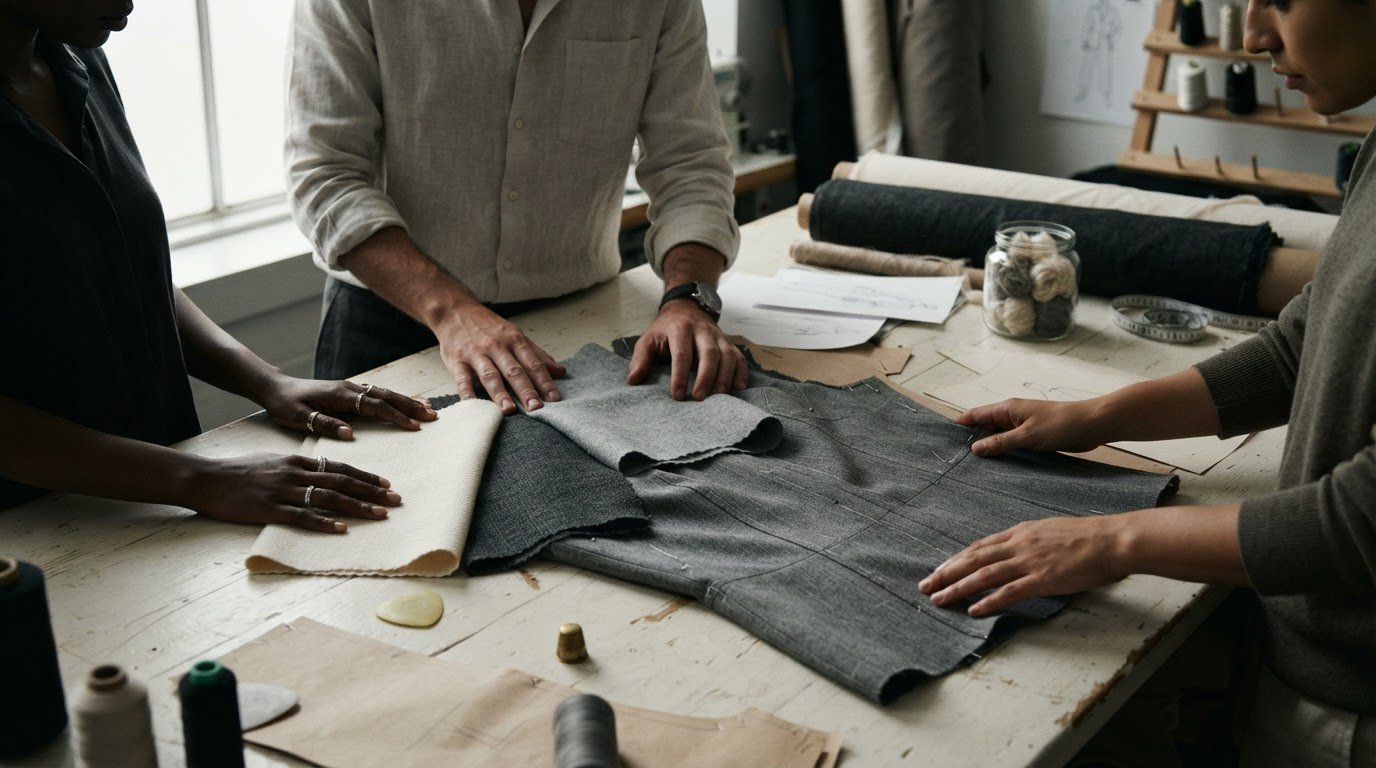
Starting your production journey is a methodical and transparent process. It begins when you submit your design sketches or tech packs to our team for a professional consultation. We then move into the sample development phase, where we create a physical prototype for your approval. Once the fit and finish meet your exact standards, we begin bulk production. We're here to support your brand as you scale from initial small batches to larger orders as your audience grows. We handle the logistics so you can handle the vision. Partner with PowerSweet Fashion to launch your custom collection today and secure a reliable future for your fashion brand.
Master Your Supply Chain for 2026 and Beyond
The transition from reselling wholesale inventory to launching a custom line is the most effective way to secure your brand's future. It's about taking ownership of your aesthetic and ensuring your products can't be found on a competitor's site. Success in today's market depends on finding a boutique clothing manufacturer that understands the balance between high-end quality and the need for agility.
We've built our systems to support this growth with low MOQ options and rapid execution. Speed is your advantage. Our 10-day sample turnaround and 15 to 20 day bulk production cycles provide the responsiveness you need to capture trends in real-time. As specialists in custom women's apparel, we manage the technical details of fabric sourcing and pattern making so you can focus on your vision.
Ready to move beyond the limitations of wholesale? Contact PowerSweet Fashion for a Custom Manufacturing Quote to start your production journey. We're here to turn your creative concepts into a scalable reality.
Frequently Asked Questions
What is the typical MOQ for a boutique clothing manufacturer?
Typical minimum order quantities for a specialized boutique clothing manufacturer in 2026 vary by garment category. For t-shirts, you can often find thresholds between 50 and 200 pieces, while activewear and hoodies generally range from 100 to 300 units. Jeans usually require higher volumes, often between 200 and 500 pieces. These lower limits allow emerging brands to test diverse collections without the heavy financial burden of mass-market production.
Can I start a clothing brand with no design experience?
You can definitely launch a brand without formal design training by utilizing a production partner's technical expertise. Most boutique manufacturers provide pattern-making and sample development services based on your basic sketches or reference garments. They act as your industrial consultants, translating your creative concepts into production-ready specifications while advising on construction methods and fabric suitability to ensure your final product meets retail standards.
How long does it take to produce a custom clothing sample?
The current industry benchmark for rapid prototyping is approximately 10 days for a single custom sample. This timeframe covers pattern drafting, material sourcing, and the actual assembly of the garment. Fast sample turnaround is critical for brands that need to approve designs quickly to capture social media trends or meet tight seasonal deadlines. Once you approve the prototype, bulk production typically follows a separate 20-day schedule.
What is the difference between a clothing vendor and a manufacturer?
A clothing vendor usually functions as a wholesaler that sells pre-made, existing inventory to multiple retailers. In contrast, a boutique clothing manufacturer creates custom garments from scratch specifically for your brand. While vendors offer speed for generic styles, a manufacturer provides exclusive designs, proprietary fits, and total control over fabric quality. This ownership of the design process is what builds long-term brand equity.
Is it cheaper to manufacture my own clothes or buy wholesale?
Wholesale often has a lower initial cost per unit because the development expenses are spread across thousands of generic items. However, manufacturing your own clothes often results in higher profit margins by eliminating the middleman's markup. Custom production also reduces the risk of dead stock by allowing you to create unique, high-demand pieces that justify a premium price point, ultimately making it a more sustainable financial model for growing labels.
What documents do I need to provide to a boutique manufacturer?
You should ideally provide a tech pack that includes technical sketches, a bill of materials, and size grading specifications. If you don't have a formal tech pack, many manufacturers can work with clear reference photos or physical samples to develop the necessary patterns. Providing detailed information about fabric weight, trim preferences, and label placement ensures the factory can execute your vision with high precision and minimal errors.
How do I ensure the quality of garments from an overseas factory?
Ensuring quality requires a multi-stage inspection protocol and transparent communication. A reliable boutique clothing manufacturer will conduct in-line inspections during the sewing process and a final 100% inspection before packing. You should also request a pre-production sample to verify fit and construction. Many modern factories now offer digital updates or video walkthroughs of the production floor to provide empirical proof of their quality control standards.
Can a boutique manufacturer help with fabric sourcing?
Most boutique manufacturers provide fabric sourcing as a core part of their end-to-end service. They leverage established relationships with textile mills to find specific materials like Lyocell, organic cotton, or high-end crepes. This expertise is invaluable because it ensures the chosen fabric is technically compatible with your design's construction. It also saves you the logistical challenge of managing multiple suppliers, allowing you to focus on marketing and sales.
Comments