
Private Label vs Custom Clothing: Which Model Fits Your Brand in 2026?

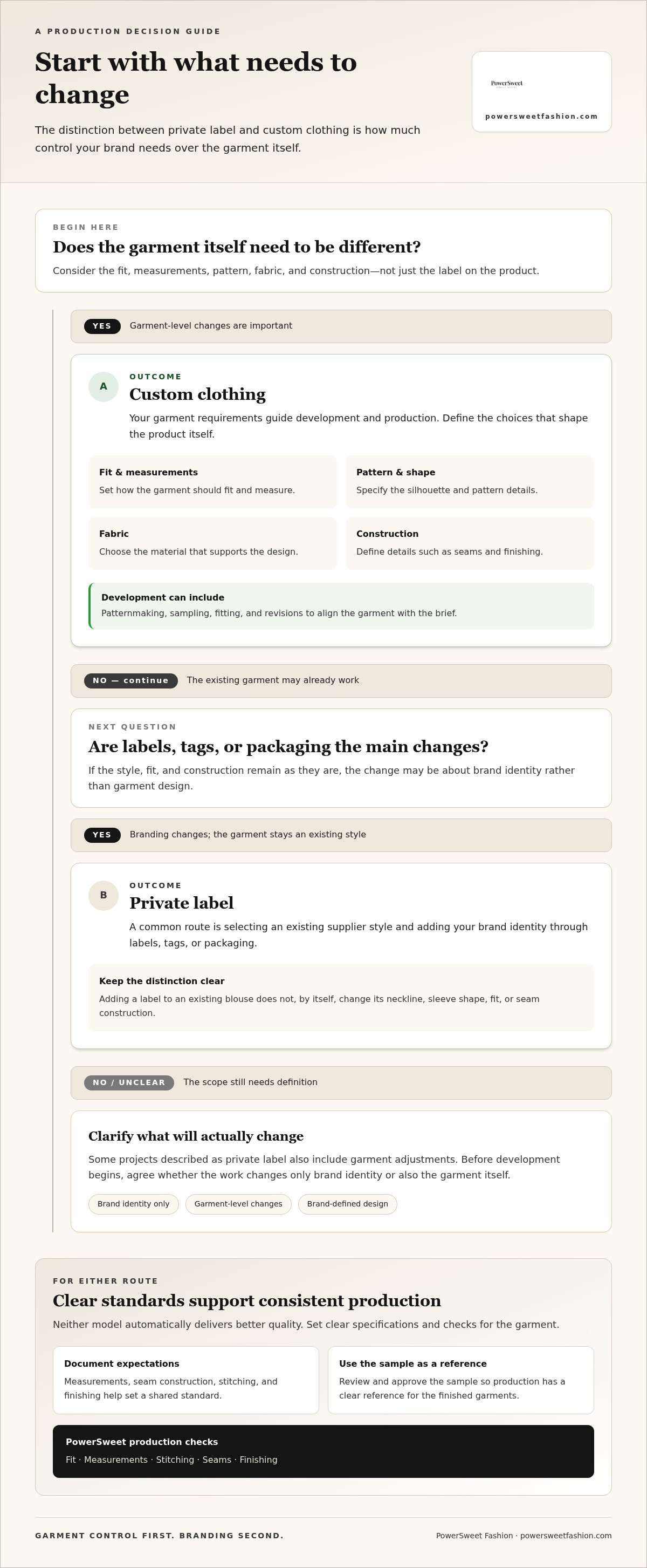
The option that gets a collection moving fastest may give your brand the least room to stand apart. With private label vs custom clothing, the key question isn’t just how quickly you can launch. It’s how much of the garment your brand needs to control. Private label uses existing designs with your label, while custom clothing develops a garment around your specifications. Both can make sense, but the right fit depends on your collection, identity, and production priorities.
If you’re weighing design freedom against a more ready-made route, start by identifying what needs to be distinctive about the garment itself. This guide explains how the two models differ, which decisions to make before production, and how sampling connects your design to finished garments. PowerSweet Fashion brings fabric and trim sourcing, patternmaking and grading, sampling and fitting, bulk production, and finishing into one process for custom women’s clothing. Samples have a 5-7-day turnaround, and bulk production takes 15-25 days. You’ll also learn how sample approval sets a clear reference for the production run, so you can choose a model with a practical path from concept to collection.
Key Takeaways
In the private label vs custom clothing decision, start with how much control your collection needs over the garment itself.
Separate garment design choices from brand touches such as labels, tags, and packaging. Branding alone doesn’t make a garment custom.
Choose based on the collection’s originality, fit requirements, and positioning, then define the specifications that matter before development begins.
Custom production turns brand-defined garment requirements into apparel through connected development and production steps.
Review and approve the sample as the reference point for the finished garments, aligning design decisions with production.
Table of Contents
Private Label vs Custom Clothing: What Does Each Model Actually Mean?
How Private Label and Custom Clothing Differ in Design and Production
Is Private Label Simpler Than Custom Clothing? Compare the Real Trade-Offs
How to Choose Between Private Label and Custom Clothing for Your Collection
How PowerSweet Turns Custom Clothing Designs Into Production-Ready Apparel
Private Label vs Custom Clothing: What Does Each Model Actually Mean?
The terms can blur together because “private label” describes how a garment is branded, while the work behind that garment can vary. In a common model, a brand selects an existing supplier style and adds its own branding. Custom clothing starts from the brand’s garment specifications, which guide development and production. The practical distinction isn’t simply whether your logo appears on the product. It’s how much control you have over the garment’s fit, construction, materials, and details.
What private label can mean in clothing
Private label often means choosing an existing garment and selling it under your brand. The starting point might be an available style, with branding added through labels, tags, or packaging. The term has broader uses across retail, as outlined in What is private label?, so clarify what the specific clothing process includes.
Branding changes don’t automatically change the garment. Adding a woven label to an existing blouse is different from revising its neckline, sleeve shape, fit, or seam construction. Some private-label projects focus on branding an existing style, while others include garment adjustments. Identify the agreed scope and specifications before development begins.
For example, a brand might select an existing skirt shape and apply its own label, or request changes to the waistband and length. Those projects involve different levels of garment development, even if both are described as private label. Before choosing the term, identify what will actually change: only the brand identity, or the garment itself?
What custom clothing production means
Custom clothing production uses a brand’s design direction and garment requirements as the basis for development. The brief may begin with sketches, reference images, an existing sample, or a more detailed specification. It doesn’t have to start with a finished technical pack. The important step is translating the concept into clear decisions that can be sampled and produced.
Those decisions can include the garment’s measurements and fit, pattern shape, fabric, and construction details. For a women’s blouse, that might mean defining the collar shape, sleeve volume, fabric weight, and how the garment should sit across the shoulders. Patternmaking turns design intent into garment components, while sampling and fitting help assess how those choices work together before production.
Use this distinction to frame the private label vs custom clothing decision:
Brand identity only: The garment remains an existing style while labels, tags, or packaging carry your brand.
Garment-level changes: Fit, measurements, fabric, pattern, or construction requirements shape the product itself.
Brand-defined design: Your specifications guide development from concept through sample and production.
The more your collection depends on a particular fit or construction, the more important it is to define those requirements clearly. Start by separating what makes the garment yours from what simply identifies your brand.
How Private Label and Custom Clothing Differ in Design and Production
The main production difference is where decisions begin. With private label, a brand usually selects an existing style and decides how to present it. With custom clothing, the brand’s garment requirements guide development. That affects the work needed before bulk production, but neither model automatically delivers better quality. Clear specifications and consistent checks matter in both.
Starting point: Private label typically starts with an available garment; custom production starts with the brand’s design direction and garment requirements.
Garment control: Private label may preserve the existing fit and construction, while custom development can define measurements, pattern, fabric, and construction details.
Development work: Private label may focus on selection and branding. Custom clothing may involve patternmaking, sampling, fitting, and revisions to align the garment with the brief.
Brand differentiation: Labels, tags, and packaging establish brand identity. Garment-level choices can also make a style distinct through its silhouette, fit, fabric, or construction.
Design control, fit, and construction
An existing style offers a defined starting point. A custom women’s garment can be developed around requested measurements and construction, such as a particular shoulder fit or sleeve shape. The more specific the desired result, the more important it is to document those choices so the sample and production team share the same reference.
Repeatability depends on clear standards, not the model’s name. Fit measurements, seam construction, stitching, and finishing requirements help set expectations for the garment. PowerSweet’s multi-step quality checks cover fit, measurements, stitching, seams, and finishing, connecting agreed specifications with production checks.
Branding, samples, and quality checks
Brand presentation and garment design are separate decisions. Labels, tags, and packaging can carry a brand identity without changing a garment’s pattern or fit. When deciding how to apply brand markers across clothing or accessories, comparing options like UV DTF vs iron-on labels can help determine the most suitable application for each material. A sample, by contrast, lets the team assess the garment itself. In custom development, sampling and fitting help reveal how measurements, fabric, and construction work together before bulk production.
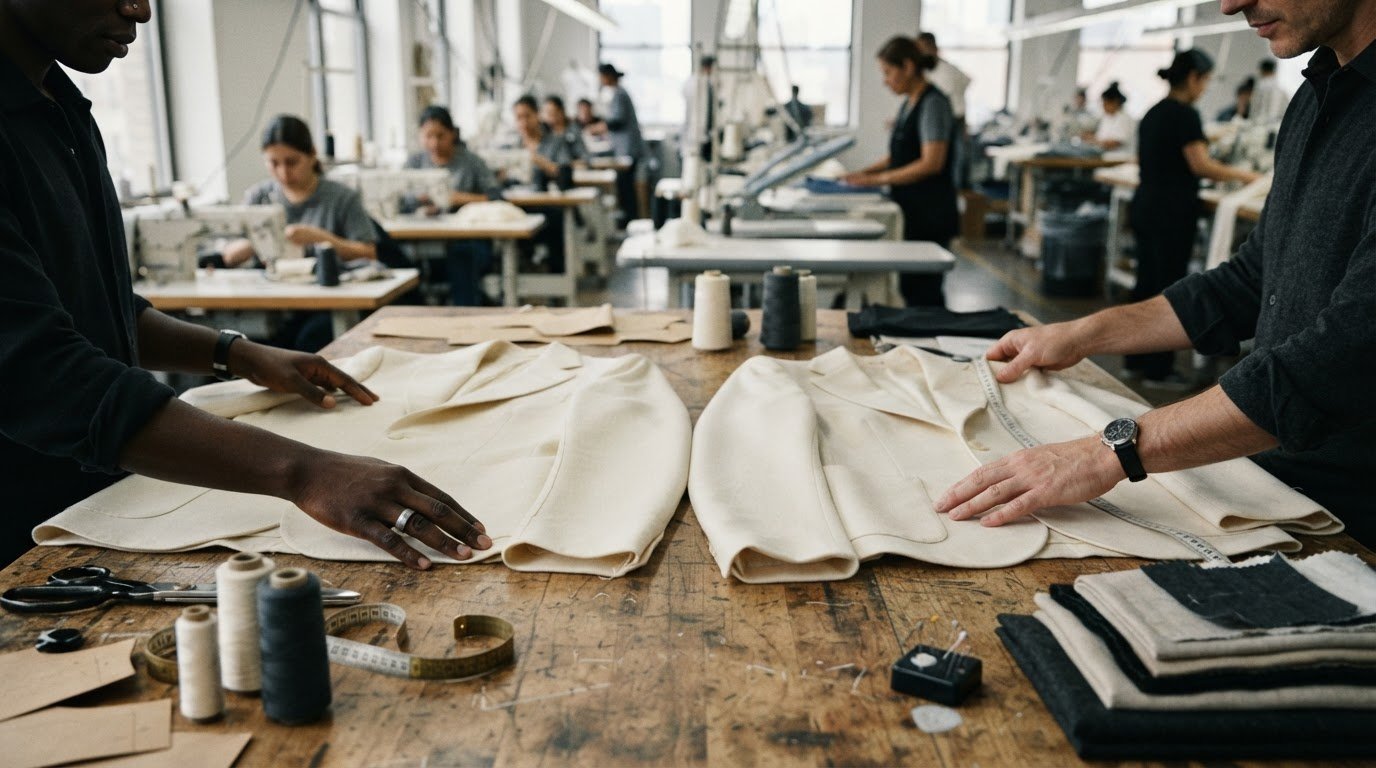
For example, a fitted blouse sample can be checked for shoulder fit, sleeve shape, seam execution, and finishing. Record specific adjustments and resolve them before the approved sample becomes the reference for the production run. PowerSweet’s sample turnaround is 5-7 days; bulk production takes 15-25 days.
Whether you choose an existing style or brand-defined specifications, establish quality criteria around the actual garment and agreed details. For a collection that needs garment-level control, custom women’s clothing production connects sourcing, patternmaking, sampling, fitting, and production in one workflow.
Is Private Label Simpler Than Custom Clothing? Compare the Real Trade-Offs
Private label can reduce some development decisions, but it isn’t automatically faster, cheaper, or risk-free. Custom production adds specification and development work, yet that work gives a brand more influence over the garment. The practical trade-off depends on the collection: how distinctive the design needs to be, how much fit control matters, and how much coordination the team can manage.
For private label vs custom clothing, compare the work involved rather than assuming one route is simple and the other complicated. With an existing style, your team still needs to align on branding, materials, fit, and any agreed adjustments. With custom production, design decisions need to be communicated and developed, but the brand can define more of the product’s details.
Where private label can reduce development work
Selecting an existing style can limit the need to develop a garment pattern and construction from the ground up. That may be useful when the collection’s priority is to choose a suitable garment and apply a clear brand identity—an approach frequently utilized when working with custom apparel partners like A1 Promotions Ltd.. The remaining work still needs alignment: define the branding, materials, fit, and any garment changes included in the project.
That doesn’t make private label a guaranteed shortcut. Fit or material changes can introduce decisions and coordination. Cost is also shaped by project details, including sourcing, development, requested modifications, and production requirements. Without a defined scope, a quick comparison based only on the model’s label can miss important work.
Where custom production can add control
Custom production gives a brand a path to build around its own design and garment specifications. That can support a more distinctive offer when the silhouette, fit, fabric, or construction is central to the collection. The added control comes with responsibility: communicate the design direction clearly, resolve key details during development, and align the sample and production requirements.
Specification work can include measurements, pattern requirements, material choices, and construction details. A sketch or reference can be a starting point, but the production team needs shared, usable information to turn the concept into a garment. Sampling and fitting help reveal decisions that need refinement before bulk production, rather than leaving them open to interpretation during manufacturing.
Plan around the project, not a general assumption about speed or order size. At PowerSweet, MOQs start as low as 50 pieces per style and color, with size variations. Samples have a 5-7-day turnaround, and bulk production takes 15-25 days. These figures describe PowerSweet’s custom-production process, not a universal comparison between private label and custom.
Development: An existing style may reduce garment-development decisions, while custom design requires clearer specifications.
Differentiation: Branding can identify the product; garment-level design choices can shape what makes it distinct.
Coordination: Either route needs agreement on scope, materials, fit, and production expectations.
Use these trade-offs to decide how much garment control your collection needs. For more detail on planning custom production, explore the professional custom clothing production guide.
How to Choose Between Private Label and Custom Clothing for Your Collection
Choose the production model by working backward from the product your collection needs to deliver. The right answer isn’t universal. A label focused on a recognizable brand identity may prioritize existing styles, while a collection built around a specific fit or construction may need garment-level development. Use this sequence to turn that distinction into a practical decision.
Assess design originality. Ask whether an existing style can express the collection, or whether its silhouette, fabric, or construction needs to be brand-defined. If the garment itself is central to what makes the offer distinctive, custom development may be a better fit.
Define fit requirements. Identify what needs to be consistent across the garment, such as measurements, ease, or a particular shape. If fit is a key part of the customer experience, consider how much control an existing style allows versus a pattern developed around your specifications.
Connect the choice to brand positioning. Decide whether the collection’s identity comes mainly from branding and selection, or from original garment details. This helps clarify whether you need an existing style with your branding or production guided by your own garment requirements.
Map the development input. Consider how much direction your team can provide and how much development the garment needs. Clear references and decisions help keep sampling and production aligned with the intended result.
Use the collection brief to select a model
An existing-style approach can suit a collection where garment originality isn’t the main priority and the selected product already supports the intended fit and positioning. Custom development is worth considering when fit, construction, or specific garment details carry the design concept. Review each style in the collection against those priorities rather than forcing every product into one model. The comparison should reflect what the garments need to do for your brand.
Prepare the information needed to move forward
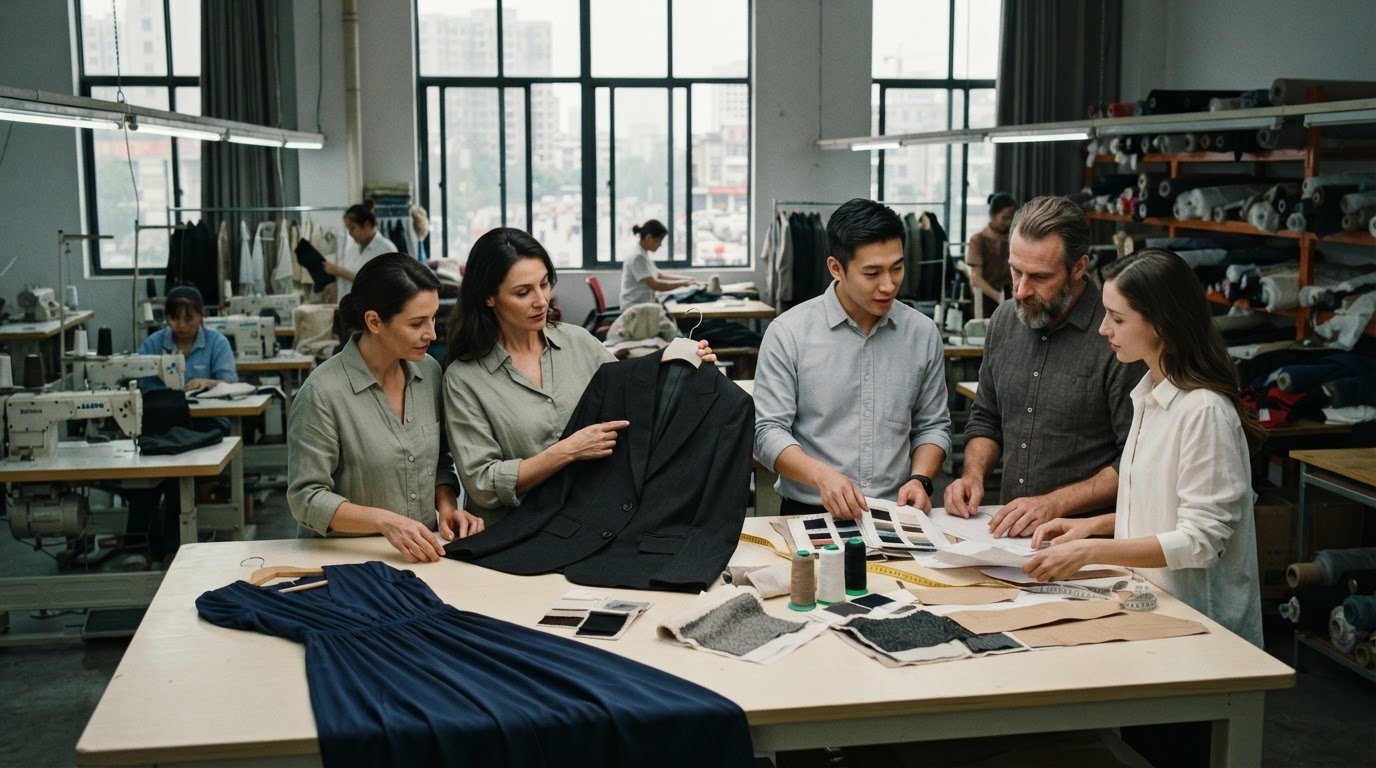
Organize the available inputs before development begins. A complete tech pack can help communicate construction, measurements, and details, but it isn’t the only useful starting point. Design references, sketches, an existing pattern or sample, fabric information, and notes on desired details can all help explain the brief. A pattern, tech pack, and fabric information support production planning and a project-specific quote. If you don’t have a pattern, PowerSweet can create one as part of custom women’s clothing production.
Design references: Sketches, images, or samples that show the intended look.
Pattern or tech pack: Existing technical information, if available, plus key measurements and construction details.
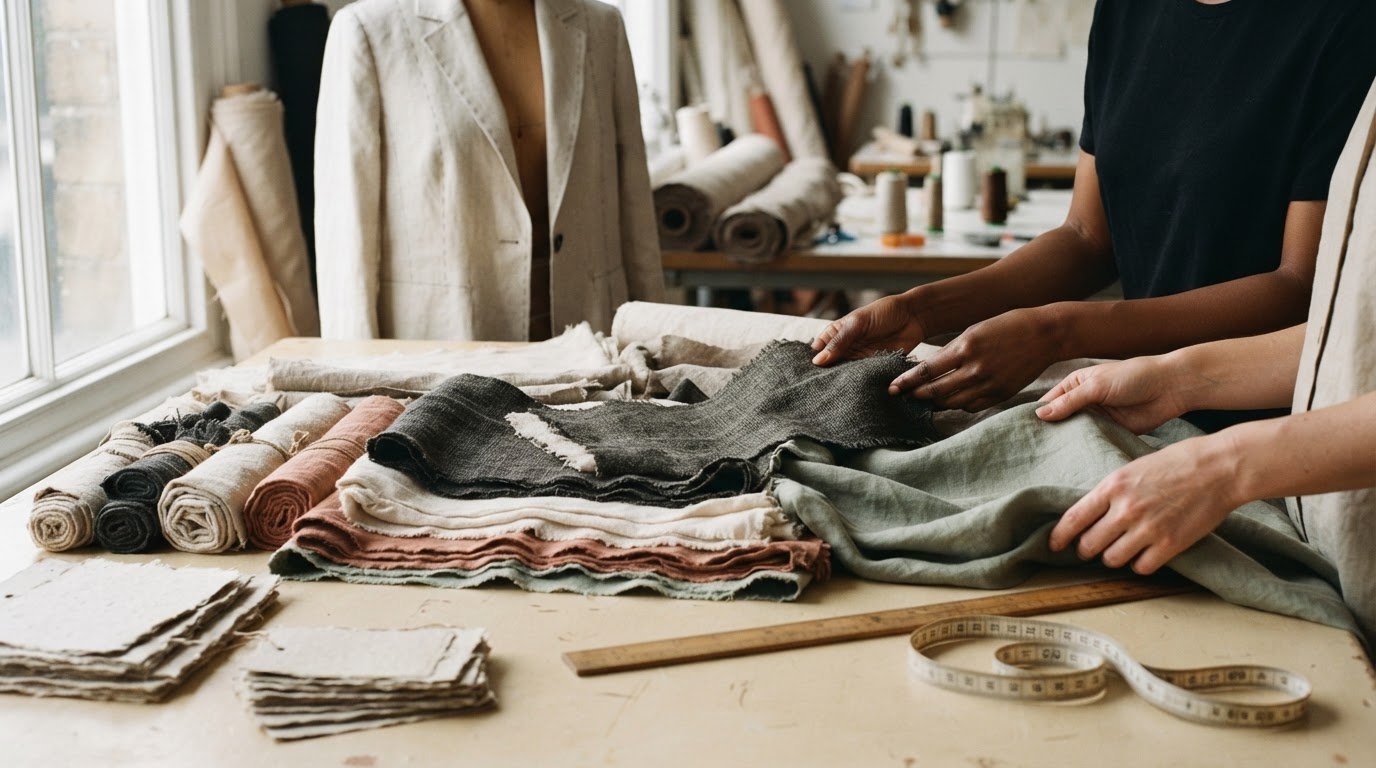
Fabric and details: Preferred material and any garment features that affect the finished result.
For the broader sequence from development through production, explore this end-to-end clothing production guidance. If you’re preparing a prototype, this sample development and pattern making guidance can help organize your next steps. To move your own women’s clothing concept into development, start planning custom garment production.
How PowerSweet Turns Custom Clothing Designs Into Production-Ready Apparel
For brands that need control over garment-level specifications, PowerSweet’s custom women’s clothing production connects development decisions to bulk manufacturing. Fabric and trim sourcing, patternmaking and grading, sampling and fitting, bulk production, finishing, and branding components such as labels, tags, and packaging fit into one workflow. Each step helps translate the brand’s requirements into a garment the production team can work from.
From pattern and sample to approved production
Start with the garment information you have. A pattern, tech pack, and fabric details give the team a basis for preparing a project quote. If you don’t have a pattern, PowerSweet can create one before quoting and sampling. Design references and clear notes on fit, measurements, and construction also help explain how the finished garment should look.
Once development is ready for sampling, the sample turnaround is 5-7 days. Treat this as a decision point, not just a preview. Review the garment against the intended specifications, including fit, materials, and construction, then identify any required changes. Approval establishes the production reference. PowerSweet’s promise is that the sample you approve is the production you receive. Clear sign-off helps align the team before bulk work begins.
Bulk production, quality control, and next steps
After sample approval, bulk production takes 15-25 days. The MOQ starts as low as 50 pieces per style and color, with size variations. On-time delivery is non-negotiable, and direct access to the production team supports clear communication as the order moves through manufacturing.
Quality checks remain tied to the garment requirements. PowerSweet’s multi-step QC checks fit, measurements, stitching, seams, and finishing, giving the team concrete points to assess during production. The workflow also brings finishing and branding components together, so garment execution and presentation details can be coordinated as part of the same order.
PowerSweet has operated since 2008 with a team of 200+ members. Its stated credentials include a SMETA 6.1 audit, BSCI monitoring, and Global Recycled Standard certification. These provide context about the manufacturer’s operating standards; the garment’s own requirements still guide development, sampling, and quality checks.
Compared with a private-label route based on an existing style, custom production gives your brand a process for developing garments around its specifications. To begin, organize your pattern or design references, tech pack, fabric information, and desired details. Then discuss your custom women’s clothing production project with PowerSweet and take the next step from concept toward an approved sample and finished garments.
Turn Your Collection Direction Into a Clear Production Brief
Your next step is to turn your preferred production model into a brief the team can act on. Before development starts, write down what must remain true about each garment, from fit and fabric to construction details and brand presentation. Mark which decisions are essential and which can be adjusted. This gives your production team a shared reference and helps keep creative intent connected to execution.
The right choice in private label vs custom clothing is the one that supports the collection you’re building, not a rule that applies to every brand. If your direction points toward custom garments, bring your references and requirements together and start a focused conversation about the project.
Discuss your custom women’s clothing project with PowerSweet and take the next step toward bringing your collection to life.
Frequently Asked Questions
Is private label the same as white label?
No, the terms can describe different arrangements, though apparel suppliers don’t always use them consistently. Private label commonly means selling a product under your brand, while white label often refers to a more standardized product sold by multiple brands. For a useful private label vs custom clothing comparison, focus on the actual work: identify what changes in the garment, materials, and branding rather than relying on the label alone.
Does a private-label manufacturer own the brand name on the clothing?
No, producing or relabeling a garment doesn’t by itself establish who owns the brand name. Ownership, permitted label use, and intellectual-property rights depend on the applicable agreements and laws. Before production, document who owns the brand assets, who may use them, and what permissions apply. Because these questions can have legal consequences, get appropriate professional advice and keep the relevant approvals and agreements organized.
Can private-label clothing be exclusive to one fashion brand?
It can be, but the term private label alone doesn’t promise exclusivity. The arrangement depends on the style or design and the written terms covering its use. Distinguish an existing garment carrying your branding from a design developed specifically for your brand. If exclusivity matters, define exactly what is exclusive, how it may be used, and for how long in the agreement before production begins.
What do OEM and ODM mean in clothing manufacturing?
OEM generally refers to production based on a buyer’s specifications, while ODM generally describes a manufacturer-developed design that a buyer may adapt or brand. Usage varies between companies, so the abbreviations don’t fully define the work. Clarify who develops the garment, who sets or controls its specifications, and who reviews and approves the final sample. Those practical details show how the arrangement will operate.
Can a clothing manufacturer work from a sketch instead of a finished pattern?
Yes, a sketch can start the development conversation, but it usually doesn’t specify every measurement or construction detail needed for consistent production. The brief may also need fabric information, fit decisions, and sample feedback. If you don’t have a pattern, PowerSweet can create one. Quote preparation uses the pattern, tech pack, and fabric information, or PowerSweet can create a pattern before quoting and sampling when needed.
Why approve a garment sample before bulk production?
Approving a sample gives your team a physical reference for judging whether the design brief has translated into the intended garment. Use the review to note specific changes, such as adjusting a measurement or clarifying a construction detail, rather than relying on general feedback like “make it fit better.” PowerSweet’s production promise is that the sample you approve is the production you receive, making clear review and approval an important checkpoint.
What information should a fashion brand organize before discussing custom production?
Gather the pattern, tech pack, and fabric information when available, then add design references and notes on the garment requirements. Label files clearly and make sure measurements and material choices match across documents. This makes the intended design easier to interpret and supports quote preparation. If you don’t have a pattern, PowerSweet can create one; keeping the approved information together helps guide sample review and production decisions.
Comments