
How to Find a Reliable Women's Clothing Manufacturer in China

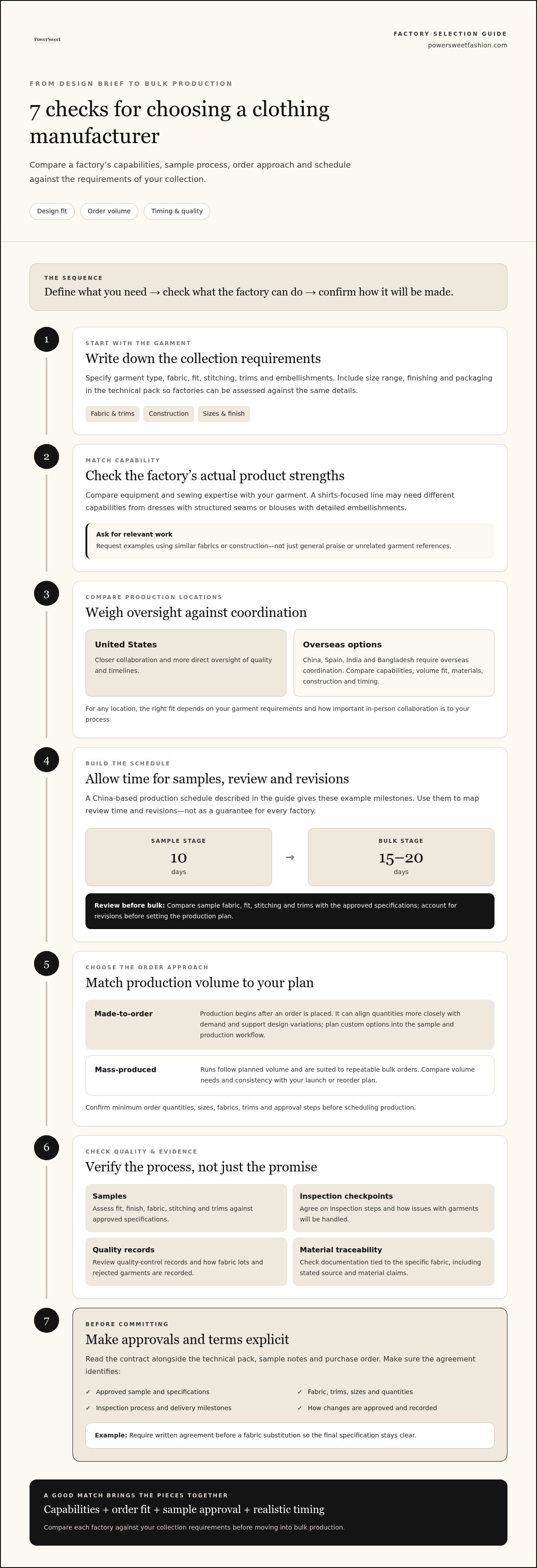
Made-to-order production is a good fit only when a manufacturer can meet your design, order-volume, and delivery requirements. A Reliable Women's Clothing Manufacturer should explain its capabilities clearly and show how sampling, custom details, and bulk production work together.
Choosing a factory means more than finding someone who can sew a garment. Look for a production partner with minimum order quantities that suit your launch or reorder plan, a sample process that lets you assess fit and finish, and a clear production schedule.
This guide shows you how to compare manufacturers in China using practical criteria, from pattern making and fabric sourcing to quality control and made-to-order flexibility. You’ll also learn what to weigh when comparing production locations, how to spot a mismatch between a factory’s strengths and your needs, and how to decide which option best supports your next collection.
Table of Contents
Production capabilities, order volumes, and timelines
Domestic and overseas manufacturers differ in communication, production oversight, and how work moves between teams. Compare options by garment capabilities, order volume, sampling, and delivery planning, whether you’re considering a manufacturer in the United States, China, Spain, India, or Bangladesh.
Overseas Manufacturing
Overseas manufacturing means coordinating production across distance and time zones. China-based factories, for example, may handle sampling and bulk production in separate stages, while a domestic US factory may allow closer communication and more direct oversight. The right fit depends on how important in-person collaboration is and whether the factory has the apparel capabilities your collection requires.
Compare the actual products a factory can make. A shirts-focused line may need different equipment and sewing expertise from dresses with structured seams or embellished blouses. Request a sample that reflects the garment’s fabric, fit, stitching, and trims, then compare it against your approved specifications. One China-based production schedule offers samples in 10 days and bulk production in 15-20 days; use such milestones to map review time and revisions.
Assess ethical and sustainable production through practical evidence. Review a factory’s labor policies, material traceability, waste practices, and quality-control records. For example, check how fabric lots are recorded and rejected garments handled. This helps you determine whether stated practices are reflected in production processes.
Made-to-Order Production
Made-to-order production begins after a customer or brand places an order, rather than relying entirely on finished inventory made in advance. It can align quantities more closely with demand and support design variations, but each custom option must be planned into the sample and production workflow. Specify sizes, fabric, trims, and approval steps before scheduling production.
For women’s clothing examples such as shirts, dresses, and skirts, prices depend on fabric, construction, embellishments, and order quantity, and are given after a quote request. Choose the manufacturer whose product capabilities, order-volume approach, sample process, and timeline match the collection’s requirements.
Choosing a clothing manufacturer for a brand
Choose a factory by matching its production process to your designs, order plan, and supply-chain needs. A written comparison helps you assess communication, sample approvals, material sourcing, and contract terms before committing.
Reviews and References
Useful reviews and references describe relevant garment types, communication, and how production issues were handled. Compare these details with your needs, then request examples involving similar fabrics or construction. A reference for basic shirts may reveal little about a factory’s ability to produce lined dresses or detailed embellishments.
Use a consistent review process instead of relying on ratings alone. Check whether feedback covers completed apparel orders, not just general customer service. Compare references with your technical pack, including fabric, size range, finishing, and packaging. Ask how sample revisions or inspection issues were handled. Specific accounts of problem-solving tell you more than broad praise.
Match references to your garment category and production method.
Look for clear examples of sample revisions and quality follow-up.
Compare public feedback with direct references and work samples.
Record unanswered questions before selecting a factory.
For material claims, review documentation tied to the specific fabric. A supplier’s statement about recycled or organic content should identify the material and its source. Compare those records with purchase documents and product specifications to keep sustainability claims traceable through the supply chain.
Manufacturing Contract Risks
Contract risks include unclear specifications, changing delivery expectations, undocumented approvals, and disagreements over rejected garments. Each can affect what the factory produces or how both parties handle a defect. Read the contract alongside the technical pack, sample notes, and purchase order, rather than treating it as a separate document.
Check that the agreement identifies the approved sample, fabric and trim details, size specifications, quantities, inspection process, and delivery milestones. It should explain how changes are approved and recorded. For example, require written agreement before a fabric substitution, rather than relying on a message that leaves the final specification unclear.
Before signing, map each production stage to a clear decision point: sample approval, start of bulk production, inspection, and shipment release. Confirm who can approve changes for your brand, and keep the latest signed specification with the order. This document trail helps prevent outdated artwork, labels, or size charts from reaching production.
Compare the factory’s workflow with your launch calendar and reorder plan. A brand preparing a small first run may prioritize flexible quantities and close collaboration during sampling. A label planning repeat orders may value consistent materials, documented quality checks, and reliable handoffs. Choose based on the needs of your collection, not a generic reputation score.
To connect written specifications with garment inspections, use quality-control planning as part of your factory selection process.
Custom designs and embellishments
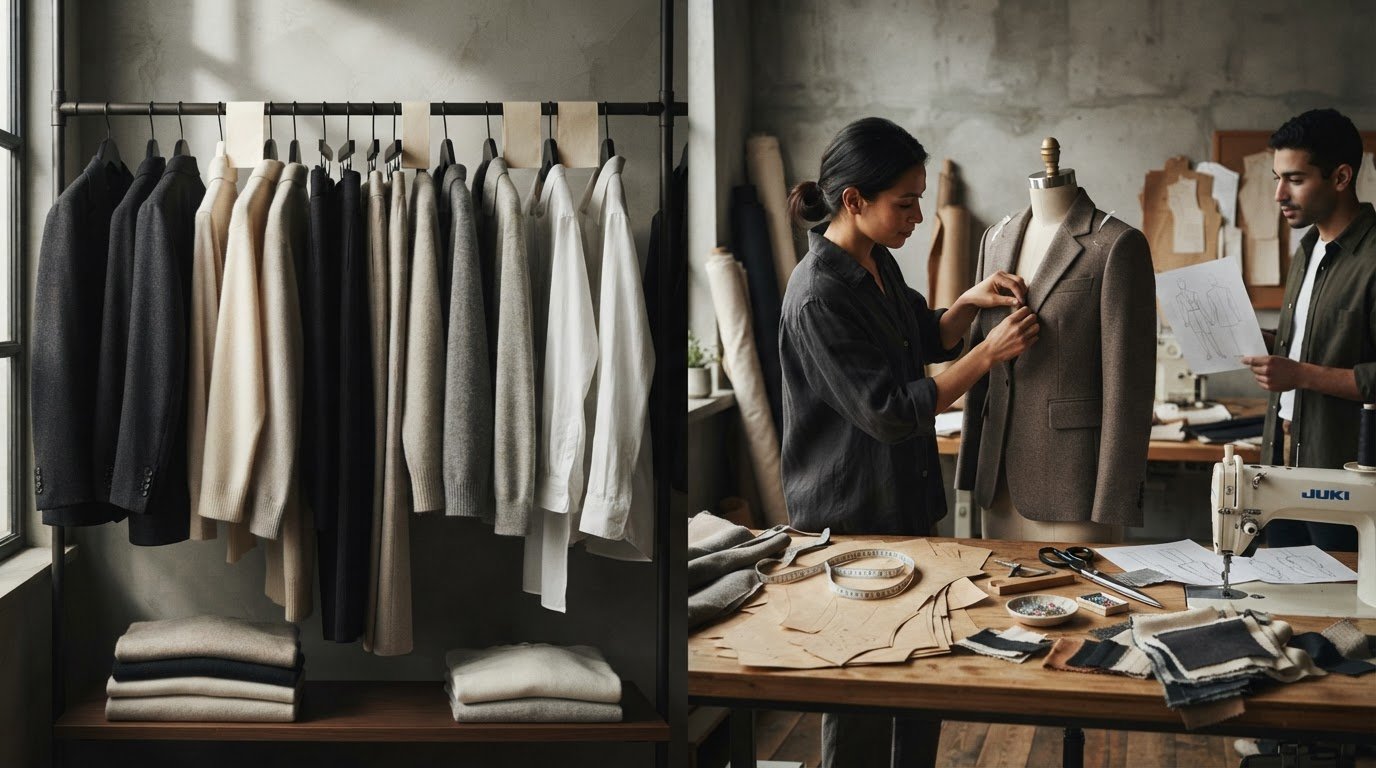
A custom design becomes a garment through clear specifications, material selection, and sample approval. For a summer dress collection, document each style’s silhouette, fabric, color, closures, stitching, and embellishment placement before production begins.
Start with a technical pack that gives the pattern maker and sewing team clear instructions. Include front and back sketches, construction details, a measurement chart, seam finishes, and trim references. For example, “embroidered flowers at the neckline” leaves room for interpretation. A placement diagram and embroidery sample define the intended result.
Specify Fabrics and Construction
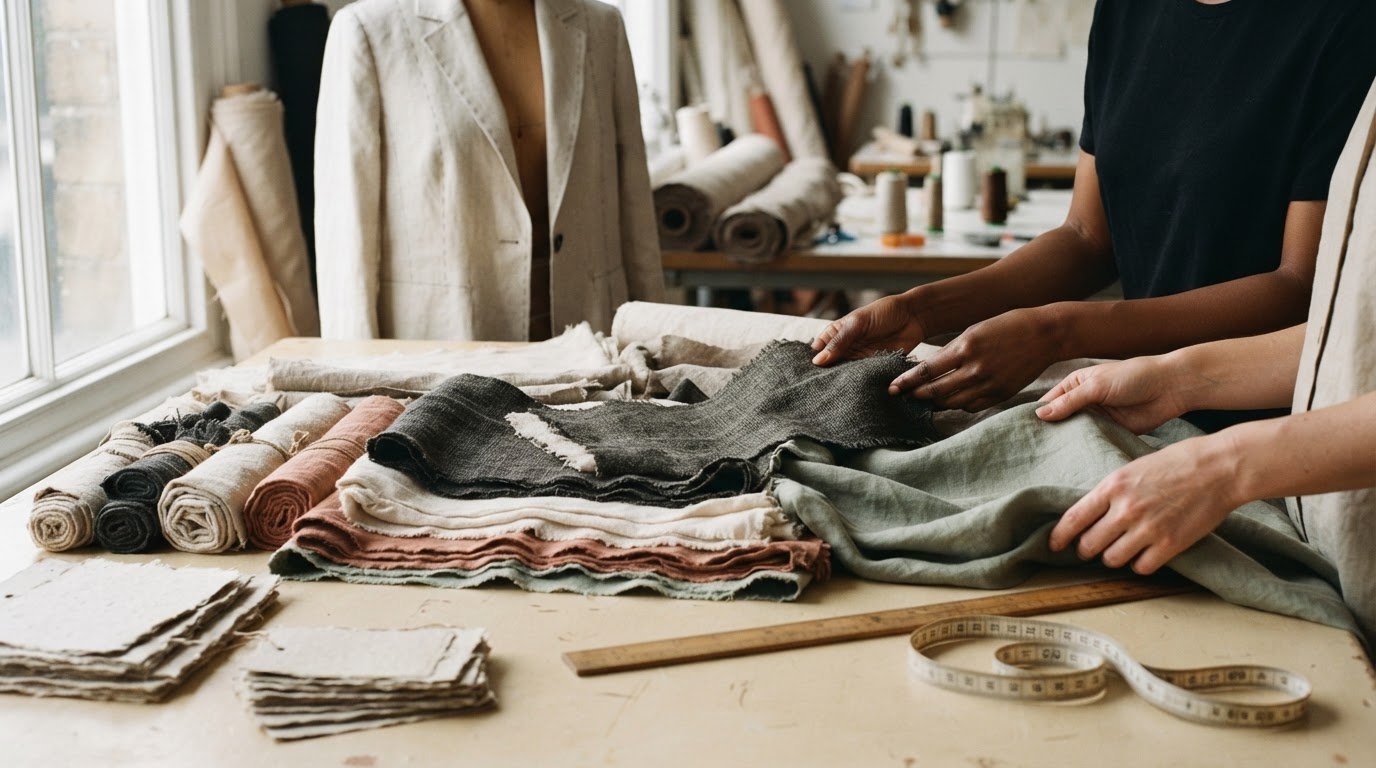
Fabric affects drape, fit, opacity, and how a garment handles washing. Specify the preferred fiber, weight, weave, finish, and color reference, then identify acceptable alternatives. A lightweight woven fabric may suit a summer shirt, while a stretch knit needs different pattern allowances and seam construction. Request swatches and approve the material against the design before sampling.
Specify custom details individually. Describe whether a dress uses buttons, appliqué, embroidery, sequins, beads, lace, or contrast stitching, and show each detail’s location, size, color, and attachment method on the garment drawing. A beaded bodice, for instance, needs a sample that tests placement and handling, not just a photograph of loose beads. Record approved trims to avoid unexpected substitutions.
Review the Sample Before Bulk Production
Use the first sample to assess the design as a physical garment. Compare its measurements with the chart, inspect seam alignment, and check fabric hand-feel, drape, closures, and embellishment security. Try it on the intended fit model or dress form, then write specific revision notes. “Shorten the sleeve” is less useful than a measurement and reference point.
Keep design decisions in one current specification file. Include approved fabric swatches, color references, artwork, label placement, and notes from each sample review. If a supplier proposes a substitute fabric, compare its weight, stretch, surface, and color before approval. A substitute that looks similar on screen can change how a skirt hangs or embroidery sits.
Custom production works best when you prioritize design choices. Identify the features that define the style, such as a gathered sleeve or embroidered collar, and those that can use standard materials. This helps the manufacturer plan pattern making, sourcing, and construction around the details that matter most to your collection.
Send drawings and measurements alongside the written specifications.
Approve fabric and trim samples against the intended garment.
Record sample revisions and final decisions in one file.
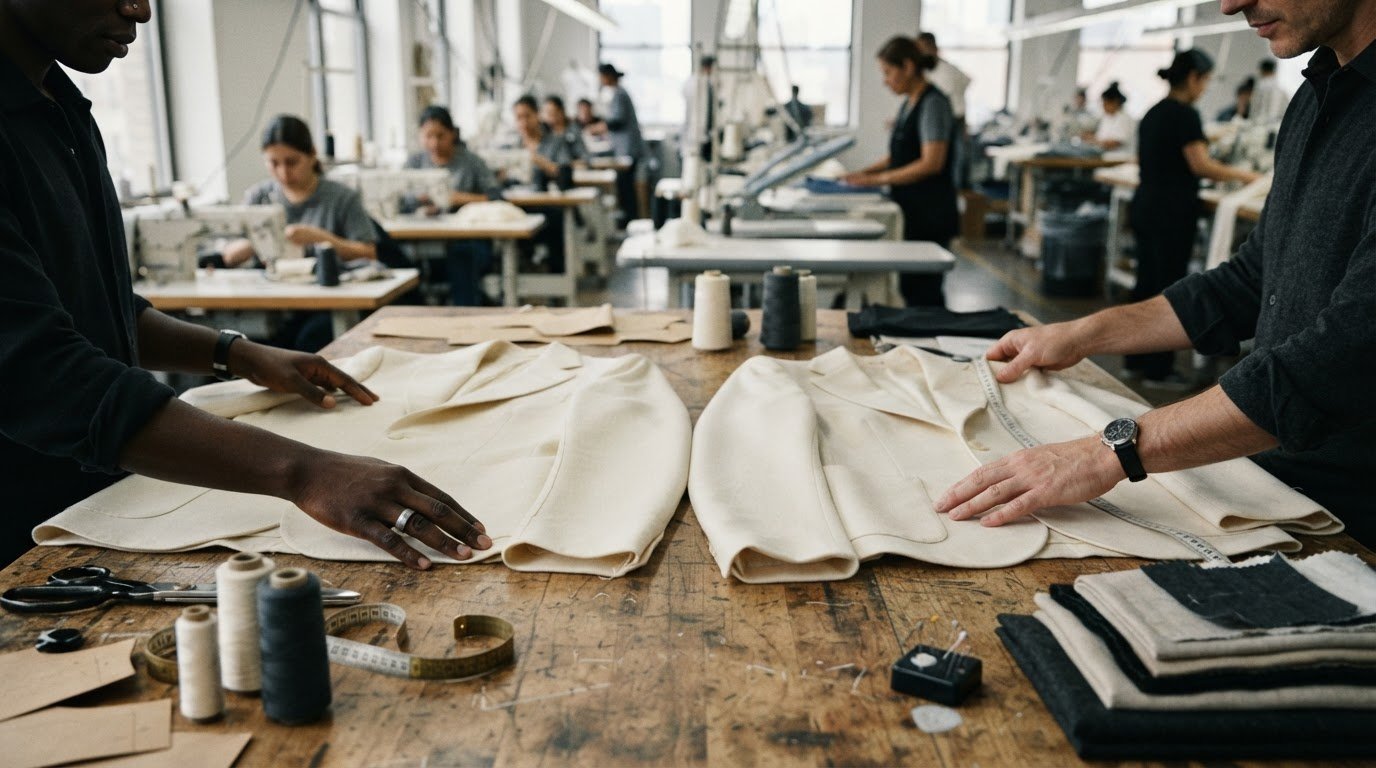
Made-to-order women’s clothing manufacturers
Made-to-order production starts with a confirmed order, followed by planning for the garment’s materials and construction. For a US brand testing a specialty cotton top, this approach ties production quantities more closely to its order plan.
What Made-to-Order Production Involves
Unlike mass production, made-to-order work is organized around specific orders rather than a planned run of finished stock. The factory uses an approved design, fabric, size specifications, and quantity plan to schedule each garment. A brand might offer one shirt in several fabrics, for example, but each option must fit the production plan.
Production still requires preparation. Pattern making, material sourcing, sample review, and sewing all need decisions before the order moves through the factory. If a cotton dress has a custom sleeve or special trim, include those details in the specification. Late changes can affect material planning and disrupt the agreed workflow.
Compare the Production Model With Your Order Plan
Made-to-order can suit brands that want to align production with customer demand or test a style before planning larger runs. Mass production, by contrast, schedules a larger quantity of the same design for repeatable construction. A brand launching a specialty blouse can compare the models by considering demand, fabric access, customization, and replenishment needs.
Ask how the manufacturer handles order changes from approval through production. Confirm, for example, how a revised size breakdown affects cutting or how a fabric substitution changes the approved garment. A clear process identifies the current specification, who approves changes, and how they are recorded, keeping the production team aligned on the design version.
Share the expected garment types, fabrics, sizes, and order quantities.
Separate fixed design details from options such as color or trim.
Map sample approval and material readiness to the production schedule.
Record how revised quantities or specifications are handled.
Review the factory’s actual process, not just its use of the term “made-to-order.” Ask how it moves a garment from approved sample to cutting and sewing, and how it organizes different styles in one collection. A cotton shirt and a lined dress, for example, may need different materials and production steps. Choose a setup that fits your order pattern, customization needs, and repeat-run plans.
How can I verify a women's clothing manufacturer's quality and certifications?
Assess quality using garment samples, written inspection steps, production records, and certification documents. A certificate alone doesn’t show how a factory checks a specific dress or shirt. Compare documentation with the production site, product category, and processes used for your order before treating it as relevant evidence.
Begin with the sample. Compare its measurements, seams, closures, lining, labels, and finishing with your approved specification. For a shirt, check sleeve lengths against the size chart and button spacing for consistency. For a lined dress, inspect how the lining attaches and whether seams lie flat. Record differences, then review the corrected sample before bulk production.
Next, ask how inspection works at each production stage. A useful quality plan specifies checks during fabric preparation, sewing, finishing, and packing. For example, the team can compare garment measurements with the approved chart and inspect stitching against a defined standard. Ask how defects are recorded, separated, corrected, and reviewed before the order moves forward.
Compare the sample with the latest approved technical specifications.
Review inspection records for the relevant garment and production stage.
Check whether defect reporting includes corrective action and follow-up.
Confirm finished garments match approved labels, trims, and packaging.
For certifications, inspect the document rather than relying on a logo or verbal claim. Match the certificate holder’s legal name to the factory entity and the named site to the facility producing your garments. Read the scope to see which activities, materials, or products it covers. Check the issuer, validity dates, and stated exclusions. A document covering another site or process may not support the claim you’re assessing.
Connect each document to a specific production question. If a supplier says fabric meets a standard, match the fabric description and supplier records to the material in your order. If a factory presents a management certificate, check whether its scope covers the production site and activity involved. Keep copies with the approved specification, sample notes, and inspection records to maintain clear order traceability.
Use a simple sequence: review the sample, examine the inspection process, then match certificates to the factory and product. This separates garment performance from process documentation and helps identify gaps before production, such as an unrecorded measurement check or a certificate scope that doesn’t match the work.
For production supported by documented garment checks, explore quality-control services as part of your evaluation.
PowerSweet Fashion: Custom Women's Clothing Production
PowerSweet Fashion supports brands with custom women’s clothing production, from sample development through bulk manufacturing. Turn to the team for fabric sourcing, garment development, and quality checks as your designs move toward production.
Samples are ready in 10 days, and bulk production takes 15-20 days. Low minimum order quantities can suit brands developing a new style or planning a smaller initial run. Share your design specifications, fabric preferences, and order requirements to start a focused production discussion.
To move your women’s clothing designs toward production, contact PowerSweet Fashion.
Turn Your Design Into a Production Plan
Turn your collection concept into a brief the manufacturing team can use. Define the styles, materials, target quantities, and design priorities you want to develop. This gives you a practical starting point for discussing production and identifying decisions that still need to be made.
Choosing a reliable women's clothing manufacturer means finding a working fit between your product requirements and the factory’s process. PowerSweet Fashion offers custom women’s clothing production, sample development, and fabric sourcing to help brands move from concept toward finished garments.
Bring your design details and production goals into the conversation. Contact PowerSweet Fashion to discuss your project and take the next step toward developing your collection.
Frequently Asked Questions
What makes a women's clothing manufacturer reliable?
A reliable women's clothing manufacturer follows approved specifications, communicates production changes clearly, and records quality checks. Compare a finished garment with the approved sample, then review measurement and inspection records for that style. Assess how the factory documents corrections when a check finds a problem. Consistent records make it easier to track decisions across sampling, production, and repeat orders.
What are the minimum order quantities for women's clothing manufacturers?
Minimum order quantities vary by manufacturer, style, fabric, and production setup. A custom print or specially dyed fabric may require a different commitment than a garment using readily available material. Check whether the factory sets its minimum per style, color, or total order, and how it handles size breakdowns. PowerSweet Fashion offers low minimum order quantities, which can suit brands planning smaller production runs.
What are typical prices and lead times for women's apparel manufacturing?
Prices depend on order volume, fabric complexity, and garment construction, and are provided after a quote request. For an accurate quote, PowerSweet Fashion uses the pattern, tech pack, and fabric; pattern making is available when a brand needs a pattern developed. Lead times depend on sample approvals, material sourcing, design revisions, and production scheduling, so organize these decisions before setting a launch date.
What fabrics, customization, and private-label services do manufacturers offer?
Fabric and customization options depend on a factory’s sourcing and construction capabilities. You might specify cotton, knit fabric, embroidery, or a particular fit, then document the details in the garment specifications. Define private-label requirements clearly, including branding and packaging. PowerSweet Fashion offers fabric sourcing, sample development, and pattern making for custom women’s clothing projects.
What ethical labor and sustainability standards should I look for?
Look for documented labor monitoring, traceable material claims, and clear production records. A certificate should identify the relevant facility and scope, rather than relying on a logo alone. PowerSweet Fashion is SMETA 6.1 audited, BSCI monitored, and Global Recycled Standard certified. For a specific garment, connect any sustainability claim to the material documentation used for that order, such as records identifying recycled fabric content.
What steps are involved in vetting and choosing a clothing manufacturer?
Start with a tech pack that includes garment measurements, construction notes, fabric preferences, and target quantities. Review relevant samples and quality records, then compare the factory’s process with your product requirements. Match certificate scope to the facility and work involved. Before production, document approved specifications, revision procedures, inspection expectations, and delivery milestones so the team has one clear set of instructions.
Which reliable women's clothing manufacturers serve US brands?
US brands can work with clothing manufacturers in the United States, China, Spain, India, and Bangladesh. Compare garment capabilities, order volumes, sampling processes, and delivery planning to find a suitable production partner.
Comments