
Low MOQ Clothing Manufacturing for Emerging Brands

Updated: Nov 13
A low minimum isn’t one universal order size: small-batch clothing manufacturing typically covers 10 to 500 garments per style. Choosing a low MOQ clothing manufacturer for emerging brands means finding a production setup that fits the product and the quantity you’re ready to make. Minimums can vary by manufacturer, garment, fabric, and custom details.
It makes sense to avoid committing to a large run before you know how a design will perform. But a smaller order is only one part of a workable launch: the product still needs development, a sample, suitable materials, and a clear route into production. This article explains what low MOQ means, why manufacturer minimums differ, and how sampling, fabric sourcing, and custom manufacturing fit together. You’ll also see how these steps turn an early design into a production-ready garment, with clear decisions and handoffs along the way.
Table of Contents
Apparel product development, sampling, and sourcing
Product development connects a design concept to materials, a sample, and production-ready specifications. For emerging brands, coordinating these steps helps make smaller quantities practical without losing sight of quality or launch timing.
Small-Run Production Efficiency
Small orders work best when the production plan limits unnecessary changes. Finalize the pattern, fabric choice, colour, and construction details before cutting; cutting tables can stack 20-50 fabric layers, so smaller runs may not use the same production setup as larger orders. Combining compatible styles or colours can also simplify sourcing and scheduling.
Consistent costing makes order quantities easier to compare. Break each estimate into materials, pattern work, sampling, cut-and-sew operations, finishing, and packing, then compare the same categories across order scenarios. This shows which choices affect unit cost, rather than leaving you to compare unclear totals.
Cut-and-Sew Product Development
Cut-and-sew production turns a garment concept into a pattern, fabric plan, and construction instructions. Start by defining the intended fit and details, then develop the pattern, source suitable material, and review a sample before approving production. Record every approved change in the specifications the production team will follow.
Material availability can shape a sustainable launch as much as the design does. Custom fabric dyeing typically requires 300-500 metres from a mill, which can exceed the material needs of a small order. Sourcing an existing fabric may therefore help keep a first run aligned with its planned quantities.
Quality Control and Production Communication
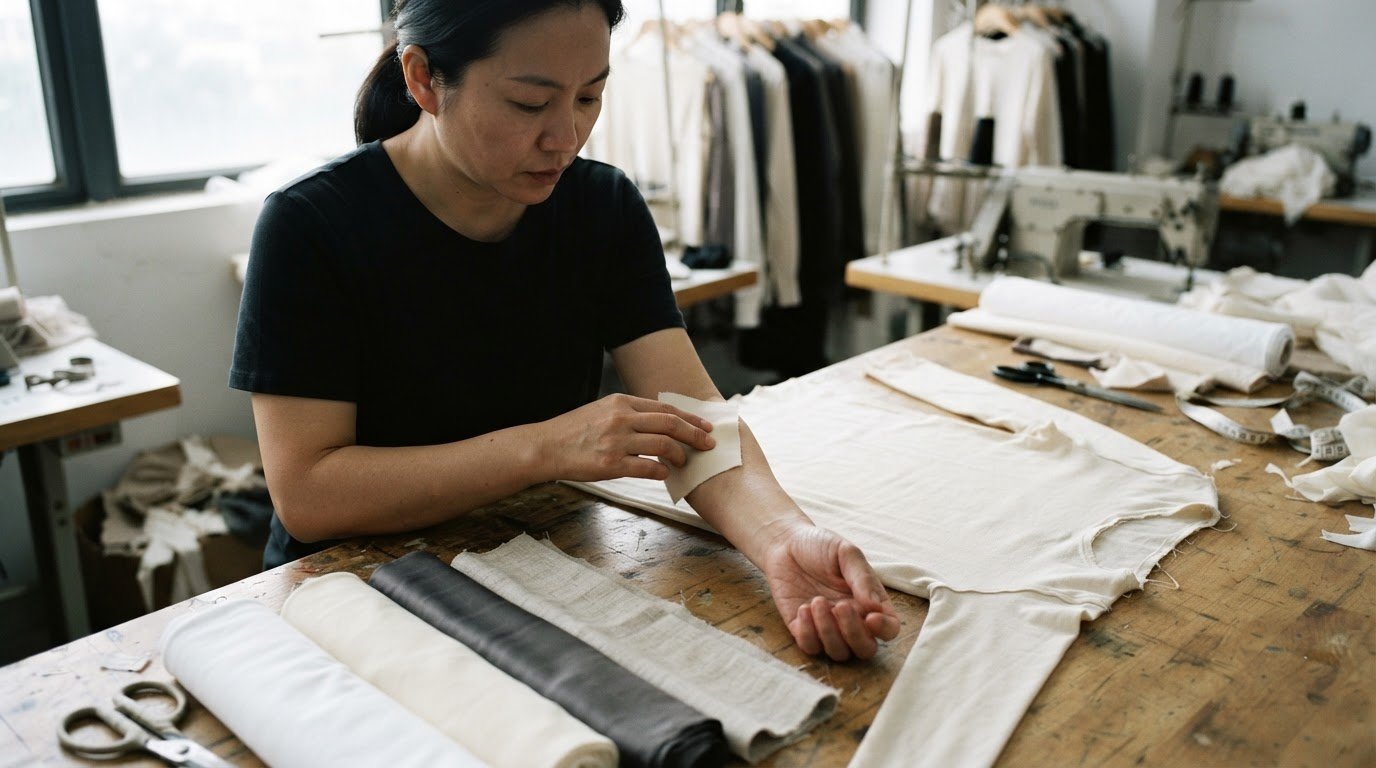
Quality control begins with clear approval points, not only a final inspection. Record the sample’s fit, measurements, seams, trims, and finish in production specifications, then use those details to review garments during production. For runs under 50 pieces, sewing-line productivity can fall, making clear sequencing and timely decisions especially useful.
Keep communication tied to production stages: material confirmation, sample approval, cutting, sewing, finishing, and final review. A written update at each handoff can flag a fabric substitution or construction issue before it affects the rest of the order.
Manufacturer Selection Questions
Ask whether the minimum applies per style or colour, which product types the factory specializes in, and how it coordinates pattern development, sampling, sourcing, and production. Request separate stage timelines and a breakdown of costing categories so you understand the plan before placing an order.
Low-MOQ production can bring quality variation, longer timelines, or unexpected charges if specifications, sourcing, and included services are unclear. Clarify how quality control works, what could affect the timeline, and whether sampling, finishing, and packing are included in the production scope.
Manufacturer specialties and typical minimum order quantities
A low MOQ manufacturer accepts smaller production runs, but the minimum varies by factory, garment, and material. Small-batch manufacturing typically covers 10 to 500 pieces per style.
Low Minimum Order Quantities
For startups, a low minimum order can limit inventory while testing a new design. Domestic US manufacturers commonly set small-brand minimums at 50 to 150 units per style; overseas manufacturers commonly set 100 to 500 units per style, though some export factories accept lower quantities.
Why Factories Set Minimums
A factory’s minimum reflects how its production is organized. Cutting, machine setup, material purchasing, and labour scheduling all take preparation, and a small run spreads those tasks across fewer garments. Large Asian clothing factories typically set minimums of 500-5,000 pieces, while traditional garment factories often require 1,000 pieces per style or more.
Minimums can help a factory organize production efficiently, but they can also leave a brand with excess inventory when demand is still uncertain. Compare the factory’s minimum with the quantity your brand can realistically sell.
Flexible Minimum Orders
Low and flexible minimums aren’t the same. A low MOQ is a smaller stated threshold; flexibility may mean adjusting quantities across styles or colours, depending on how the factory organizes cutting and sourcing.
For US-bound orders, overseas export factories are a relevant category to assess. Overseas manufacturers commonly set minimums of 100 to 500 units per style, and some export factories accept lower quantities. Confirm how the minimum applies and how shipping arrangements fit the production plan.
Minimums by Garment Style
Minimums can change with construction. A simple garment and a structured or lined style require different materials and production steps, so the factory’s specialty matters alongside the quantity. Micro or artisan workshops typically accept 10-50 pieces; small European factories typically accept 50-200 pieces per colour.
Compare minimums on the same basis: per garment style, per colour, or across the total order. A minimum of 500 pieces per colour across three styles and three colours amounts to 4,500 garments, a substantial inventory commitment for a new fashion brand.
Apparel development and sampling
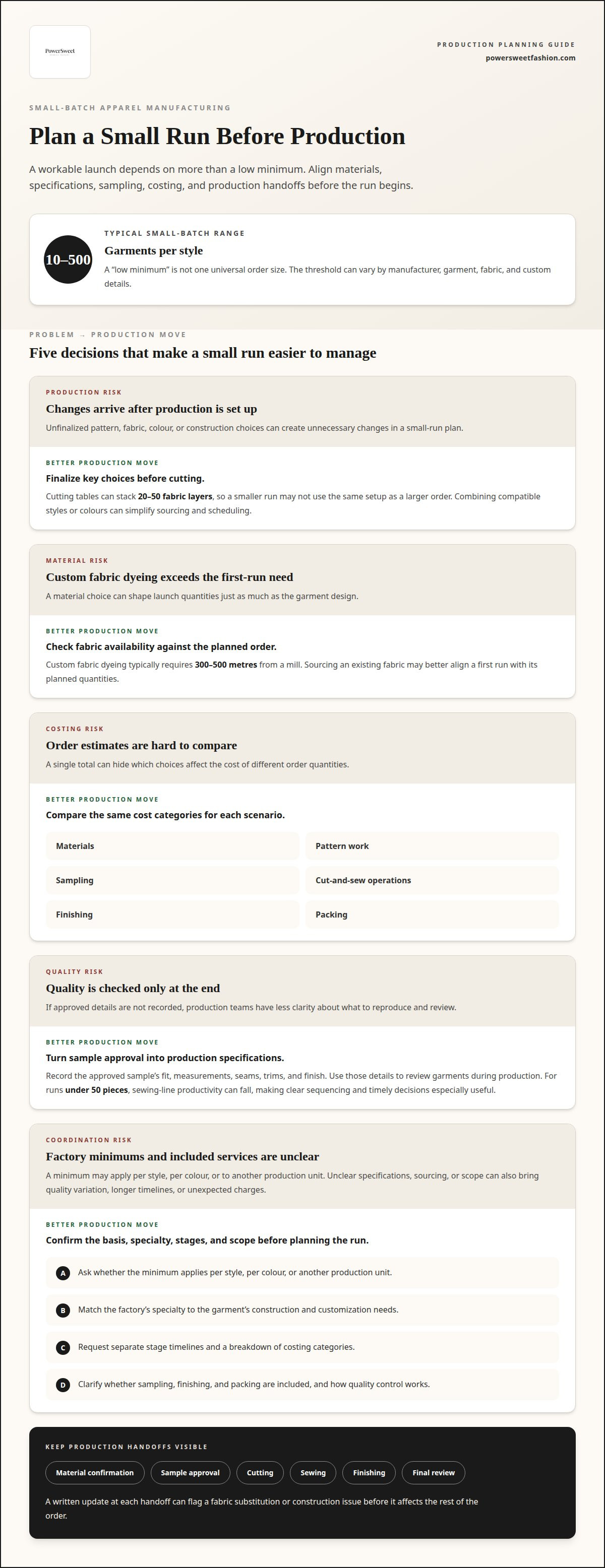
Apparel development turns a fashion concept into a pattern, sample, and construction plan the production team can follow. Pattern making defines garment shapes and measurements; sample making tests those decisions in fabric. For emerging brands, this sequence creates room to refine fit and details before committing to a production run.
From Pattern to First Sample
Start with the garment’s intended fit, measurements, fabric, seam details, and trims. A pattern maker translates those requirements into pattern pieces that guide fabric cutting and sewing. The first sample shows whether the construction matches the design. For example, if a sleeve restricts movement, the pattern may need adjustment before approval.
A first clothing sample typically takes 2 to 4 weeks after the tech pack is finished. A clear tech pack helps reduce avoidable back-and-forth because it records measurements, materials, and construction details in one production reference.
Reviewing Samples and Making Revisions
One to three samples is a typical initial sampling range for factories serving new clothing brands. Use each review to assess specific points, such as fit, length, seam placement, fabric feel, and finishing. Record requested changes clearly, then check the revised sample against those notes rather than relying on memory.
Sampling is an approval process, not just a visual preview. A Los Angeles factory example involved a New York influencer brand ordering 80 hoodie pieces; for any launch, the approved sample should guide production so the finished garments follow the agreed construction.
Preparing for Production
Once a sample is approved, its measurements and construction details become the production team’s reference. Align the pattern, material choice, and finishing instructions before cutting begins. A fabric or fit change after approval can affect how the garment is made, so document revisions and confirm the updated sample before the production run.
Keep sample reviews practical: identify the issue, describe the desired correction, and record the approval decision. This gives the factory a clear handoff from apparel development to production and helps maintain consistency across the order.
Customized clothing manufacturing
Custom manufacturing connects a brand’s design decisions to garments made to its specifications. The work can include fabric sourcing, pattern development, sample approval, cutting, sewing, finishing, and quality review. Each handoff affects how closely the finished pieces match the approved design.
For clothing sold in the United States, plan for three compliance areas: import duties, labeling rules, and product requirements. The applicable details depend on factors such as garment materials, country of origin, construction, and intended sale, so account for them in product planning and documentation.
Customization begins with a defined product brief. Identify the garment type, fit, fabric, colour, trims, and construction details, then translate them into production specifications. For example, a woven blouse with a shaped collar needs different pattern and sewing instructions from a simple knit top. Clear specifications give sourcing and production teams a shared reference.
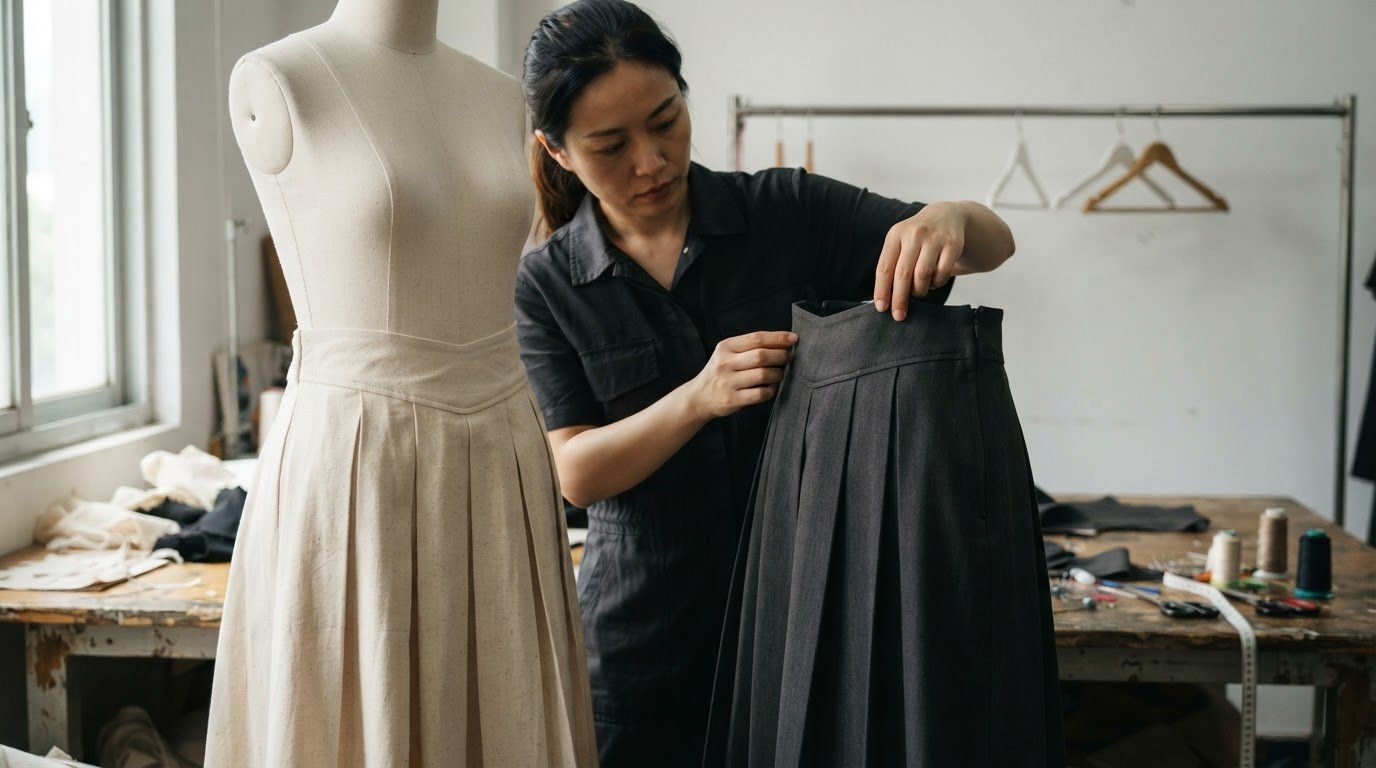
Fabric sourcing affects both appearance and manufacturing decisions. Material weight, stretch, drape, and availability influence the pattern and sewing method. If a collection uses several fabrics, map each material to its garment and colour before sampling. This makes sample reviews more useful and helps prevent late substitutions from changing the intended fit or finish.
Use sample approval as a production control point. Compare the sample with the written specifications, record requested changes, and approve the final version before the production run. A change to a seam, trim, or fabric after approval may require updates to the pattern or sewing instructions, so keep revisions together.
For smaller orders, match the level of customization to the planned quantity. A new fabric, specialized construction, or multiple colourways can add sourcing and setup steps. Streamlining choices early can make a small production run easier to coordinate without losing the details that distinguish a brand’s collection.
Customized women’s clothing production can bring sourcing, samples, and garment specifications into one development process. Start a custom clothing production project by outlining the garment and the details that define it.
PowerSweet Fashion: Custom Women's Clothing Production
PowerSweet Fashion supports emerging brands developing custom women's clothing, from early samples through bulk production. Turn to the team when you need low minimum order quantities and coordinated support for product development and manufacturing.
Sample Development helps translate garment specifications into a reviewable sample, while Fabric Sourcing connects material choices to the design. Quality Control Services support production checks, helping keep finished garments aligned with approved requirements. Samples are ready in 10 days, and bulk production takes 15-20 days.
For a new launch or growing collection, bring your garment concept, preferred materials, and target order quantities into the conversation. Contact PowerSweet Fashion to discuss your production needs.
Turn Your Garment Concept Into a Production Plan
Your next step is to shape the design into a clear project brief. Set out the garment, intended fit, fabric preferences, key construction details, and planned order quantities. These decisions give development and production teams a shared starting point, while leaving room to refine details through sampling.
Choosing a low MOQ clothing manufacturer for emerging brands is ultimately about aligning production with your product and launch priorities. PowerSweet Fashion brings custom women’s clothing production together with sample development and fabric sourcing, connecting early design decisions to manufacturing. Share the garments you’re developing and the details that matter most to your collection.
Contact PowerSweet Fashion to discuss your project and take the next step toward developing your clothing line. A clear brief is a practical place to begin.
Frequently Asked Questions
What Does “Low MOQ” Really Mean?
A low MOQ clothing manufacturer for emerging brands accepts smaller production orders than a factory focused on large-volume runs. The exact threshold depends on how the factory counts an order: by style, colour, or combined quantity. For example, if you plan to order two colours, clarify whether the minimum applies to each colour. That distinction affects your total order and inventory commitment.
Which U.S. clothing manufacturers offer low MOQs for emerging brands?
Domestic U.S. clothing manufacturers that accept small-brand orders commonly set minimums of 50 to 150 units per style. That range helps frame the search, but manufacturers differ in garment specialties and production methods. A knitwear factory may not suit a structured woven design. Match the factory’s production focus to the garment and the customization the collection requires.
How much does low-MOQ clothing manufacturing cost per unit and per style?
There’s no single per-unit or per-style cost because garment specifications and order structure affect the quote. PowerSweet Fashion provides a quote based on order volume, fabric complexity, and garment construction requirements. Include your pattern, tech pack, and fabric details in the request. If you don’t have a pattern, PowerSweet can create one before quoting.
What factors affect clothing manufacturers’ minimum order quantities?
Minimums reflect the production setup and materials a garment requires. Fabric availability, colour choices, construction complexity, and a factory’s equipment or specialty can affect how an order is organized. A design using several fabrics or detailed sewing may need different preparation from a simpler style. The order basis matters too, especially whether quantities are counted by style or colour.
What is the process for finding, vetting, and sampling a low-MOQ clothing manufacturer?
Choosing a low MOQ clothing manufacturer for emerging brands starts with a defined garment brief and production requirements. The manufacturing team reviews the tech pack, pattern, and fabric information, then develops a sample for fit and construction review. The brand shares specific revisions and approves the final sample before production begins. This sequence gives both sides a clear reference for the garment’s required details.
Which overseas clothing manufacturers offer low MOQs and ship to the United States?
Overseas export factories are a relevant option for US-bound orders. They commonly require 100-500 units per style, though some accept lower quantities; confirm the minimum and shipping arrangements with each factory.
Comments