
Fabric options for sensitive skin, from cotton to merino

The fiber isn’t always the problem. Sourcing fabrics for sensitive skin means considering texture, breathability, and finishing together: rough surfaces, trapped heat and moisture, or residues can all contribute to discomfort. Smooth, soft options such as cotton, lyocell, silk, and superfine merino may feel gentler, but comfort varies from person to person.
If certain clothes leave skin feeling itchy or irritated, that experience is real, and the label alone may not explain it. A garment marked 100% cotton can still have finishes that affect how it feels against the skin.
This guide explains why fabrics can irritate, compares fibers from cotton to merino, and outlines which materials and fabric properties to assess. You’ll also learn why construction, airflow, moisture handling, and finishing matter alongside fiber choice, helping you match materials to the comfort needs of the garments you’re developing.
Table of Contents
1. Why is my skin sensitive to certain fabrics?
Clothing can irritate skin through friction, heat, or chemical residues. Rough fibers and seams rub against skin, while fabrics that trap heat can contribute to sweating and chafing. A tight synthetic shirt, for example, may feel uncomfortable because it holds warmth close to the body. Texture matters, but it’s not the only factor.
Dyes and finishing treatments can also affect how a textile feels. Wrinkle-resistant or permanent-press clothing often contains formaldehyde, and a “100% cotton” label doesn’t rule out other finishes. New clothing may carry surface dye or finish residues. Washing it before wear, using fragrance-free detergent, and rinsing thoroughly can reduce residue and avoid adding fragrance or softener to the fabric.
Certifications offer information about chemical testing, not a promise that a garment will suit every wearer. According to OEKO-TEX, every thread, button and accessory has been tested against a list of over 1,000 harmful substances. OEKO-TEX Standard 100 has certified over 35,000 companies. GOTS covers organic fiber farming and processing, and a GOTS-certified garment contains at least 70 percent organic fibers. Neither label guarantees that a specific person won’t experience irritation from a fabric’s feel or construction.
In the United States, clothing brands seeking fabric by the yard can source it through domestic textile mills and wholesale fabric distributors. Available yardage depends on the fabric and order requirements.
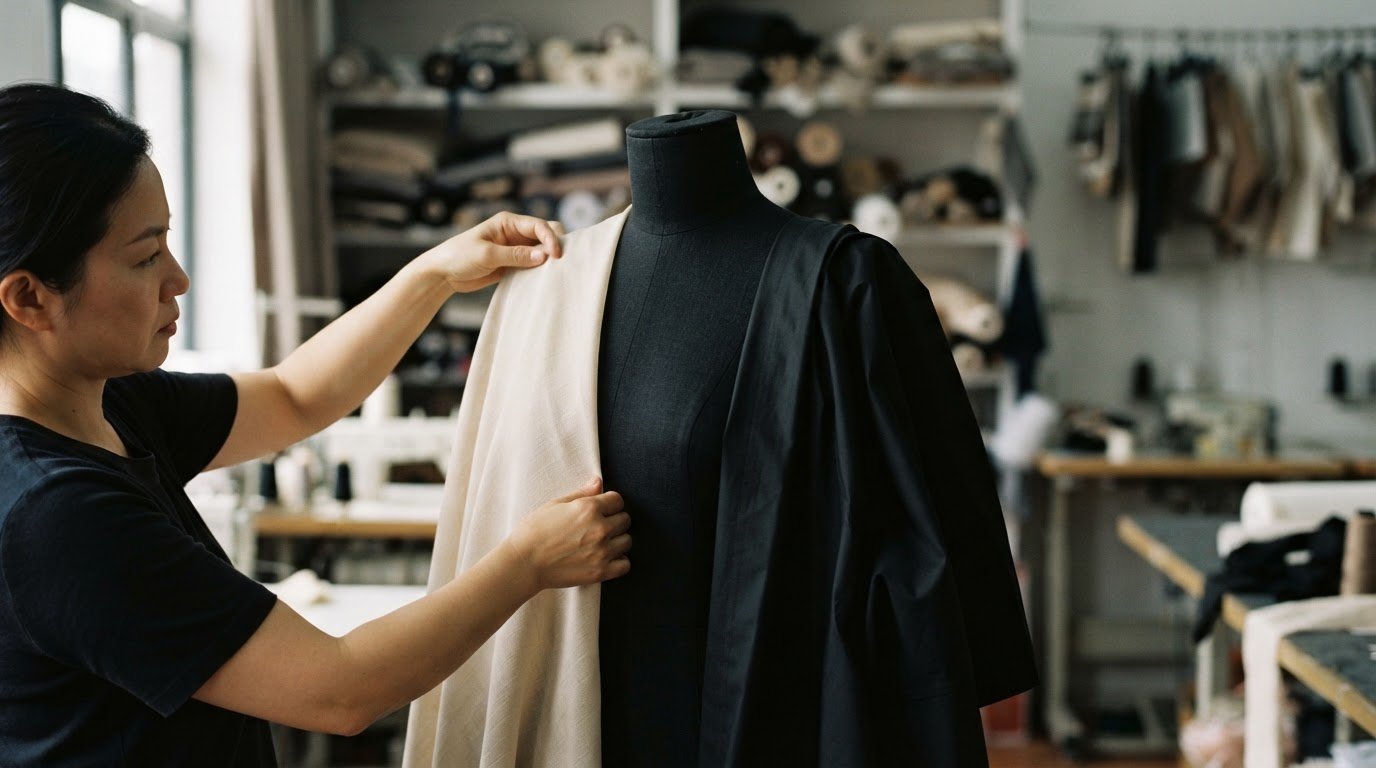
Fabric sourcing professionals assess samples by feeling the surface, checking fiber content and finish details, and evaluating seams or other areas that touch skin. They can also wash a sample using a simple laundry routine, then assess its feel again. Reactions to new fabrics may appear after repeated wear, so a brief initial inspection alone can miss a problem.
Bamboo clothing is usually made by dissolving bamboo cellulose with chemicals to form bamboo viscose. Wrinkle-resistant finishes often contain formaldehyde, while antimicrobial treatments add another finish to assess for potential irritation. A fiber name alone doesn’t reveal every treatment applied to the finished textile.
2. Organic cotton, lyocell, silk, linen, and superfine merino wool
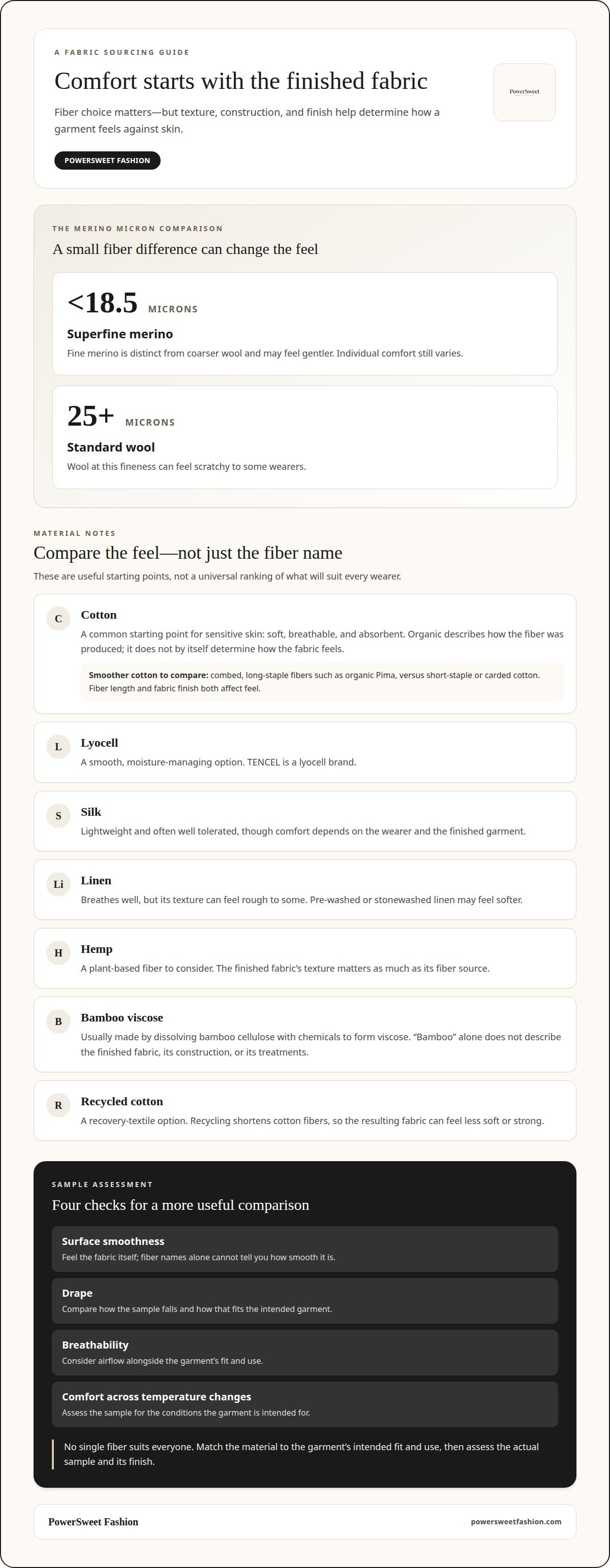
For sensitive skin, eczema, or allergies, cotton is a common starting point because it feels soft, breathable, and absorbent. Organic cotton provides information about how the fiber was produced, while GOTS certification covers organic farming and processing. For a smoother cotton fabric, compare combed, long-staple fibers with short-staple or carded cotton. Organic Pima cotton is a long-staple option; both fiber length and fabric finish affect how it feels.
Lyocell, including TENCEL-branded lyocell, offers another smooth, moisture-managing option. Silk is lightweight and often well tolerated, while linen breathes well but can feel rough to some wearers. Pre-washed or stonewashed linen may feel softer. Hemp is another plant-based fiber to consider, though the finished fabric’s texture matters as much as its fiber source. Bamboo clothing is commonly made from bamboo cellulose processed into viscose, so “bamboo” alone doesn’t describe the finished fabric.
Fine merino differs from coarser wool. Superfine merino measures under 18.5 microns, while standard wool at 25 or more microns can feel scratchy. For a practical comparison, assess each sample for surface smoothness, drape, breathability, and comfort across temperature changes. Recovery textiles also deserve attention: recycled cotton can feel less soft or strong because recycling shortens its fibers.
No single fiber suits everyone. A sourcing team can compare organic cotton, silk, lyocell, linen, hemp, bamboo viscose, and merino based on the garment’s intended fit and use. Fabric price depends on fiber, construction, finish, and order requirements, and is provided after a quote request. For professional fabric sourcing, material requirements and garment specifications guide the selection process.
3. Synthetic fabrics and conventional rayon to avoid
Polyester and nylon can feel uncomfortable against sensitive skin, particularly in close-fitting garments. These synthetic fibers may limit moisture transfer, allowing heat and sweat to build up near the body. That combination can increase friction and irritation during wear, especially in warm conditions. Fleece can also feel hot when its construction doesn’t move moisture away effectively. The fiber name matters, but garment fit and fabric structure also shape comfort.
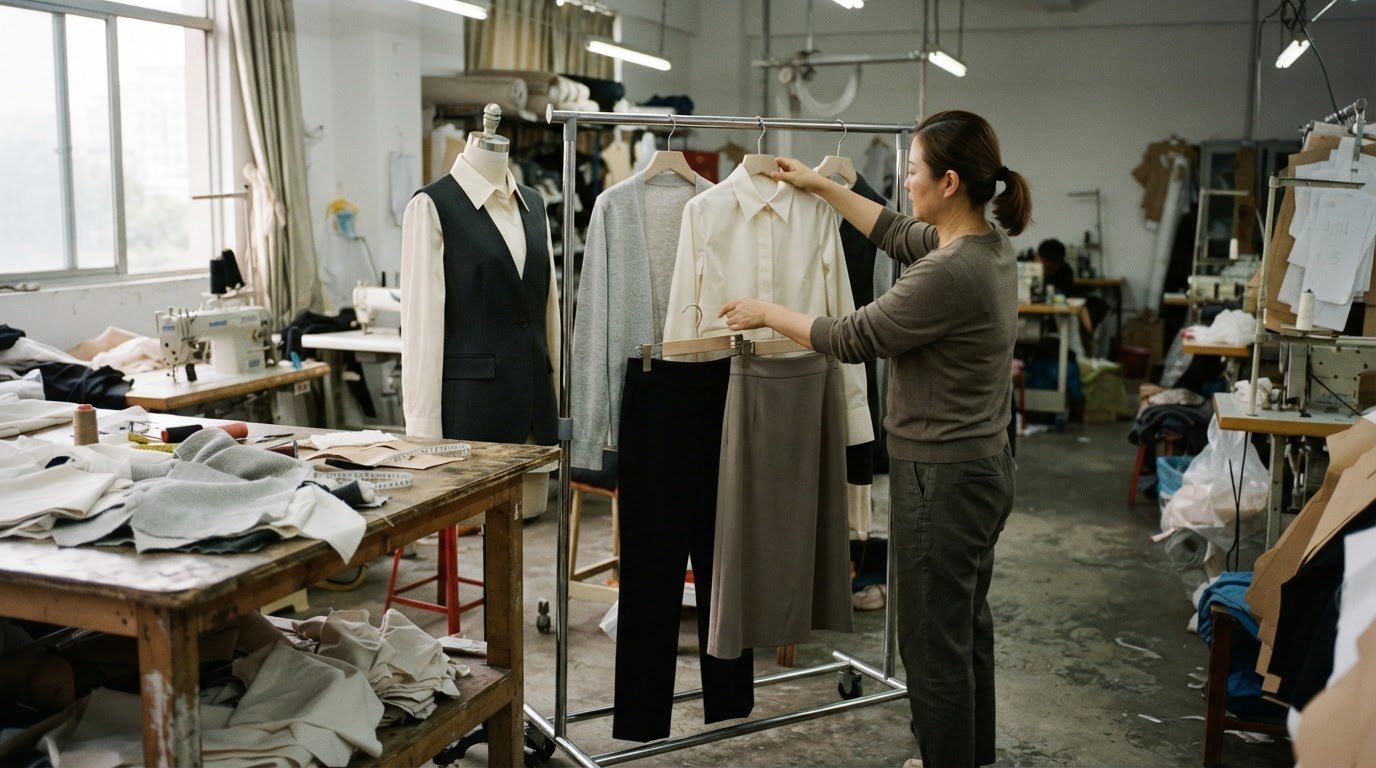
Blends need a closer read than a front label suggests. A shirt described as cotton may include 5–10% elastane or polyester, while a 60/40 cotton-polyester blend contains substantial synthetic content. The first fiber listed on the care label helps indicate the blend’s main component, but it doesn’t show the complete ratio. Fabric sourcing professionals review the full material composition and handle sample swatches for surface feel, stretch, and thickness.
Conventional rayon and viscose also deserve consideration. Rayon, polyester, and nylon are hydrophobic fibers associated with irritation for some people with sensitive skin. Bamboo viscose is a processed cellulose fiber, not a natural bamboo thread; the finished fabric’s feel depends on its construction and treatments. Rather than treating every rayon fabric as identical, professionals assess the specific sample and its intended use.
For clothing worn directly against reactive skin, a blend weighted toward polyester or nylon may be less suitable, especially in fitted styles. A high natural-fiber content can be a useful starting point, but the complete fabric still matters. During professional sourcing, the team compares the stated blend with the physical sample, then assesses softness, breathability, and likely heat retention. A sample intended for a lightweight top, for example, needs different performance from one used as a loose outer layer. This helps align fabric selection with the garment’s fit, function, and wearer comfort.
4. Fabric properties relevant to sensitive skin
Fiber content is only one part of comfort. Brands sourcing fabrics for sensitive skin should also assess the surface, structure, weight, and finish. These properties affect friction, airflow, and moisture against the body. Smooth surfaces reduce rubbing, while rough yarns or raised textures create repeated contact points. A soft cotton jersey, for example, may feel smoother than a coarse fabric made from similar fibers. During manufacturing, match fabric selection to the garment’s fit and use.
To reduce friction and overheating, choose a smooth, breathable weave with a weight suited to the garment. Open structures allow more airflow, while dense or heavy fabrics can hold warmth and moisture close to the body. The right balance depends on whether the fabric will become a fitted base layer or a loose outer garment. Fiber blend matters too: polyester can retain heat in some constructions, while a breathable natural-fiber blend may feel cooler.
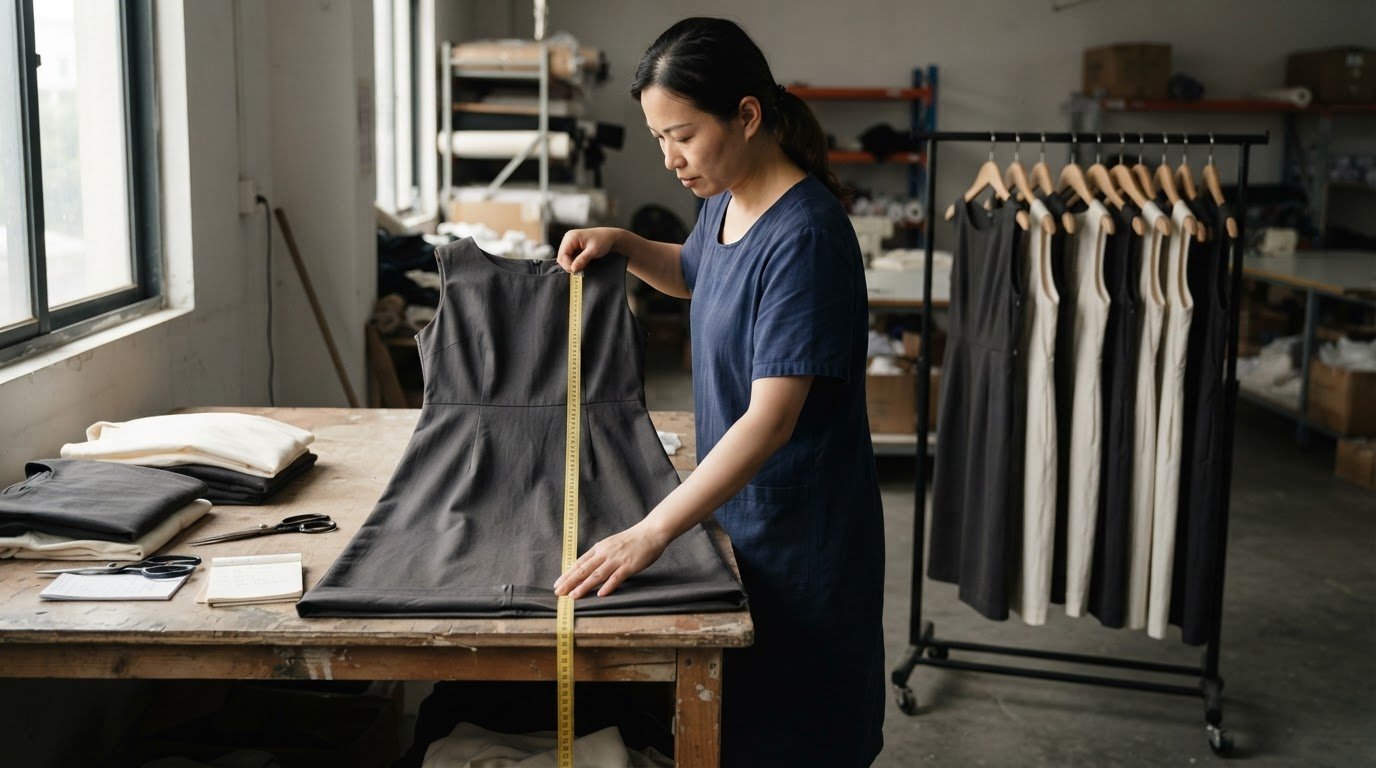
Construction details can cause discomfort even when the fabric surface feels gentle. Raised seams, stiff labels, uneven hems, tight elastic, and bulky fastenings can rub or press against skin. A product team can assess the sample inside and out, then review how seams and trims sit when worn. This connects fabric choice to the finished clothing instead of judging a swatch alone.
Care affects fabric after production. Detergent residue, fragrance, or softener can remain on fibers and irritate skin. A simple laundry routine with fragrance-free detergent and thorough rinsing reduces added residues. Teams sourcing fabrics for sensitive skin can assess fabric after washing, checking whether its surface stays smooth, the garment retains its shape, and moisture moves away from the skin. These properties provide a more useful comfort assessment than fiber names alone.
PowerSweet Fashion: Fabric Sourcing
PowerSweet Fashion helps brands source fabrics suited to sensitive-skin priorities and garment requirements. Share the intended garment, preferred fibers, desired hand feel, and any concerns about dyes or finishes. These details guide material selection around softness, breathability, and the finished design.
Fabric decisions can carry through to sample development, allowing the material to be assessed as part of the garment rather than as a swatch alone. For a broader production project, fabric sourcing can be combined with custom women’s clothing production and quality control services.
If you’re developing clothing for sensitive skin, contact PowerSweet Fashion to discuss your fabric and garment requirements.
Turn comfort priorities into a clear fabric brief
For a clothing brand, the next step is to turn wearer comfort into practical material requirements. Decide how the garment should feel, where it will sit against the body, and how it will be worn. These choices give fabric development a clearer direction and help align the design, material, and intended use. Sourcing fabrics for sensitive skin works best when the brief considers the finished garment, not fiber content alone.
PowerSweet Fashion can support that work through fabric sourcing, sample development, and custom women’s clothing production. Bring your garment concept and material priorities into the conversation, then shape the next steps around the product you’re building. Discuss your fabric sourcing needs with PowerSweet Fashion, and move your design forward with a clear, considered brief.
Frequently Asked Questions
Why is my skin sensitive to certain fabrics?
Fabric discomfort can come from rubbing, warmth, trapped moisture, or substances left by dyeing and finishing. Where and when irritation appears can offer a useful clue: discomfort under a tight seam may point to friction, while a reaction after wearing a newly finished garment may involve residue. Note the garment, contact area, and laundry products used. These details can reveal patterns that the fiber name alone won’t show.
Am I allergic to wool or just sensitive to coarse fibers?
A scratchy sensation alone doesn’t establish a wool allergy. Coarse wool fibers can mechanically irritate skin, while superfine merino has a much finer diameter and may feel different against the body. Notice whether discomfort is limited to rough wool garments or occurs with different wool textures. Record the garment and symptoms; recurring or concerning reactions merit medical assessment rather than assumptions based on feel alone.
Is OEKO-TEX® the same as hypoallergenic?
No. OEKO-TEX® Standard 100 indicates testing for harmful substances, but it doesn’t certify that a fabric is hypoallergenic or suitable for every wearer. Chemical testing also doesn’t measure how a garment’s texture, seams, fit, or care residues feel against an individual’s skin. Treat certification as one useful material-safety signal, then consider the finished garment and the wearer’s specific sensitivities.
What about blends?
Blends combine fibers for properties such as stretch, drape, or durability, but the combination can change breathability and surface feel. For a close-fitting garment, assess the full fiber composition and how the finished fabric behaves, not just its dominant fiber. A blend that works in a loose layer may feel less comfortable in a fitted top. Review the care label and test the intended construction.
What about bamboo fabric?
“Bamboo fabric” usually refers to bamboo viscose, made by dissolving bamboo cellulose and forming new fibers. The label doesn’t mean the garment is made from untreated bamboo strands, and the fiber source alone doesn’t predict comfort. Compare the actual fabric’s softness, airflow, and finish. For product development, assess the material in the garment’s intended weight and construction.
What about recycled cotton?
Recycled cotton can be a useful material choice, but its feel depends on the resulting yarn and fabric construction. Processing can shorten cotton fibers, which may affect softness and strength. Compare a finished sample with its intended use, especially where fabric touches skin directly. The weave, finishing, and blend all influence whether the material feels smooth enough for the design.
Comments