
How to Design a Capsule Collection with Interchangeable Pieces

A polished-casual capsule doesn’t need more pieces; it needs pieces that work together. To learn how to design a capsule collection, start with the wearer’s real routines, then build a focused range of versatile garments around them. A wardrobe of around 30-40 pieces can be a useful reference, but the right count depends on lifestyle, climate, and laundry habits.
It’s easy to focus on individual designs and miss the system that makes a capsule collection work: outfits need to mix and match, fabrics need to suit how the clothes will be worn, and polished pieces should feel consistent with everyday options. That planning turns a group of garments into a cohesive collection.
This guide breaks the process into clear decisions. You’ll learn how to assess fabrics for breathability and shape retention, map interchangeable outfits, estimate item counts by category, and balance casual staples with polished-casual options. The result is a practical framework for developing a collection that looks unified and gives every piece a clear role.
Table of Contents
Choosing breathable, shape-retaining fabrics
Choose fabrics for the collection’s intended use, then coordinate color, pattern, and garment roles. Common mistakes include selecting material by appearance alone, overlooking care needs, or combining prints without a clear palette. These choices can make garments harder to wear together and complicate production. Assess fabric behavior in a sample garment before finalizing designs.
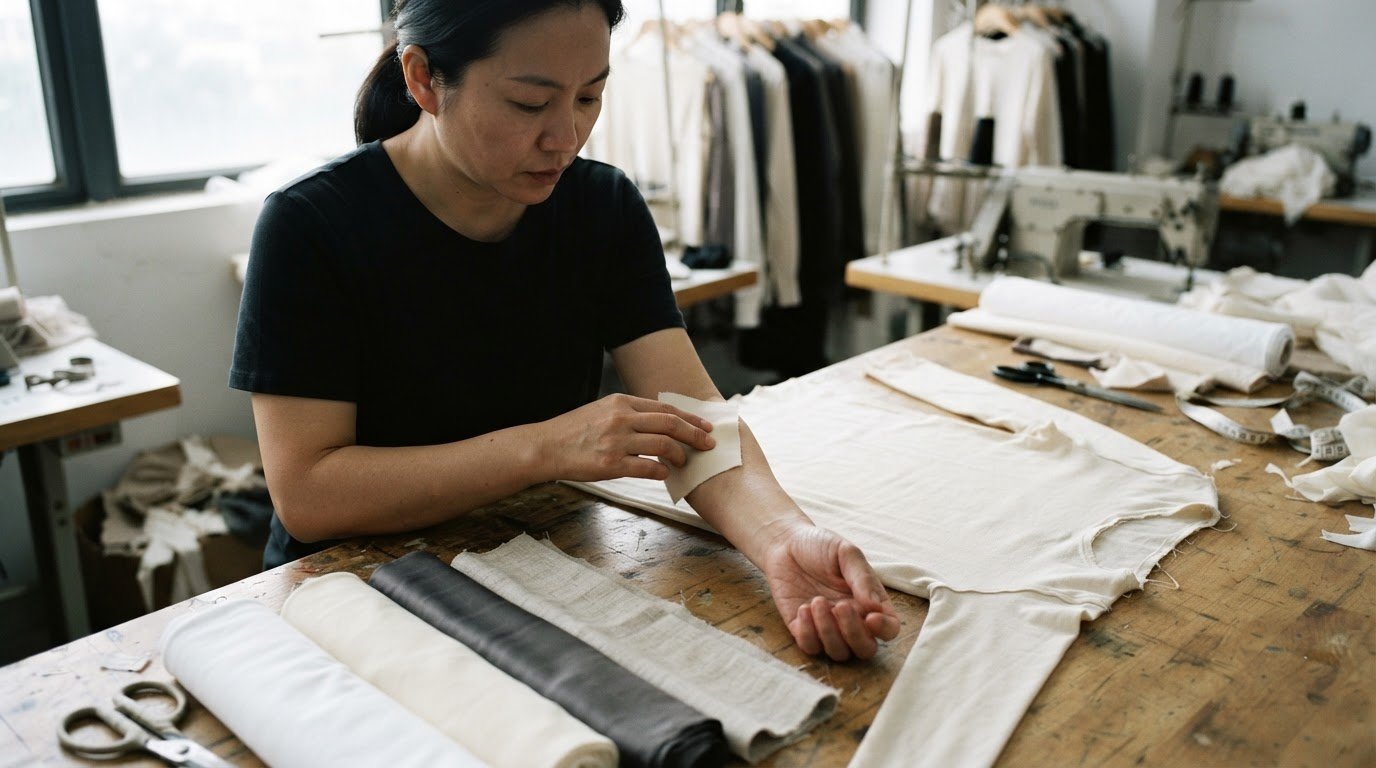
Start with the season and everyday conditions. For warm-weather shirts, consider breathable options such as organic cotton, lyocell TENCEL™, or recycled fibers. For cooler pieces, organic wool can add warmth. Compare how each fabric feels, drapes, and suits the wearer’s routine instead of choosing by fiber name alone.
Assess shape retention in light of the garment’s purpose. A fitted top needs fabric that supports its intended silhouette, while a relaxed shirt can use a softer drape. Review the material in the garment’s actual construction: a swatch alone won’t show how seams, openings, and movement affect the finished shape.
Build a color plan before adding patterns. Choose a small group of neutrals for anchor pieces, then add colors that reflect personal style. For example, neutral trousers and shirts can coordinate with a patterned top. Keep pattern scale and contrast compatible so pieces combine instead of competing.
Choose modules that create complete outfits. A module might pair shirts with trousers and a layer, using one color family across the garments. Check that each piece works with several others and that fabrics suit the same season and level of formality. This keeps the wardrobe cohesive without making every item identical.
Reduce production risk by reviewing the proposed fabric and design together. Confirm that the material’s drape, weight, and care needs match the pattern and intended fit. Develop a sample before locking the collection, then assess its comfort, construction, and shape. Revise the fabric or pattern if the sample misses the design goal.
Planning outfits around interchangeable pieces
Start with real occasions, not isolated designs. List the situations the collection should serve, such as casual workdays, weekends, and a dinner out. Then sketch outfits for each setting. A useful capsule can support 7-10 go-to outfits, giving the design process a clear test beyond whether each garment looks appealing alone.
Build each outfit from pieces that share a compatible color story and level of formality. For example, pair a neutral shirt with casual trousers, then add a jacket for a more polished look. Aim for each garment to combine with at least 3 other pieces. That test helps keep the closet versatile without making every outfit identical.
Map layers as complete combinations. A simple outfit might include a shirt, trousers, and an outer layer; another might use a dress with a cardigan. Plan around 3-5 layers where climate and styling call for them, but avoid adding pieces simply to reach a count. Each layer should change warmth, formality, or silhouette.
Separate core pieces from one-off event looks. If a customer needs a trendy garment for a single occasion, renting it can keep that item outside the capsule’s permanent buying plan. Design the collection around repeat-wear pieces first, then check that an occasional rented statement piece still works with its colors and proportions.
Test the combinations before finalizing the range. Create a grid with garments down one side and outfit occasions across the top. Mark each workable combination, then remove pieces that suit only one narrow look. Photograph sample outfits and save them together so customers can see how casual staples change with a different shirt, layer, or styling choice.
Suggested item counts by clothing category
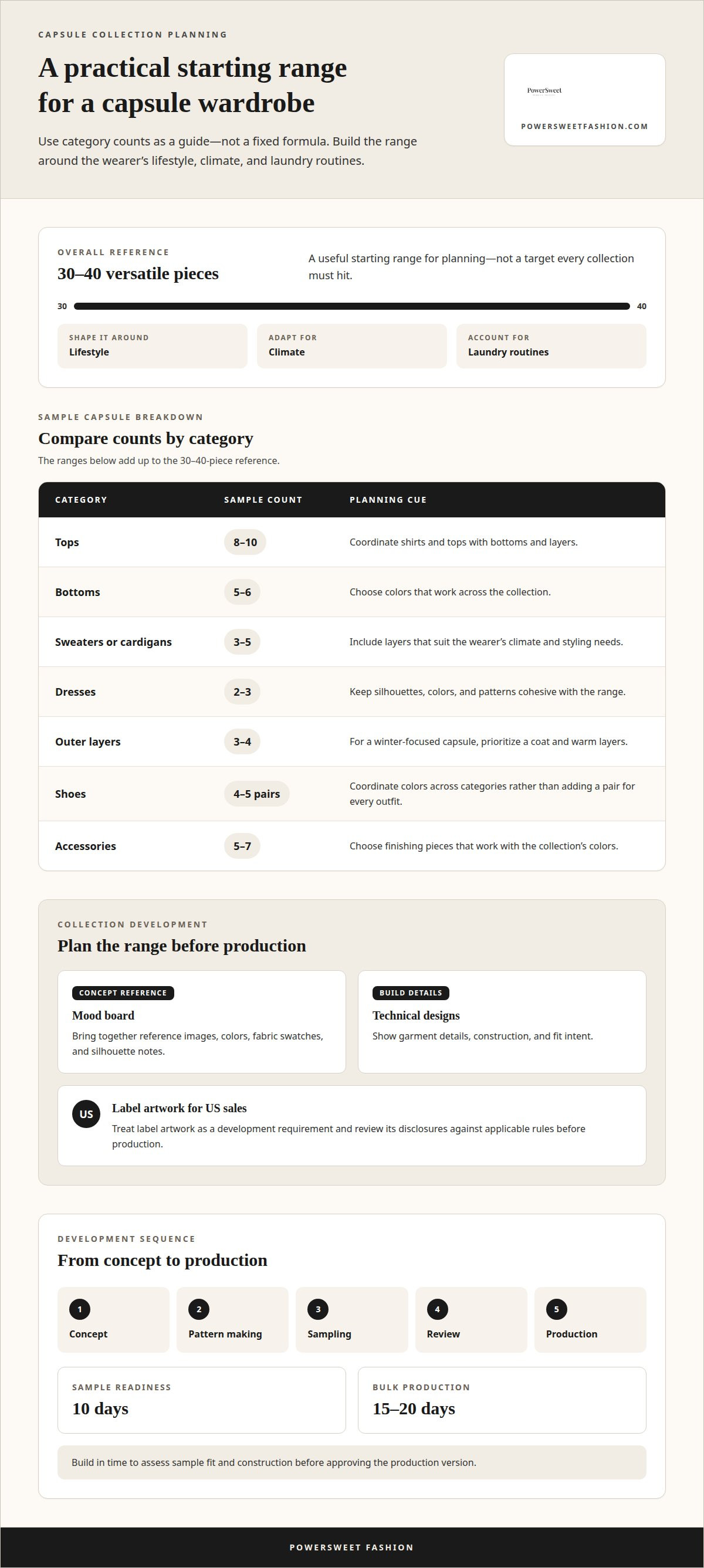
Use 30-40 versatile pieces as a starting range, not a fixed target. For brands considering how to design a capsule collection, category counts should reflect the customer’s lifestyle, climate, and laundry routines. A sample capsule wardrobe might include 8-10 tops, 5-6 bottoms, 3-5 sweaters or cardigans, and 2-3 dresses.
Plan outerwear and finishing pieces around use. A sample range includes 3-4 outer layers, 4-5 pairs of shoes, and 5-7 accessories. For a winter-focused capsule, prioritize a coat and warm layers; choose colors that coordinate across categories instead of adding a jacket for every outfit. This is one practical way to design a capsule collection around function.
Create a mood board with reference images, colors, fabric swatches, and silhouette notes. Pair it with technical designs showing garment details, construction, and fit intent. For US sales, treat label artwork as a development requirement and review its disclosures against applicable rules before production.
Sequence development from concept and pattern making to sampling, review, and production. Samples are ready in 10 days, and bulk production takes 15-20 days. Build in time to assess sample fit and construction before approving the production version.
Set retail prices by accounting for garment costs, development, packaging, and the planned margin; no single price fits every capsule. For launch, prepare product descriptions, outfit combinations, and a release schedule. Extend clothing life by following care labels and avoiding the dryer, which can damage garments or cause shrinkage. Rotate pieces by season, store off-season clothing cleanly, and alter, donate, or recycle items that no longer fit or suit the range.
Planning a polished-casual capsule
Start with the wearer’s actual calendar. Compare casual and polished occasions, then choose a balance that reflects real use. One wardrobe plan used a 90% casual and 10% polished-casual target, based on wearing casual outfits about 30 times monthly and polished-casual looks about three times monthly. Treat that as one example, not a fixed formula.
Build the polished-casual module around adaptable pieces. One practical plan uses three casual modules and one polished-casual module. A module can pair tailored trousers with shirts, then use a blazer to sharpen the outfit. Keep its colors compatible with the casual pieces so the added formality doesn’t isolate garments.
Use classic shapes to make the transition clear. A crisp shirt, well-fitting trousers, and a simple dress can look put together without feeling formal. Check each silhouette in motion and while seated, since comfort affects whether customers reach for it. Add a cardigan or jacket when the season calls for another layer.
Keep accessories focused. A belt, refined bag, or simple jewelry can shift an everyday outfit toward an event-ready look without changing its core garments. Exploring versatile pieces from Frenelle Jewellery is an easy way to find classic accents that complement multiple styles. During shopping, evaluate each proposed addition against several outfits. If it works with only one look, it may not earn space in a capsule built for repeat wear.
Test the fashion balance before locking designs. Lay out complete casual and polished-casual outfits side by side, then review color, proportion, and fabric consistency. The goal isn’t a perfect uniform; it’s a range with distinct options that still feel related. For help developing a cohesive range, start planning your capsule collection.
PowerSweet Fashion
PowerSweet Fashion helps turn a capsule plan into coordinated women’s garments, from material selection through production. If you’ve mapped interchangeable outfits but need support developing the designs, its custom women’s clothing production can bring the collection’s pieces together as a consistent range.
Fabric sourcing helps align material choices with the intended wear and design direction. Sample development gives the team garments to review for fit, construction, and how the pieces work together. Quality control services check production, helping keep finished garments consistent with the approved designs.
Bring your collection concept, garment designs, and fabric preferences to the conversation. Contact PowerSweet Fashion to discuss your capsule collection.
Move your collection from concept to development
A useful next step in learning how to design a capsule collection is to turn the concept into a clear development brief. Define the wearer, the collection’s point of view, and the role each design should play. Note what still needs testing, such as fit preferences, fabric handfeel, or how polished the range should feel. A focused brief keeps creative choices connected to the collection’s purpose.
Then take the concept into development as a working plan, not a fixed set of assumptions. Review the designs as a group, identify open questions, and refine the direction as samples take shape. This gives the collection room to develop while keeping its identity consistent.
PowerSweet Fashion can help move your women’s collection from concept toward finished garments. Share your collection brief with PowerSweet Fashion and take the next step with a clear direction.
Frequently Asked Questions
What is a capsule collection in fashion?
A capsule collection is a focused group of garments designed to work together and express a consistent point of view. For a fashion brand, it can establish a clear assortment around a customer need, such as work-to-weekend dressing or travel-ready layers. Each style should contribute to the collection’s identity and give customers useful options, rather than stand alone as an unrelated design.
How many pieces should a capsule collection include?
There’s no required number of pieces. Set the count by defining the collection’s purpose, the occasions it serves, and the range of outfit options customers need. A workwear capsule may need more coordinated separates, while an event-focused edit may rely on fewer, more specialized designs. Draft the assortment first, then remove styles that don’t add a distinct function or strengthen the collection.
How to define a capsule collection’s target customer and design concept?
Define the customer through practical details: where she wears the garments, what she needs them to do, and which fit or styling choices she prefers. For example, a concept for a creative professional might focus on pieces that work for both studio days and client meetings. Turn that direction into a concise design brief covering the customer, use case, silhouette, and visual character of the collection.
How to choose versatile colors, fabrics, and silhouettes for a capsule collection?
Evaluate palette, fabric, and silhouette as one design system. Select colors that support the collection’s intended mood, then test how they look together under consistent lighting. Compare fabric swatches with the garment’s drape and construction, and review silhouettes side by side to create a balanced range. A sample review can reveal whether a striking design still feels connected to the collection.
How to plan a cohesive capsule collection wardrobe and outfit combinations?
Use an outfit matrix to connect each design to a customer occasion and the other garments it can accompany. For example, note whether a blouse works with both a skirt and tailored pants, or whether a layer changes an outfit’s formality. The matrix makes gaps and redundant designs easier to spot. Keep the strongest combinations, then refine the assortment around those customer-use scenarios.
How to find manufacturers and set minimum order quantities for a capsule collection?
Prepare a clear design brief and technical details, including construction, materials, sizing, and expected assortment, before discussing production. Ask how minimums are applied across styles and colors, since that affects how a collection can be divided into an order. PowerSweet Fashion provides custom women’s clothing production, with minimums as low as 50 pieces per style and color, with size variations.
Comments