%20(1).png)
How We Inspect Every Dress Before Shipping
- Powersweet Team

- Jul 30
- 11 min read
Updated: Aug 10
A single shipment of defective garments can dismantle years of brand building in just one afternoon. You've likely felt the frustration of unboxing a bulk order only to discover sizing discrepancies or fabric flaws that weren't present in your approved sample. It's difficult to scale when the factory's clothing inspection process remains a mystery, leaving you to deal with the fallout of high return rates and unhappy customers.
We believe that transparency is the only way to build a reliable partnership. In this guide, you'll learn how to implement a rigorous clothing inspection process that eliminates defects, ensures sizing consistency, and protects your brand reputation. When you understand the mechanics of professional oversight, you gain the confidence that your bulk production will mirror your tech pack every time.
In this article, we'll break down the specific stages of garment quality control. You'll learn how to use a clear checklist at every production phase to ensure consistency, protect your margins, and keep your brand's reputation intact.
Table of Contents
Understanding the Clothing Inspection Process: Why Quality Control is Non-Negotiable
Phase 1: Pre-Production Inspection and Material Verification
Phase 2: Inline Inspection – Maintaining Workmanship During Bulk Production
Phase 3: Final Random Inspection (FRI) and AQL Sampling Standards
Streamlining Quality: How an End-to-End Manufacturing Partner Ensures Excellence
Understanding the Clothing Inspection Process: Why Quality Control is Non-Negotiable
The clothing inspection process is the systematic verification of garments against your specific design requirements. It isn't just a final check before a box is taped shut; it's a rigorous framework designed to ensure every unit matches your vision. When this process fails, the financial consequences are immediate. You don't just lose the cost of the material. You lose the shipping fees, the marketing spend used to acquire the customer, and the customer's long term trust. High return rates can quickly erode the margins of even the most successful collections.
Every successful inspection relies on a definitive source of truth. In professional manufacturing, this is your tech pack and your approved gold sample. Without these documents, quality becomes a subjective opinion rather than a measurable standard. A professional clothing inspection process verifies that the physical reality of the garment aligns perfectly with these specifications. This oversight extends beyond how a dress looks on a hanger. It covers critical safety standards, legal labeling requirements, and regional compliance issues that could otherwise lead to costly recalls or customs delays.
The Three Pillars of Apparel Quality
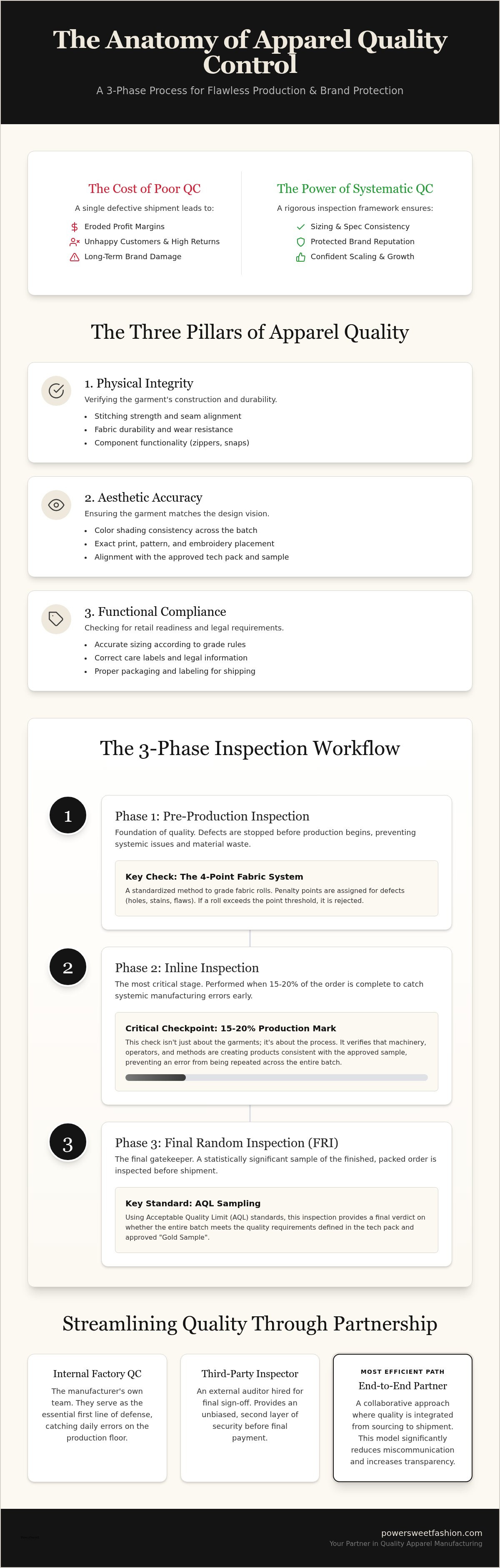
Maintaining high standards requires looking at the garment from three distinct angles. First, we examine physical integrity. This includes testing stitching strength, ensuring seam alignment is precise, and verifying that the fabric can withstand the intended wear. Second is aesthetic accuracy. We check that color shading is consistent across the entire batch and that print placement matches the tech pack exactly. Finally, we address functional compliance. This ensures sizing is accurate to the grade rules and that all care labels and packaging meet retail requirements.
The Manufacturer vs. Third-Party Perspective
Your factory's internal QC team is your first line of defense. They are on the floor every day, catching errors as they happen. However, some brands choose to bring in a third-party inspector for a final sign-off before the balance payment is made. This provides an additional layer of unbiased security. The most efficient path is often partnering with an end to end clothing production partner. When the team sourcing the fabric is the same team managing the final inspection, transparency increases and the risk of miscommunication drops significantly. This collaborative approach turns the factory into a proactive partner rather than just a vendor.
Phase 1: Pre-Production Inspection and Material Verification
The clothing inspection process doesn't start on the sewing floor. It starts at the warehouse doors. If you wait until a dress is finished to check for defects, you've already lost the battle. A single roll of fabric with inconsistent shading can ruin an entire production run, leading to wasted materials and missed deadlines. We treat material verification as the foundation of every project, ensuring that every component meets the standards established during the initial design phase. This proactive approach prevents systemic errors before they have a chance to multiply.
We use the industry-standard 4-point system to evaluate every roll of fabric. This method assigns penalty points based on the size and severity of defects like holes, stains, or weaving flaws. If a roll exceeds the point threshold, it's rejected immediately. This level of scrutiny is essential when working with a sample development clothing manufacturer to ensure the bulk fabric matches the quality of your approved prototype. Beyond the fabric, we inspect every trim and accessory. We test zippers for smooth operation and verify that buttons and labels match the tech pack specifications exactly. No detail is too small to escape verification.
Sourcing Quality at the Source
The most effective way to prevent defects is through professional fabric sourcing. By working with trusted mills, we secure materials that already meet high standards for durability and color fastness. We verify certifications for specialized materials, such as organic cotton or recycled polyamides, to ensure your brand's sustainability claims are backed by documentation. Before the first cut is made, we perform shrinkage tests and wash cycles to confirm the material behaves as expected. If you need assistance finding the right materials for your next collection, our team can help you source high-quality textiles that align with your brand's requirements.
The Pre-Production Meeting (PPM)
Before bulk production begins, we hold a Pre-Production Meeting to align the entire team. This is a critical step in the clothing inspection process where designers and production managers review the final tech pack and the "Gold Sample." We discuss every detail, from seam allowances to stitch density. This meeting establishes clear "pass/fail" criteria for the bulk run, ensuring everyone understands the quality expectations. By resolving potential issues before sewing starts, we maintain a steady production rhythm and deliver a consistent product that matches your creative vision perfectly.
Phase 2: Inline Inspection – Maintaining Workmanship During Bulk Production
Inline inspection, often called During Production Inspection (DPI), is the most active part of the clothing inspection process. We perform this check when approximately 15% to 20% of your order has moved through the sewing lines. This timing is deliberate. It's early enough to identify systemic workmanship errors, such as incorrect seam allowances or tension issues, but late enough that the production rhythm is established. If we find a flaw at this stage, we can correct the machine settings or operator technique before the remaining 80% of the garments are affected.
A key component of this phase is the "First Off-the-Line" check. We compare the first few finished units directly against the approved gold sample and the tech pack. This ensures that the bulk production isn't deviating from the design intent. We also examine semi-finished goods. By looking at garments before they are fully assembled, we can inspect internal construction details like shoulder tapes and stay-stitching that are often hidden once the lining is attached. This level of transparency prevents hidden defects from reaching your customers.
Workmanship Checklist for Women’s Apparel
Women's fashion often involves complex draping and delicate fabrics that require specialized handling. For instance, brands like By Sophi, which explore Venda de vestuário feminino e moda evangélica, must ensure that every seam and finish aligns with the specific quality requirements of their niche. Our workmanship checklist focuses on these specific challenges:
Symmetrical construction: We verify that necklines, pockets, and hemlines are perfectly balanced and aligned.
Stitch density: We count the stitches per inch (SPI) to ensure they match the structural requirements of the tech pack.
Edge finishes: We check that overlocking is clean and that linings are securely fastened without pulling or puckering the outer fabric.
Measurement and Sizing Verification
Consistency across a size run is vital for your brand's reputation. We sample garments from every size, from XS to XL, to detect grading errors early in the run. Each measurement is recorded in a standardized table and compared against the tech pack's tolerance limits. If a garment is "out of tolerance," we don't necessarily halt production immediately. Instead, we identify the specific workstation causing the deviation, recalibrate the process, and isolate the affected units for rework. This methodical approach keeps your timeline on track while maintaining the strict quality standards your clients expect.
Phase 3: Final Random Inspection (FRI) and AQL Sampling Standards
The Final Random Inspection (FRI) is the final safeguard in the clothing inspection process. We perform this check only when 80% to 100% of the order is fully packed. It serves as a comprehensive audit that mirrors the customer’s experience. By selecting random units from the finished stock, we confirm that the workmanship and consistency maintained during the inline phase are present in the final shipment. This stage provides the final verification needed before your goods leave the factory floor.
We rely on AQL (Acceptable Quality Limit) sampling standards to provide a statistically sound assessment. Our team follows the latest industry benchmarks, such as ISO 2859-1:2026, to determine the appropriate sample size for your order. Most brands utilize an AQL of 2.5 for major defects. This means the shipment only passes if the number of defects found in the random sample stays below a predetermined threshold. To maintain total objectivity, our inspectors pull cartons from different areas of the warehouse. This prevents the factory from presenting only the best-looking units for review.
Safety remains a top priority during this final stage. We conduct "Pull Tests" on buttons, snaps, and other small accessories to ensure they can withstand the rigors of wear. This step is non-negotiable. It protects your brand from liability and ensures your garments meet international safety requirements for consumer goods. If you want to ensure your next shipment arrives without a single defect, partner with our quality control experts today.
Categorising Defects: Critical, Major, and Minor
Every defect we find is categorized by its impact on the consumer and the brand. Critical defects involve safety risks, such as a broken needle tip or a sharp point. These result in an immediate failure of the entire batch. Major defects are functional failures like broken zippers or holes that make the garment unsellable. Minor defects are small aesthetic imperfections, such as loose threads or slight shade variations. These don't affect the garment's use but are still tracked to improve future production cycles and maintain high standards.
Packing and Labeling Accuracy
A perfect dress can still be rejected if the labeling is incorrect. We verify that care labels, size tags, and country of origin markings are accurate and placed according to the tech pack. We also inspect the shipping cartons and polybags for proper markings and safety warnings. This ensures your shipment moves through customs without delays. A meticulous packing process protects the unboxing experience, ensuring your customers receive their orders in pristine condition. When the packaging is secure, the perceived value of your brand increases the moment the customer opens the box.
Streamlining Quality: How an End-to-End Manufacturing Partner Ensures Excellence
The most effective clothing inspection process isn't an isolated event at the end of a production line. It's a continuous thread that runs through every stage of development. When you partner with an integrated custom women’s clothing manufacturer, the feedback loop between the design room and the sewing floor is instantaneous. This structural alignment ensures that quality isn't just checked; it's built into the garment from the very first stitch. We treat your brand’s reputation as our own, knowing that our success is tied directly to the satisfaction of your end customers.
Transparency is the foundation of a reliable B2B partnership. We believe that the manufacturing world shouldn't be shrouded in mystery. That's why we actively encourage on-site factory visits. Seeing the clothing inspection process in person allows you to witness the meticulous care our team applies to every seam and hem. This open-door policy builds a level of trust that digital reports alone cannot provide. It transforms the factory from a distant vendor into a physical extension of your own brand team.
Our commitment to low MOQ production also serves as a strategic advantage for quality. In high-volume facilities, the sheer scale of production can sometimes lead to a "percentage-based" mindset where minor errors are seen as inevitable. By focusing on smaller, more manageable runs, our team can apply a higher level of scrutiny to every individual unit. This approach allows us to maintain the premium standards required for custom women's apparel while helping your brand scale safely without the risk of massive defective batches.
The Human Element in Quality Control
While checklists and standards are essential, the human element remains the most critical factor in garment excellence. Our experienced pattern makers play a vital role in preventing sizing defects before the fabric is even cut. Their deep understanding of drape and fit ensures that the technical specifications of your tech pack translate perfectly into a physical garment. We use a collaborative "we" approach to solve production challenges. When a technician identifies a potential issue during an inline check, the entire team works together to recalibrate the process immediately. This collective expertise is what keeps your production on track and your quality consistent.
Ready to Start Your Production?
The journey from an initial tech pack to a perfectly inspected final shipment requires precision at every turn. We've refined our systems to ensure that your creative vision is never compromised by manufacturing errors. Whether you're developing your first sample or preparing for a bulk run, our team is ready to provide the professional oversight your collection deserves. We invite you to reach out for a consultation to discuss the specific needs of your next project. Take the next step toward a more reliable supply chain and Book a factory visit or request a sample today.
Secure Your Brand's Future with Rigorous Oversight
A rigorous clothing inspection process is more than a final check; it's a strategic commitment to your brand's integrity. By integrating quality control into every production phase, from initial material sourcing to the final random inspection, you protect your margins and build long term customer loyalty. We've spent years refining this framework, bringing specialized women’s wear expertise to every project since 2008. Our systems are designed to catch errors before they scale, ensuring your bulk production mirrors your approved sample perfectly.
We provide the tools and transparency you need to scale with confidence. Our 10-day sample turnaround allows for rapid verification before bulk production begins, keeping your timeline on track. We also encourage on-site factory visits so you can see our meticulous standards in action and meet the team behind your garments. This collaborative approach turns the manufacturing process into a reliable partnership rather than a logistical hurdle.
Partner with a manufacturer that prioritises your quality—Contact PowerSweet Fashion
Your creative vision is too valuable to leave to chance. We're ready to help you deliver the consistent, high-quality apparel your customers expect. Let's start building your next collection with the precision it deserves.
Frequently Asked Questions
What is the most important stage of the clothing inspection process?
Inline inspection, also known as During Production Inspection (DPI), is the most critical stage. By checking garments when only 15% to 20% of the order is finished, we can identify systemic workmanship errors early. This allow us to recalibrate machines or retrain operators before the remaining 80% of the batch is affected, significantly reducing wasted materials and time.
How is AQL (Acceptable Quality Limit) calculated for apparel?
AQL is calculated using statistical sampling tables defined by international standards like ISO 2859-1:2026. You determine the sample size based on your total order quantity and the chosen inspection level. For major defects, an AQL of 2.5 is the industry standard, meaning the shipment only passes if the number of defective units found in the random sample stays below a specific limit.
What is the difference between a major and a minor defect in clothing?
A major defect is a functional failure or a significant aesthetic flaw that makes a garment unsellable, such as a broken zipper or a visible hole. A minor defect is a slight imperfection that doesn't affect the garment's use or durability, like a loose thread or a small shade variation. While minor defects are often tracked for future improvement, major defects usually result in a rejected batch.
Should I hire a third-party inspector or trust the factory’s internal QC?
Internal QC is your first line of defense, but hiring a third-party inspector provides an unbiased final sign-off. The most efficient approach is to work with an integrated partner that offers total transparency. We encourage on-site factory visits so you can personally oversee the clothing inspection process, combining the speed of internal checks with the reassurance of your own direct oversight.
What is a "Gold Sample" and why is it vital for inspection?
A "Gold Sample" is the final, approved prototype that represents the exact standard for bulk production. It is vital because it serves as the physical benchmark for every unit on the line. Inspectors use this sample to verify that the draping, stitch density, and trim details of the bulk output match your original creative vision and technical specifications perfectly.
How do I handle a failed final inspection?
When an inspection fails, you must first identify the root cause and the percentage of the batch affected. The factory should isolate the defective units for rework or replacement rather than shipping the entire lot. Once the issues are corrected, a full re-inspection is mandatory to confirm the batch now meets your AQL standards before it is cleared for final shipment.


Comments