%20(1).png)
How to Protect My Clothing Designs from Being Copied: The 2026 Designer’s Guide
- Powersweet Team

- 11 minutes ago
- 12 min read
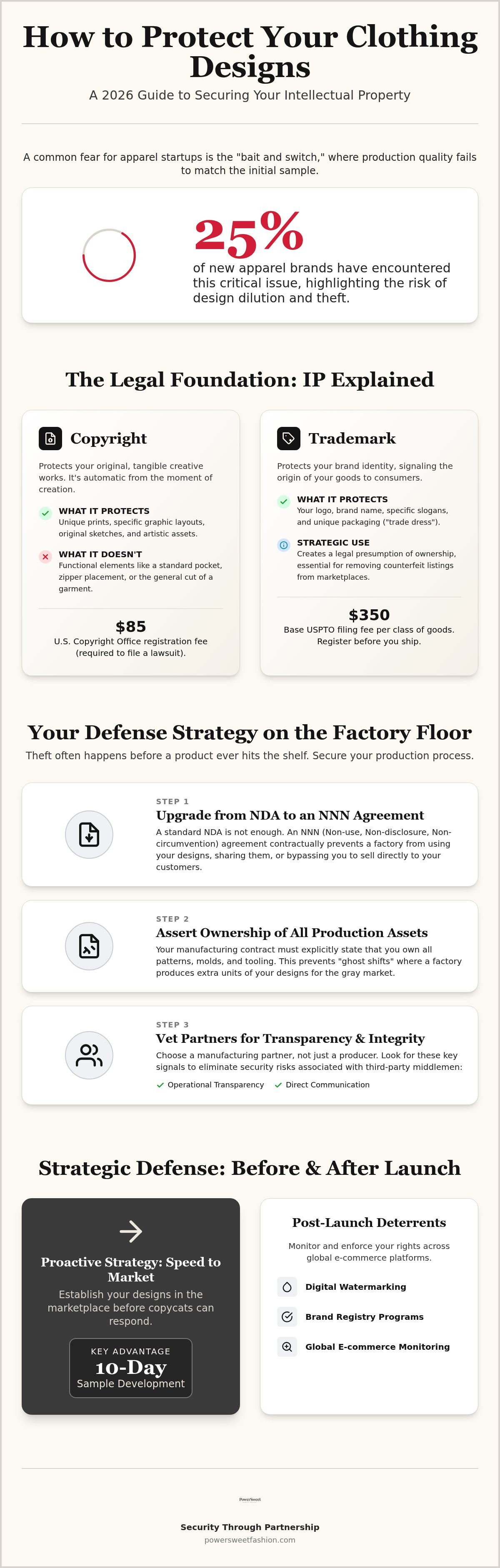
Nearly 25% of apparel startups have encountered "bait and switch" scenarios where production quality fails to match the initial sample. It's a staggering figure that highlights a deep-seated anxiety for every designer; the fear that your hard work will be stolen or diluted by cheap knock-offs. You've spent months perfecting patterns and sourcing fabrics. The thought of sending tech packs to an unknown factory is understandably stressful. You want to grow your brand, but you're likely wondering how to protect my clothing designs from being copied without sacrificing your production speed.
Protecting your vision is a logistical priority. This 2026 guide provides the roadmap you need to secure your intellectual property while scaling your women's clothing line. We'll break down the essential legal filings, including the updated $85 U.S. Copyright Office fees, to ensure your brand identity remains yours. Beyond the paperwork, you'll discover how to vet manufacturing partners for transparency and establish an end-to-end workflow that keeps your data safe. From 10-day sample development to low MOQ strategies that limit market exposure, we'll give you a clear checklist to move forward with confidence and precision.
Table of Contents
Understanding Fashion Intellectual Property: Copyright vs. Trademarks
Securing your intellectual property is the first step in learning how to protect my clothing designs from being copied. Many designers confuse trademarks with copyrights, but they serve very different defensive purposes. A trademark protects your brand identity, such as your logo, brand name, or a specific slogan. In contrast, copyright focuses on original creative works. While you can't copyright the functional "idea" of a dress, you can protect the specific expression of that design, such as a unique floral print or a specific graphic layout. This distinction is a cornerstone of Fashion Design Copyright law, which helps prevent competitors from simply duplicating your artistic assets.
Copyright protection is a powerful tool because it applies automatically from the moment you create your original sketches or digital prints. You don't need a certificate for the protection to exist, though registration is required if you ever need to file a lawsuit in the U.S. There are clear limitations, however. You cannot protect purely functional elements like a standard patch pocket, a basic zipper placement, or the general cut of a t-shirt. These are considered utilitarian features. To cover the broader visual identity of your line, you must look toward trade dress. Trade dress describes the total image and aesthetic configuration of a product that serves as a visual indicator of its brand origin.
When to Register a Trademark for Your Fashion Brand
Registering your trademark should happen well before you ship your first production run. In 2026, the base filing fee for a trademark application with the USPTO is $350 per class of goods. This investment creates a legal presumption of ownership that is vital for B2B operations. When you have a registered trademark, you have significantly more leverage to remove counterfeit listings from third-party marketplaces. It acts as a primary deterrent. Most copycats look for easy targets; a brand with visible trademark symbols and a registered name signals that you're prepared to defend your assets. We recommend filing in both your primary sales market and the region where your manufacturing takes place to prevent "trademark squatting" by foreign entities.
Design Rights: Registered vs. Unregistered
In many jurisdictions, unregistered design rights provide a three-year protection window from the date the design is first made available to the public. This is helpful for seasonal collections with a short shelf life. However, for a "hero" product that you expect to sell for multiple years, paying for a registered design is a strategic move. It provides a longer term of protection and a clearer legal standing. Regardless of which path you choose, you must maintain a meticulous paper trail. Keep every dated sketch, tech pack, and email exchange with your production team. These documents serve as the empirical evidence of your original work if you ever need to prove you were the first to create the design. When you're figuring out how to protect my clothing designs from being copied, your internal archives are your most valuable evidence.
Securing Your Designs During the Manufacturing Process
Design theft often happens before a product ever hits the retail shelf. It occurs in the "manufacturing leak" during sampling and production. If you're researching how to protect my clothing designs from being copied, your focus must shift from the courtroom to the factory floor. A standard Non-Disclosure Agreement (NDA) is a starting point, but it's often insufficient for international manufacturing. You need a Non-use, Non-disclosure, and Non-circumvention (NNN) agreement. This stronger contract prevents a factory from using your designs for their own benefit, disclosing them to third parties, or bypassing you to sell directly to your customers.
Contracts must be explicit about physical assets. Your manufacturing agreement should clearly state that you own all patterns, molds, and tooling developed during the project. Without this clause, some factories may claim ownership of the technical patterns they created based on your sketches. This ambiguity often leads to "ghost shifts," where a factory runs their machines after hours to produce extra units of your garments for the gray market. By securing ownership of the physical and digital patterns, you gain the legal right to demand their return or destruction if the partnership ends.
The Tech Pack: Your Blueprint and Legal Shield
A comprehensive tech pack is more than a set of instructions; it's a definitive record of your intellectual property. It documents every unique measurement, stitch type, and construction method. You should embed IP ownership clauses directly into every page of your technical documentation. This ensures that every technician and floor manager sees who owns the design. When you work with a sample development clothing manufacturer, this document becomes the baseline for quality and legal compliance. As noted by the U.S. Copyright Office on Fashion Design, while the general cut of a garment is hard to protect, the specific technical expressions within your blueprint provide a necessary layer of evidence in disputes.
Protecting Your Fabric and Trim Sourcing
Customization is a natural deterrent to copycats. Using generic buttons and zippers makes it easy for a rogue factory to replicate your look with off-the-shelf components. We recommend using custom-branded trims and proprietary fabric blends whenever possible. Replicating a specific hand-feel or a custom-engraved button requires significant investment from a thief. Transitioning to end to end clothing production also limits the number of vendors who handle your design data. Keeping the process within one trusted system reduces the risk of information leaking between multiple sub-contractors. If you're ready to secure your workflow, starting with a professional sample development phase is the safest way to test a new partner's integrity.
How to Vet a Clothing Manufacturer for Design Integrity
Transparency is the foundation of a secure manufacturing relationship. It's the most reliable indicator of a partner who respects your intellectual property. Research indicates that nearly 25% of apparel startups have encountered "bait and switch" scenarios where production quality fails to match the initial sample. This data highlights why direct communication with the production team is essential. By avoiding third-party "middlemen," you eliminate a common source of information leaks. Direct access ensures your tech packs and fabric sources stay within a closed loop. Always ask for references from established brands to verify a factory's history of design integrity.
Physical verification is a necessary step in the vetting process. You must confirm that the factory actually exists and possesses the equipment they claim to have. A trustworthy partner will have no issues with an open-door policy. They should allow for factory visits or, at the very least, provide live video tours of the production floor. This level of access proves they aren't outsourcing your work to unauthorized sub-contractors, which is a primary way designs are stolen before they reach the market.
The 'Open Door' Policy: Why Factory Visits Matter
Physical presence is a powerful deterrent against IP theft. It signals to the factory that you're an active, observant partner rather than a distant client. Visiting the facility allows you to meet the pattern makers and seamstresses who will handle your designs. This human connection builds mutual respect and accountability. You can also inspect their quality control measures firsthand. A secure factory has strict protocols for handling "seconds" or rejected garments, ensuring they're destroyed rather than sold out the back door. If a physical visit isn't possible, a live video tour is a non-negotiable requirement for vetting.
Portfolio Red Flags to Watch Out For
Scrutinize a factory's portfolio for evidence of past IP violations. If a manufacturer openly displays other clients' custom designs as their own "stock" items, they'll likely do the same with yours. You should prioritize factories that focus on Original Equipment Manufacturing (OEM) rather than those that sell their own house designs. Factories with house lines often have a conflict of interest; they may be tempted to "borrow" elements from your tech packs to improve their own retail offerings. Choosing a custom women's clothing manufacturer with a niche focus usually provides better security. These specialists rely on their reputation for protecting unique visions to attract high-end brands. As noted in the U.S. Copyright Office statement on fashion design, the legal landscape is complex, so your choice of partner is often your strongest defense. This is a critical component of learning how to protect my clothing designs from being copied effectively.
5 Practical Steps to Deter Design Theft Post-Launch
Once your collection launches, the battle for IP security shifts to the digital marketplace. Learning how to protect my clothing designs from being copied requires a proactive post-launch strategy that combines technical tools with legal action. Registering your brand on the Amazon Brand Registry or similar platform-specific protection programs provides the administrative tools needed to remove infringing listings quickly. You should also use digital watermarking in your high-resolution marketing photos. This technology embeds invisible data into your images, making it much easier to prove ownership when a copycat steals your professional photography for their own advertisements.
Speed to market is your most effective non-legal defense. Fast production cycles allow you to capture the trend and establish brand dominance before slow-moving copycats can react. If you find an infringement, have a pre-written cease and desist protocol ready to deploy immediately through your legal counsel. In international trademark law, the "First to File" rule grants rights to the entity that registers the mark first, while the "First to Use" rule prioritizes the brand that can prove the earliest commercial use of the design.
Monitoring the Market for Infringement
Vigilance is mandatory for long-term brand protection. Set up Google Alerts for your brand name and specific product titles to receive instant notifications whenever they appear on new websites. Use reverse image searches like Google Lens to identify unauthorized use of your campaign photography on foreign retail sites. If you discover theft on social media platforms like Instagram or TikTok, use their dedicated IP reporting tools to request a takedown. These platforms are increasingly responsive to legitimate claims from registered brand owners who provide clear evidence of original creation.
Building Brand Loyalty as a Shield
Customers value authenticity over price in the modern fashion market. If your brand story and garment quality are superior, your audience will choose the original over a cheap imitation every time. Highlight your design process and the "human element" behind each garment to build a deeper connection with your buyers. Partnering with a low MOQ women's clothing manufacturer allows you to keep collections exclusive and reduce the financial risk of overproduction. This strategy ensures you aren't sitting on excess inventory that could be liquidated and rebranded by unauthorized sellers. If you want to secure your next collection with a transparent partner, contact our production team to discuss our secure, end-to-end manufacturing workflow.
The PowerSweet Fashion Approach: Security Through Partnership
At PowerSweet Fashion, we treat manufacturing as a collaborative venture rather than a simple transaction. While legal filings provide a necessary foundation, real-world security is built through speed and operational transparency. Our 10-day sample development process serves as a strategic defensive tool. It allows you to finalize your vision and claim your space in the market before competitors have a chance to react. By the time a copycat attempts to replicate your look, your brand is already established as the original creator.
We utilize a low MOQ model to protect our clients' capital and intellectual property. High-volume production runs are often the primary targets for design theft because they offer the highest rewards for counterfeiters. By producing smaller, more frequent batches, you significantly reduce the financial impact if a design is eventually copied. This approach keeps your brand agile and your inventory secure. Because we specialize exclusively in custom women's apparel, our pattern makers and quality control teams provide specialized care for your unique technical specifications. We invite you to visit our facilities to meet the people behind the machines; this open-door policy builds the trust necessary for a secure, long-term partnership.
Streamlined End-to-End Production
Keeping fabric sourcing, pattern making, and bulk production under one roof is the most effective way to minimize IP leaks. When your design data stays within our internal system, you eliminate the risks associated with moving tech packs between multiple sub-contractors. We prioritize long-term brand partnerships over one-off orders, which aligns our success with the protection of your designs. Our internal quality control protocols act as a final safeguard, ensuring that every finished garment meets your standards and stays within a secure chain of custody until delivery.
Scaling Your Brand Safely in 2026
In the fast-paced 2026 fashion market, timing is your strongest shield. We support influencer and boutique brands by moving from initial prototype to bulk production in just 15-20 days. This rapid turnaround is a key component of how to protect my clothing designs from being copied; you stay ahead of fast-fashion trends while maintaining a secure, end-to-end supply chain. We provide the technical expertise and logistical stability you need to scale without compromising your artistic integrity.
Secure Your Brand’s Future Through Strategic Production
Protecting your fashion label in 2026 requires more than just legal registration. It demands a proactive approach that integrates intellectual property security directly into your manufacturing workflow. We've discussed the critical role of NNN agreements, the value of digital watermarking, and the necessity of vetting partners for true operational transparency. When you understand how to protect my clothing designs from being copied, you gain the confidence to scale your collections without the constant fear of market dilution.
PowerSweet Fashion acts as your authoritative facilitator throughout the entire production journey. We specialize in custom women's apparel with a focus on speed and reliability. Our 10-day sample development and low MOQ production strategies are designed to help you claim your market position quickly and safely. We welcome factory visits and maintain direct communication to ensure your design data stays within a secure, trusted system. It's time to move your brand forward with a partner who prioritizes your intellectual property as much as you do.
Start your secure production journey with PowerSweet Fashion. Let's build your vision on a foundation of trust and industrial precision.
Frequently Asked Questions
Can I legally copyright a specific clothing design?
Copyright applies automatically to your original 2D sketches, fabric prints, and graphic layouts from the moment of creation. However, it doesn't protect the functional 3D cut or shape of a garment. For full protection, you should combine copyright for your prints with trademarks for your brand name. This multi-layered approach is the standard recommendation for designers learning how to protect my clothing designs from being copied in the modern market.
What is a NNN agreement and do I need one for manufacturing?
A NNN agreement stands for Non-use, Non-disclosure, and Non-circumvention. You absolutely need one when working with international manufacturers. Unlike a standard NDA, the NNN agreement specifically prevents a factory from using your designs for their own retail lines or bypassing you to sell directly to your customers. It provides a much more robust legal framework for enforcing your rights in jurisdictions where intellectual property laws vary.
How do I stop a factory from selling my designs to other customers?
Preventing unauthorized sales starts with choosing a factory that operates with full transparency. You should ensure your contract explicitly states that you own all physical patterns and molds. Additionally, vetting your partner for an "open-door" policy allows you to verify that they have strict protocols for destroying "seconds" and rejected garments. This prevents your designs from leaking into the gray market through unauthorized factory backchannels or "ghost shifts."
Is it worth trademarking my brand name before I have a product?
Trademarking your brand name early is a strategic investment in your business's future. The USPTO filing fee is $350 per class of goods, and having this registration allows you to join IP protection programs like Amazon Brand Registry before your first collection even ships. It establishes a "First to File" priority, which is critical for deterring copycats who might try to register a similar name once your products start gaining traction.
What should I do if I find a copy of my design on a fast-fashion site?
You should immediately deploy a pre-written cease and desist protocol through your legal counsel. Use the reporting tools provided by major e-commerce and social media platforms to request a takedown of the infringing listing. Providing evidence such as dated tech packs and digital watermarks from your marketing photography'll strengthen your claim. It's essential to act quickly to prevent the copycat from saturating the market with a low-quality version of your work.
Does a tech pack count as legal proof of my design ownership?
A tech pack is a vital piece of evidence in proving your design ownership. It documents the specific technical expressions, measurements, and construction methods that make your garment unique. While a tech pack alone isn't a government-issued patent, it serves as a dated "blueprint" that proves you're the original creator. Including IP ownership clauses on every page of your tech pack further reinforces your legal standing during a dispute.
How can low MOQ manufacturing help protect my small fashion brand?
Low MOQ manufacturing limits the volume of inventory exposed to potential theft risks. When you produce smaller batches, you reduce the financial impact if a copycat eventually replicates your design. This model also allows you to test designs quickly and establish your brand as the "original" in the marketplace. By keeping your collections exclusive, you make it less profitable for counterfeiters to invest in the specialized tooling required to copy your unique apparel.
What are the most common ways fashion designs get stolen?
Designs are most frequently stolen through "ghost shifts" at unvetted factories or through the theft of high-resolution marketing photography. Another common method is the "bait and switch," where a manufacturer uses your tech pack to produce a low-quality version for a competitor. Understanding how to protect my clothing designs from being copied involves securing both your digital assets and your physical supply chain through transparent partnerships and robust legal agreements.


Comments