
Clothing Quality Control Checklist: 2026 Fashion Guide

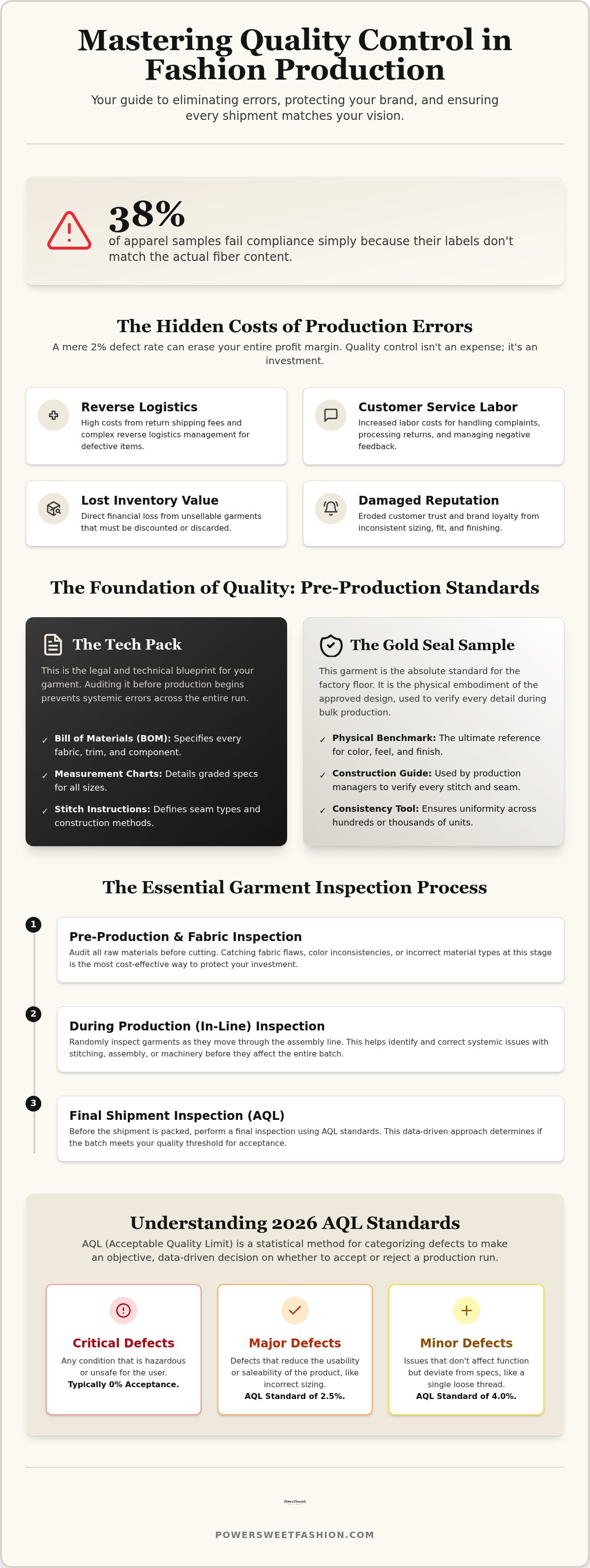
Did you know that 38% of apparel samples fail compliance simply because their labels don't match the actual fiber content? It's a staggering figure that highlights how easily a production run can spiral into a logistical nightmare. When you're managing a brand, the distance between a perfect sample and a flawed bulk shipment often comes down to a single document; a professional clothing production quality control checklist. This tool is your primary defense against the sizing inconsistencies and fabric substitutions that drive return rates up and customer trust down.
We understand the frustration of receiving a bulk shipment that doesn't mirror the 10 day sample you originally approved. You've worked hard to build your creative vision, and you shouldn't have to settle for poor finishing or missed details. This guide promises to equip you with a repeatable, systematic process to master every stage of garment inspection. We'll walk through the essential AQL standards for 2026, the critical checkpoints for fabric sourcing, and the specific steps needed to ensure your factory remains a transparent partner in your brand's growth.
Table of Contents
Why Quality Control is the Backbone of Fashion Scaling
Scaling a fashion brand represents a high-stakes transition from creative vision to industrial reality. While many designers focus on aesthetic appeal, the most successful brands prioritize the mechanics of production. Without a rigorous clothing production quality control checklist, scaling often leads to a cycle of high returns and eroded margins. In 2026, fashion consumers are shifting away from disposable fast-fashion; they now demand durability and precise construction. This shift makes consistent quality a competitive advantage rather than just a logistical hurdle.
Consistent oversight builds the necessary trust with boutique retailers and global distributors who cannot afford to stock inconsistent inventory. While factories typically maintain internal teams, third-party or client-led inspections provide an essential layer of transparency. This objective perspective ensures that the final bulk shipment matches the high standards set during your initial sample development phase.
The Financial Impact of Production Errors
Errors on the factory floor are expensive. When a defect reaches a customer, you lose the shipping cost, the original production cost, and the customer's lifetime value. A mere 2% defect rate can erase your entire profit margin when you factor in reverse logistics and restocking fees. Cost of Quality in apparel manufacturing refers to the total financial investment required to ensure products meet specifications plus the losses incurred when they fail. To mitigate these risks, professional brands utilize standardized Fabric Inspection Methods at the very start of the cycle. Catching flaws before the cutting process begins is the most effective way to protect your ROI.
Reverse logistics and return shipping fees.
Customer service labor costs for handling complaints.
Lost inventory value from unsellable garments.
Diminished marketing ROI due to high churn rates.
Protecting Brand Reputation in a Digital Market
Digital marketplaces prioritize social proof; one batch of poorly sized garments can trigger a wave of negative reviews that take months to rectify. Fit consistency is the primary driver of brand loyalty in women's wear. If a customer buys a size medium dress that fits perfectly, they expect every subsequent purchase to mirror that experience. By leveraging end to end clothing production, brands maintain a direct line of sight from the initial 10-day sample to the final bulk delivery. This transparency ensures that the final product reflects the quality promised to your audience. A comprehensive clothing production quality control checklist serves as the bridge between your technical specifications and the physical reality of the garment, ensuring your brand stays synonymous with reliability.
Pre-Production Quality Control: Setting the Standard
Many brands make the common mistake of waiting until garments are finished to start their inspection. This reactive approach leads to wasted fabric, missed deadlines, and expensive rework. True excellence begins with a clothing production quality control checklist that prioritizes the pre-production (PP) phase. By auditing every technical detail before the bulk cutting begins, you eliminate systemic errors that would otherwise affect the entire production run. This proactive alignment ensures that your creative vision translates perfectly into a physical product.
Central to this phase is the creation of the Gold Seal Sample. This garment represents the absolute standard for the factory floor. It isn't just a prototype; it's the physical embodiment of your approved design that production managers use to verify every stitch and seam. During our 15-20 day bulk production cycle, this sample serves as the constant reference point to ensure consistency across hundreds or thousands of units. Without this "perfect" reference, minor deviations in construction can quickly become major defects.
The Role of the Tech Pack in Quality Control
Your Tech Pack serves as the legal and technical blueprint for your collection. A production-ready Tech Pack must include a comprehensive Bill of Materials (BOM), detailed measurement charts, and specific stitch instructions. Working with a specialized sample development clothing manufacturer allows you to refine these specifications during the prototyping stage. This collaboration ensures that grading rules are accurately applied across all sizes. It prevents the "size drift" that frequently leads to high return rates in women's wear, especially when moving from a sample size to the full range.
Material Verification and Testing
Fabric is the most volatile variable in apparel production, making sourcing the first step of quality control. Before the first cut is made, we verify the fabric weight (GSM) and composition against the original order specs. We utilize standardized AATCC Test Methods to assess colorfastness, shrinkage, and pilling resistance. This scientific approach ensures the bulk fabric matches the high-quality local supply chain standards we established during your 10-day sample turnaround.
Verification at this stage includes several critical checks:
GSM Verification: Confirming the fabric density meets the technical specification.
Trim and Hardware Audit: Testing zippers, buttons, and labels for functionality and placement.
The Pull Test: Ensuring embellishments and delicate attachments are secure enough for consumer wear.
Setting these rigorous standards early creates a culture of transparency between you and the manufacturing facility. If you're looking for a partner who prioritizes this level of technical precision, you can explore our production services to see how we manage these critical pre-production steps to protect your brand's reputation.
The Essential Clothing Production Quality Control Checklist
Moving from a single approved sample to a bulk run of hundreds requires a shift from artistic creation to rigorous industrial oversight. A comprehensive clothing production quality control checklist serves as the definitive manual for this transition. It ensures that every garment leaving the factory floor maintains the integrity of your brand. While the pre-production phase sets the standard, this checklist governs the actual physical execution of your order, covering everything from the first stitch to the final polybag sealing.
Consistency is the primary challenge in mass manufacturing. Minor variations in dye lots or machine calibration can lead to significant discrepancies across a shipment. By following a structured inspection process, you catch these deviations before they reach your warehouse. This systematic approach is what allows us to match the precision of our 10-day samples throughout the entire 15-20 day bulk production cycle.
Fabric and Aesthetic Integrity
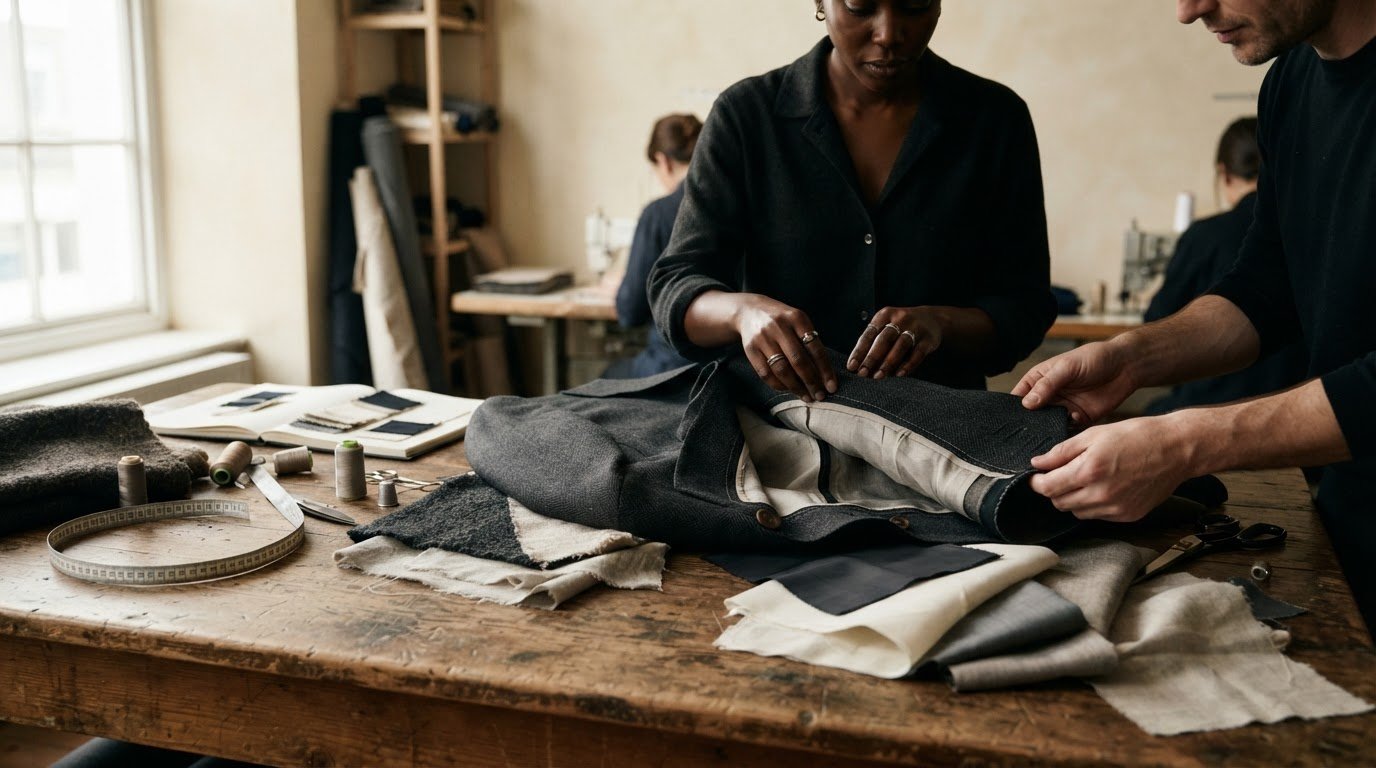
Visual inspection is the first line of defense against aesthetic defects. We examine fabric batches for "shading," which occurs when different rolls of the same fabric show slight color variations. Standards established by the American Association of Textile Chemists and Colorists (AATCC) provide the scientific basis for these visual assessments. Our inspectors also look for surface flaws such as slubs, holes, or print misalignments that compromise the garment's value. Beyond color, the hand-feel and drape must remain identical to the approved prototype to ensure customer satisfaction.
Stitching and Structural Standards
The durability of a garment depends on its structural execution. We verify stitch density, measured in Stitches Per Inch (SPI), to ensure it meets the technical specifications in your Tech Pack. Inconsistent tension or skipped stitches are immediate red flags that indicate machine issues or operator error. We also inspect seam allowances and edge finishes, ensuring that a French seam or overlocking is applied exactly as requested. Critical stress points, such as pocket corners and zipper bases, must feature bar tack reinforcement to prevent tearing during consumer use.
Functionality, Measurement, and Packaging
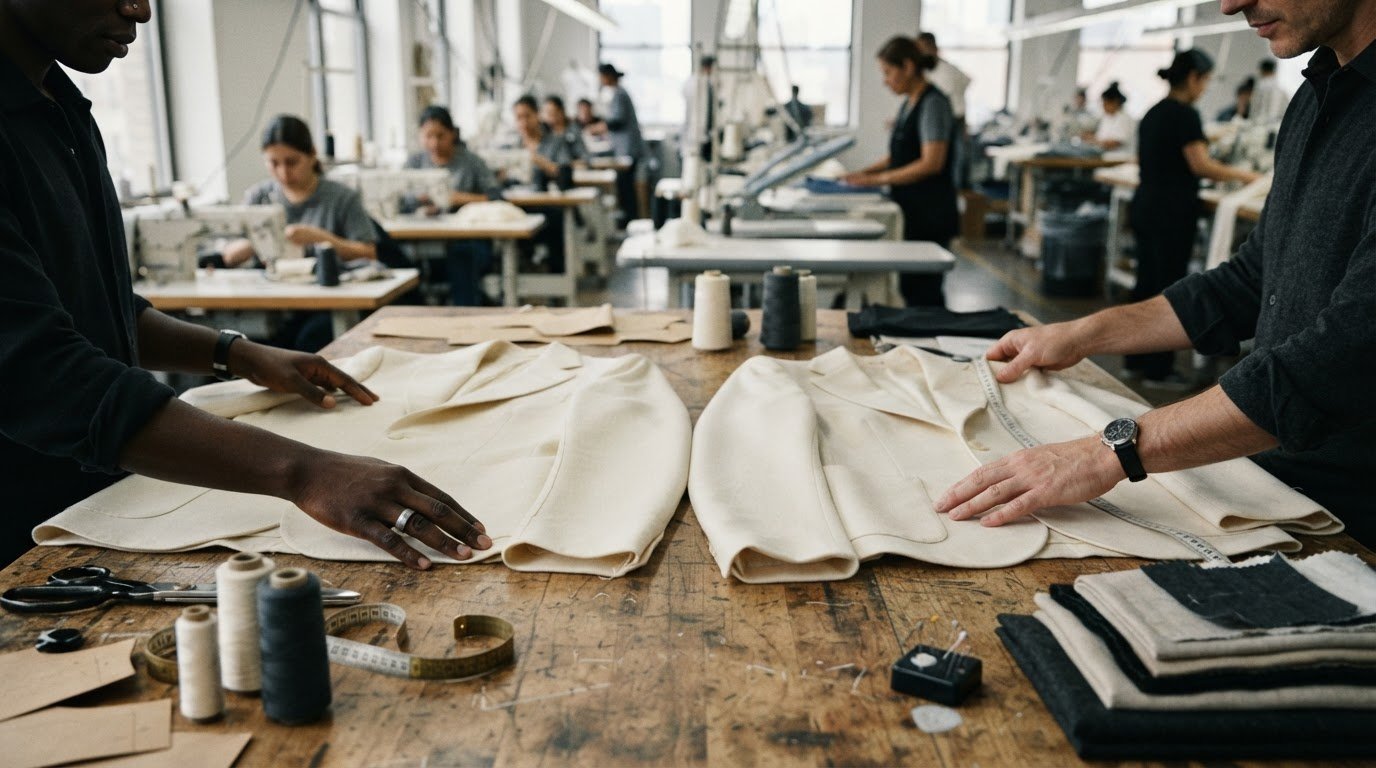
A garment that looks perfect but fails to function is a liability. Our clothing production quality control checklist includes a rigorous functionality test for all hardware. We verify that zippers glide smoothly, buttons are securely attached, and elastic components demonstrate proper recovery. Measurement verification is equally vital; we compare finished garments against the spec sheet tolerances to prevent size drift. Finally, we audit the packaging phase to ensure compliance with modern retail standards:
Label Accuracy: Verifying fiber content and care instructions match legal requirements.
Hangtag Placement: Ensuring price tags and barcodes are positioned correctly for scanning.
Polybag Compliance: Checking for suffocation warnings and proper sealing to protect the garment during transit.
This end-to-end oversight ensures that your shipment arrives retail-ready, protecting your margins and your reputation.
Measuring Success: AQL Standards and Defect Classification
Quality is not a subjective feeling; it's a measurable metric. In the apparel industry, we use the Acceptable Quality Level (AQL) to determine whether a production lot meets the standards for shipment. As of 2026, the global benchmark for these sampling procedures is ISO 2859-1:2026. This statistical tool allows us to inspect a representative sample of your order rather than every single garment, saving significant time without compromising reliability. Your clothing production quality control checklist must integrate these AQL limits to provide a clear "Pass" or "Fail" result based on empirical data, not guesswork.
For high-end women's wear, the industry standard typically follows an AQL of 1.5 for major defects and 2.5 for minor defects. Critical defects always maintain a 0.0 AQL, meaning a single occurrence can fail the entire batch. Even for brands working with a low MOQ women's clothing manufacturer, these standards are non-negotiable. Smaller batches actually require tighter oversight because a few errors represent a much larger percentage of your total inventory and can quickly erode your brand's reputation.
The Three Tiers of Garment Defects
Effective inspection requires clear categorization. We divide issues into three specific tiers to help you prioritize which defects require immediate action and which can be managed through minor adjustments.
Critical Defects: These are safety hazards or legal violations. Examples include broken needles left in seams or missing mandatory safety filings required by the U.S. CPSC. The tolerance for these is zero; any critical defect results in an automatic batch failure.
Major Defects: These are functional or aesthetic issues that make the garment unsellable. Incorrect sizing, large stains, or significant fabric shading fall into this category. These items would be rejected by any boutique retailer or distributor.
Minor Defects: These are small aesthetic deviations that don't affect the garment's function or overall appearance. Uncut threads or slightly crooked hangtags are common examples. While not ideal, they don't usually result in a customer return.
How to Read an Inspection Report
An inspection report is your window into the factory's performance. Focus first on the relationship between the sample size and the total lot size. If the number of defects found exceeds the "Acceptance" number specified in the AQL table, the batch fails. When this happens, you have the authority to request a 100% sorting, where the factory must inspect every piece and remove all defective items at their own expense. This level of transparency is essential for maintaining a stable relationship with your production partner. If you need a partner that provides detailed, transparent reporting for every run, partner with us for your next production to ensure your standards are always met.
Implementing End-to-End Quality Control with Your Manufacturer
Quality control shouldn't be a hurdle you clear at the finish line. Instead, it's a continuous dialogue that begins the moment you start your custom women's clothing manufacturer search. Establishing a "Quality First" relationship requires an open-door policy where the factory welcomes your oversight rather than hiding the process. By integrating your clothing production quality control checklist into the daily workflow of the factory floor, you transform a static document into a live management system that protects your brand's reputation.
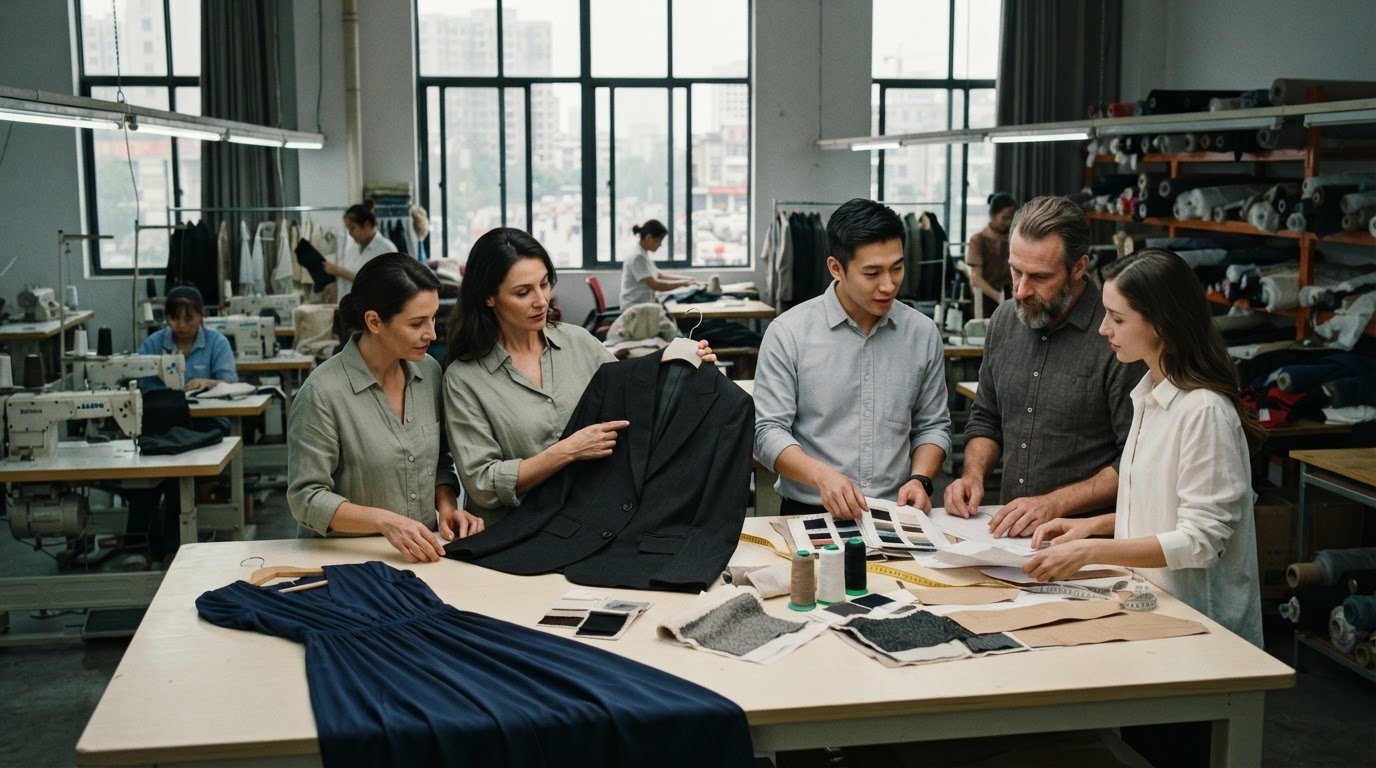
Transparency is the foundation of this partnership. We encourage live QC updates and, where possible, in-person factory visits to witness the production journey firsthand. This proximity allows for immediate course correction. If a batch fails a specific checkpoint, a streamlined feedback loop ensures that the root cause is identified and rectified before the rest of the lot is affected. This collaborative approach prevents the friction that often arises when defects are only discovered after the final shipment has been packed.
Choosing a Partner that Prioritizes QC
When evaluating potential partners, look beyond the price per unit. Ask specific questions about their internal quality management system and how they handle the transition from a 10-day sample to full-scale production. A vertically integrated partner that manages both fabric sourcing and garment construction offers a significant advantage. This integration ensures that the material quality established at the start of the project remains consistent throughout the 15-20 day bulk production cycle. Speed and quality coexist when the factory has a systematic, data-driven approach to every stitch.
The Future of QC: AI and Digital Tracking in 2026
The industry is moving toward a more digitized production floor. In 2026, real-time monitoring and digital "twins" of garments allow brands to track measurements and construction progress remotely. Automation is increasingly handling high-precision tasks, such as laser cutting and automated measurement checks, which significantly reduces the margin for human error. These technologies don't replace the human eye; they enhance it, providing a more granular level of detail for your clothing production quality control checklist.
As regulations like the EU Digital Product Passport approach in 2027, having a digitally tracked supply chain will become a legal necessity. Ready to scale your brand with a partner that values this level of precision? Partner with a manufacturer that guarantees technical accuracy at every step of the production journey, from the first pattern to the final delivery.
Scaling Your Brand with Precision and Confidence
Implementing a rigorous clothing production quality control checklist is the most effective way to transition from a creative concept to a successful, scalable fashion brand. By prioritizing pre-production audits and strictly adhering to modern AQL standards, you eliminate the high costs of returns and protect your reputation in a competitive digital market. Quality isn't just about catching errors at the end; it's about building a transparent partnership with a manufacturer that understands the technical nuances of women's apparel construction.
At PowerSweet Fashion, we bridge the gap between design and delivery with specialized expertise and 10-day sample turnarounds. Our process is built on transparent production oversight, ensuring your bulk shipments mirror the excellence of your original prototypes. Don't leave your brand's future to chance. Request a Production Quote from PowerSweet Fashion today to secure a partner that values precision as much as you do. We're ready to help you turn your vision into a retail-ready reality.
Frequently Asked Questions
What is a clothing production quality control checklist?
A technical document used to verify that garments meet specific brand standards during and after production. It includes criteria for visual aesthetics, structural integrity, and functional performance. By using a clothing production quality control checklist, you ensure every unit matches your approved 10-day sample. It serves as a definitive guide for inspectors to identify deviations in stitching, sizing, or fabric quality before products reach your customers.
How many garments should be inspected in a bulk order?
The number of garments inspected depends on your chosen AQL level and total lot size. Industry standards typically follow the ISO 2859-1 sampling tables, which determine a statistically significant sample size to represent the entire batch. For a lot of 500 pieces, an inspector might check 50 to 80 units. This approach provides reliable data on the overall quality without the time-consuming expense of a 100% inspection for every order.
What is the difference between a major and a minor defect in apparel?
Major defects are issues that make a garment unsellable or likely to be returned, such as incorrect sizing or visible fabric stains. Minor defects are small aesthetic deviations that don't impact the garment's function, like a single uncut thread or a slightly crooked hangtag. While major defects usually lead to a batch failure if they exceed AQL limits, minor defects are often noted for factory feedback but allowed within a specific tolerance.
Can I perform quality control myself without visiting the factory?
You can manage quality control remotely by hiring third-party inspectors or requesting detailed digital reports and live video updates from your manufacturer. We offer client-led factory oversight options that provide transparency throughout our 15-20 day bulk production cycle. While a physical visit offers the most direct insight, high-resolution photos and measurement logs allow you to verify your clothing production quality control checklist requirements from any location before you approve the final shipment.
How do AQL standards work for small batch production?
AQL standards for small batches require a higher percentage of the lot to be inspected to maintain statistical accuracy. In low MOQ production, even a few defects can represent a significant portion of your inventory. We apply the same rigorous standards to small runs as we do to large-scale orders. This ensures that emerging brands receive the same level of precision and durability found in high-volume fashion lines, protecting your initial market entry.
What happens if my production batch fails the quality inspection?
If a batch fails, the manufacturer must identify the root cause and rectify the issues before the goods are shipped. This often involves a 100% sorting process where every garment is inspected and defective items are repaired or replaced at the factory's expense. A failed report is a critical signal to halt logistics. It ensures that only retail-ready products leave the facility, preventing the high costs associated with international returns and customer dissatisfaction.
Why is fabric sourcing considered part of the QC process?
Quality control begins with materials because the integrity of the final garment depends on the raw fabric. Sourcing involves testing for shrinkage, colorfastness, and GSM weight to ensure the bulk material matches the approved sample. By leveraging high-quality local supply chains during the sourcing phase, we eliminate potential issues like pilling or shading early. This proactive step prevents systemic defects that cannot be fixed once the fabric has been cut.
How does a Tech Pack help with quality control?
A Tech Pack acts as the primary technical blueprint that defines every measurement, material, and stitch requirement for your design. It provides the objective "source of truth" that inspectors use to verify compliance on the factory floor. Without a detailed Tech Pack, quality control becomes subjective and prone to error. It ensures that grading rules are applied correctly across all sizes, which is the most effective way to prevent fit-related returns.
Comments