
Managing Production During Peak Seasons by Aligning Stock and Staffing

A peak-season surge can turn a small forecasting error into excess stock, shortages, rushed purchasing, and pressure on production teams. Managing production during peak seasons means aligning inventory, materials, and staffing with expected demand before orders rise, then adjusting as actual sales come in.
Growing fashion brands know this pressure well: a popular style can sell faster than expected, while another ties up stock and capacity. Reviewing sales patterns from previous years helps identify seasonal products and how long their peak demand typically lasts.
This guide explains how to forecast demand, plan replenishment, and prepare production capacity without compromising quality. It also covers staffing and coordination across teams, suppliers, and logistics, so materials and people are ready when demand rises. The aim is a plan that can absorb a peak without relying on last-minute changes.
Table of Contents
1. Inventory optimization and demand-driven replenishment
Managing production during peak seasons starts with a demand forecast based on sales history, market trends, and customer input. Compare average monthly sales with past peak-season sales to estimate likely demand for each product. Forecasting software and production-planning systems can combine these inputs and help adjust schedules as orders change. Use live inventory records to compare stock on hand with planned demand. Set material order dates using the forecast and supplier lead times, rather than waiting for shortages.
Hold enough inventory to meet expected demand without tying up excess stock. A safety buffer for critical fabrics or components can protect production if deliveries are delayed. Just-in-time replenishment may reduce carrying costs in quieter periods, while flexible schedules let teams raise output before a peak and scale back afterward. A practical plan for managing production during peak seasons matches materials, machinery, and labor to the forecast. Review stock and throughput regularly: overproduction can leave surplus goods, while underproduction risks stockouts and lost sales.
Account for regional shutdowns when planning seasonal freight. Chinese New Year usually falls between late January and early February. Many factories in China and Southeast Asia close for a week or more, and production may take about a month to fully resume. Map these dates against material arrivals, order critical inputs early, and prepare alternatives for delayed deliveries or unexpected demand changes.
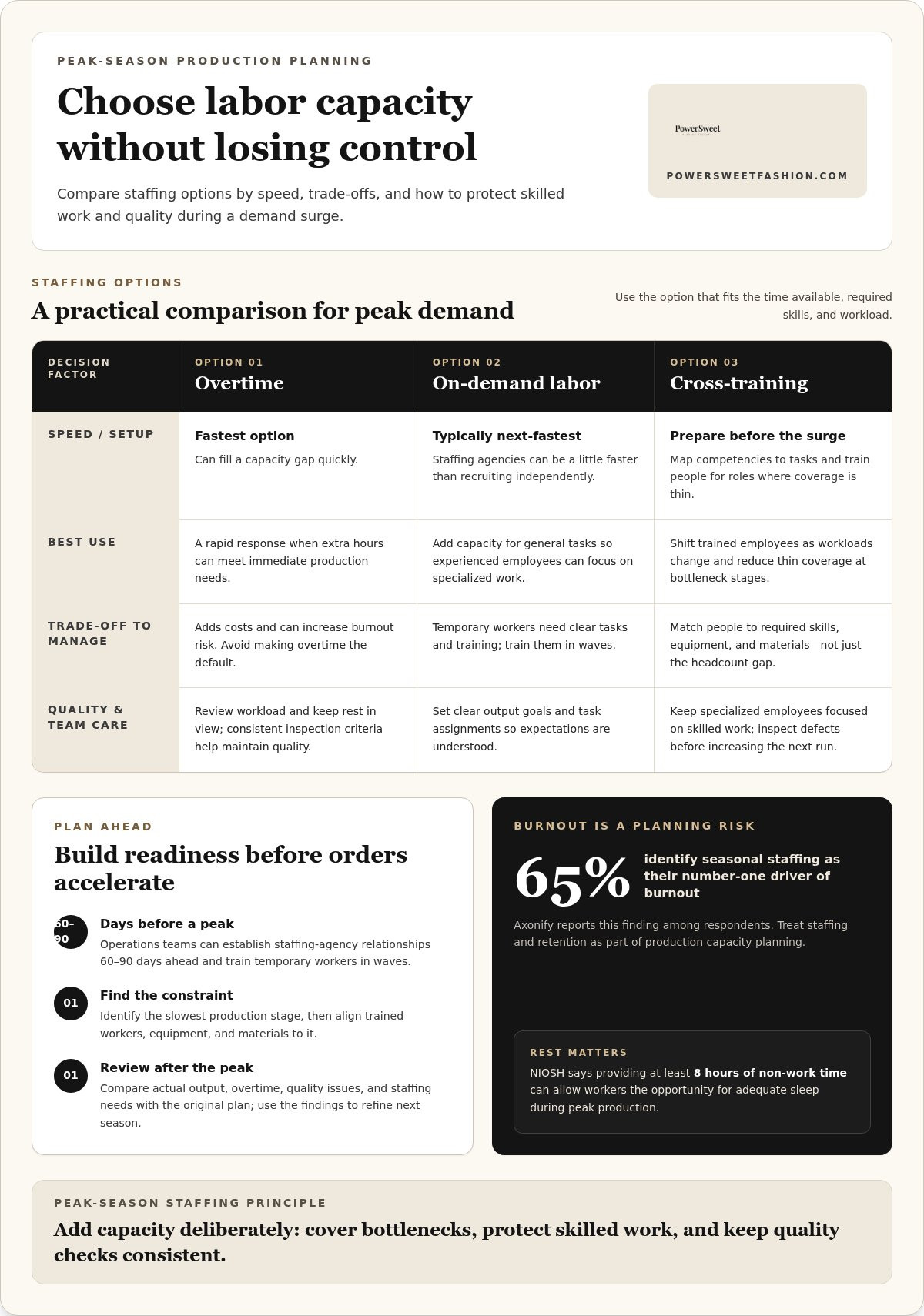
Match labor sources to the time available and required skills. Overtime may be the fastest option, but it adds costs and can increase burnout risk. On-demand labor is typically the next-fastest option; staffing agencies can be a little faster than recruiting independently. Assign general tasks to additional workers so experienced employees can focus on specialized work. Maintain quality control with consistent inspection criteria and by reviewing defects before increasing the next run. The National Institute for Occupational Safety and Health (NIOSH) says providing at least 8 hours of non-work time can allow workers the opportunity for adequate sleep during peak production.
2. Workforce planning, cross-training, and employee retention
Build the staffing plan before orders accelerate. Operations teams can establish agency relationships 60-90 days before a peak and train temporary workers in waves. Map employee competencies against production tasks, then cross-train people for roles where coverage is thin. Flexible schedules and part-time support can add capacity without permanently expanding the workforce. Set clear output goals so each person understands how their work affects delivery.
Retention matters during a surge. Axonify reports that 65% of respondents identify seasonal staffing as their number-one driver of burnout. Avoid making overtime the default: it may fill a gap quickly, but increases costs and can strain employees. Use workload reviews, performance rewards, and practical task assignments to keep expectations clear. Give specialized employees time for skilled work by assigning general tasks to additional workers.
Prevent bottlenecks by identifying the slowest production stage, then matching trained workers, equipment, and materials to that constraint. Cross-training allows supervisors to shift people as workloads change, while staggered schedules can keep work moving between stages.
Plan Christmas and New Year delivery schedules months in advance. Build a calendar around retailer deadlines, production stages, material arrivals, and shipping windows. Align temporary hiring and training with the calendar, and prepare backup staffing and supply plans for delays. Cash-flow forecasts and reserves can help cover seasonal purchasing and unexpected operating needs without disrupting production.
After the peak, compare actual output, overtime, quality issues, and staffing needs with the original plan. Record which roles became bottlenecks and where training improved flexibility; use those findings to refine next season’s schedules and budget. For fashion brands aligning seasonal capacity with garment production, consider custom women’s clothing production as part of the planning process.
3. Cross-department communication and collaboration
Create one operating plan that connects sales, marketing, manufacturing, and logistics. Sales can share order changes and customer signals; marketing can flag campaign timing; production can translate those updates into capacity needs. Assign an owner to each forecast update and record expected quantities, material status, and delivery deadlines in a shared system. ERP tools can connect business processes, while shared performance metrics give teams consistent targets. Review the plan when orders or supply conditions change so every department can act on the same information.
Set clear commitments and early warning processes with suppliers. Share production schedules and material requirements, then agree how suppliers will report delays, capacity limits, or quality issues. For critical fabrics, components, and packaging materials, identify alternatives and secure vendor capacity early—sourcing through specialized printers like Printwell Canada ensures custom labels and stickers are ready before inventory reaches fulfillment. Shorter lead times can help teams respond to demand shifts, but only when purchasing and production share the updated plan. Keep contingency actions visible to sales and logistics so a material delay does not become a missed customer deadline.
Coordinate logistics partners around receiving dates, warehouse capacity, and shipping schedules. A third-party logistics provider can help manage fluctuating warehousing demand, while real-time tracking and route planning improve visibility into deliveries. Review at-risk shipping routes and confirm lead times early with transportation and receiving partners. If plans change, tell production and warehouse teams about the revised arrival window. This helps prevent labor waiting for goods and clarifies which orders need priority handling.
Retailer collaboration can give manufacturers useful insight into customer behavior and changing demand. Share order deadlines, expected volumes, and supply constraints before the peak, then use retailer feedback to adjust production priorities. Agree on shared measures, such as order status, output, and delivery performance, so teams can spot exceptions and respond quickly. For example, during a seasonal campaign, a retailer’s revised order mix should reach sales, production, and logistics together, not as separate updates. Clear handoffs strengthen working relationships and help protect delivery commitments.
4. Identifying seasonal products and peak-season duration
Identify seasonal products by comparing each product’s sales with its normal trendline across the year. Look for repeatable increases, not a single unusual order, then compare average monthly sales with peak-season sales from previous years. In one example, Product Z sells 20% more during Q2 than other products. If its increase falls to 10% in following quarters, that pattern suggests a concentrated peak rather than year-round growth. Use these insights to set product-specific production priorities.
Peak duration depends on the product and buying calendar. July and August are peak months for seasonal shipments, including tourism, vacation, and summer-consumption products. For holiday goods, Black Friday and Cyber Monday fall at the end of November and begin the Christmas peak season; shipment demand peaks during the week leading up to December 25. Compare sales and order timing across years to identify when demand starts rising, reaches its high point, and returns toward baseline. Those periods define when extra capacity matters most.
What risks and contingency plans should manufacturers consider? A forecast that is too high can leave excess stock and holding costs; a low forecast can cause stockouts and lost sales. Prepare separate responses for demand below forecast, above forecast, or rising before it suddenly drops. Set trigger points using current orders and sales, then adjust production, material commitments, and workforce plans as the evidence changes. These steps help operations respond effectively without treating every product as equally critical.
Review the seasonal plan after each peak. Compare actual demand, production output, stock remaining, and delivery timing against the forecast, then record what changed and why. For example, if a summer style’s sales rise earlier than expected, use that pattern to move its next production window forward. Apply the same review to quieter periods, so inventory and capacity decisions reflect real sales rather than assumptions. For fashion brands planning a seasonal range, explore custom women’s clothing production as a way to align garment output with identified demand periods.
PowerSweet Fashion: Custom Women's Clothing Production
PowerSweet Fashion supports fashion brands preparing women’s clothing ranges for seasonal demand. Choose its Custom Women's Clothing Production when forecast sales call for coordinated garment production, or use Sample Development to refine a style before committing to a larger run. Fabric Sourcing and Quality Control Services support material selection and production checks, linking planning decisions to finished garments.
Low minimum order quantities can suit brands balancing peak-season stock against the risk of excess inventory. Samples are ready in 10 days, and bulk production takes 15-20 days, giving teams concrete timelines to include in their seasonal schedules. Share your product requirements and expected demand to start a production discussion.
Contact PowerSweet Fashion or visit powersweetfashion.com to discuss your seasonal production needs.
Build a stronger seasonal planning cycle
Make each peak a learning opportunity for the next collection. Record what changed, which decisions helped production stay on track, and where teams needed clearer information. Turn those observations into practical updates to product selection, schedules, and handoffs before the next demand window.
For a fashion brand, managing production during peak seasons is an ongoing planning discipline, not a one-time response. PowerSweet Fashion supports this work through Custom Women's Clothing Production, Sample Development, and Fabric Sourcing, helping brands move from seasonal product plans to production-ready garments.
Bring your upcoming collection, demand expectations, and production priorities into the conversation. Contact PowerSweet Fashion to discuss how these needs can fit together. With a clear plan and the right production partner, your next season can begin with greater focus and confidence.
Frequently Asked Questions
Which impact can peak season cause?
Peak season can increase revenue opportunities while putting pressure on production, fulfillment, and customer service. When orders exceed capacity at one stage, work can queue there even if other teams have time available. For example, a sewing line may finish garments faster than inspection can release them. Track unfinished work between stages, order changes, and late shipments to identify where demand is creating strain.
How do manufacturers forecast demand for peak seasons?
Manufacturers forecast demand by combining past sales with current signals, such as confirmed orders, promotion plans, returns, and retailer feedback. Review performance by product, size, and color, since strong category sales can hide uneven demand across variants. Build a base forecast and alternative scenarios, then update them as orders arrive. This helps distinguish a sustained trend from a short-lived sales spike.
How should production capacity be planned for seasonal demand spikes?
Plan capacity around the operation’s constraint, not just total factory output. Compare each stage’s available hours with its workload, including setup, maintenance, inspection, and changeovers. If cutting is the constraint, adding sewing hours alone will not clear the queue. Test the schedule against different product mixes, assign trained staff to critical stages, and reserve flexibility for urgent orders without disrupting work already underway.
What are the best ways to manage seasonal inventory and safety stock?
Set safety stock according to an item’s importance, how difficult it is to replenish, and how much demand varies. Protect materials that could stop production if they run short, while managing finished goods cautiously when styles or colors may lose relevance. Set reorder triggers, review exceptions regularly, and separate committed stock from available stock so teams do not promise the same units twice.
When should companies hire seasonal workers or add overtime shifts?
Add labor when forecast workload exceeds available capacity for long enough to justify the change. Overtime can address a short-term gap when current employees have the required skills; seasonal workers may suit a longer period of extra capacity or general tasks. Account for recruitment, training, supervision, and handover time. A skills matrix helps identify where new hires can contribute safely and effectively.
How much does temporary labor, overtime, or extra shifts cost during peak season?
There is no single total: costs depend on local wage rates, overtime premiums, staffing-agency charges, training, supervision, shift length, and expected output. Estimate each option separately, then compare its full cost with the value of the additional usable production capacity. Include the cost of quality rework or idle time if staffing and materials are not aligned. For an accurate budget, use current quotes and your actual shift plan.


Comments