%20(1).png)
Guangzhou Clothing: 2026 Buyer’s Guide for Fashion Brands

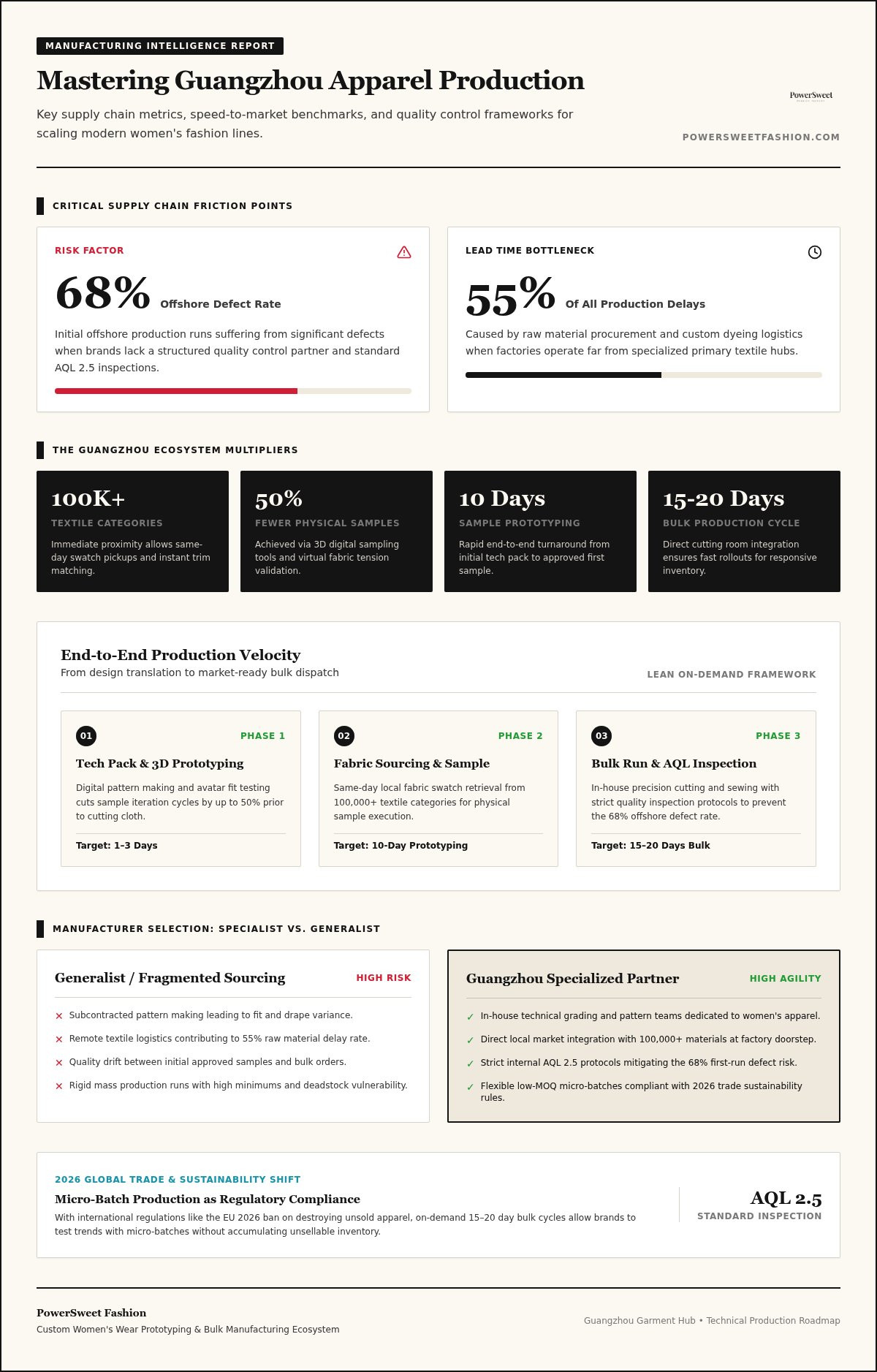
Did you know that nearly 68% of initial offshore production runs suffer from significant defects when brands lack a structured quality control partner? It's a frustrating reality for many labels trying to scale. You've likely felt the sting of communication gaps, inconsistent bulk quality, or the agonizing wait for samples that should have arrived weeks ago. Finding a reliable partner in the heart of guangzhou clothing manufacturing is often the difference between a successful season and a warehouse full of unsellable inventory.
We understand that your brand’s reputation depends on precision and speed. You need a partner who can navigate the world’s largest garment hub with confidence and find the right manufacturing solutions for your custom women’s fashion line. This guide provides the roadmap to secure a reliable end to end production partner, ensuring you get the quick sample turnarounds needed to stay on-trend.
We will walk you through sourcing high-quality fabrics and managing lead times effectively. You'll learn how to leverage local expertise for 10-day prototyping and 15-20 day bulk production while staying compliant with 2026's new global trade regulations. By the end of this guide, you'll have the tools to transform your creative vision into a streamlined, profitable reality.
Table of Contents
Understanding the Guangzhou Clothing Manufacturing Ecosystem
Guangzhou stands as the world's most sophisticated engine for apparel production. While other regions have tried to replicate its scale, none can match the sheer density of its supply chain in 2026. This city remains the epicenter because it solves the industry's biggest bottleneck: the physical distance between raw materials and sewing machines. By choosing guangzhou clothing manufacturing, brands tap into a network where fabric sourcing, pattern making, and bulk assembly happen within a few miles of each other.
The shift toward flexible, low-MOQ manufacturing has redefined how boutique brands and influencers operate. Instead of gambling on massive seasonal orders, labels now use micro-batches to test the market. This responsiveness is powered by an ecosystem that has evolved from rigid mass production to a high-speed, on-demand model. It's a system designed for the digital age, where a viral trend can move from a screen to a shipping container in weeks.
The Advantage of Local Supply Chains
Speed begins at the source. Research indicates that raw material procurement and custom dyeing account for nearly 55% of all production delays. In this hub, factories sit minutes away from the world's largest material markets, which house over 100,000 textile categories. This proximity allows for same-day swatch pick-ups and instant trim matching. It slashes logistics costs and ensures that designers aren't waiting weeks for a simple zipper or lace sample.
Specialized labor is the other half of the equation. Unlike generalist regions that focus on basic t-shirts, this hub employs artisans who specialize in the technical complexities of the textile industry in China. They understand the nuances of delicate silks, structured tailoring, and complex women's wear grading. This concentration of talent means your technical sketches are interpreted by people who have spent decades perfecting specific garment categories.
Modern Manufacturing Trends in 2026
Technology has fundamentally changed the production floor. Digital pattern making and 3D sampling tools are now standard, reducing physical sample rounds by up to 50%. This doesn't just save money; it cuts weeks off the development cycle. Brands can now verify the drape and tension of a fabric on a digital avatar before a single piece of cloth is cut.
Sustainability is no longer optional. With new global regulations like the EU's 2026 ban on destroying unsold apparel, factories have pivoted toward eco-friendly fabrics and certified recycling processes. Speed-to-market remains the ultimate goal. By integrating tech packs directly into the cutting room, we ensure that your designs move through a 15-20 day bulk production cycle without losing momentum.
Key Criteria for Selecting a Reliable Production Partner
Selecting a partner in guangzhou clothing manufacturing requires looking past glossy digital catalogs. You need a specialist who understands the mechanical drape of women's fabrics rather than a generalist factory trying to do everything. According to McKinsey's State of Fashion report, sourcing agility and manufacturer partnership criteria are now the primary drivers of success in a volatile market. High-quality production relies on technical expertise that all-in-one facilities often lack.
Transparency is the foundation of a successful B2B relationship. You should prioritize factories that offer direct access to production managers and clear visibility into their workflow. Many buyers make the mistake of choosing a partner based on price alone, which often leads to fragmented sourcing where fabrics are bought from one vendor and sewn by another. This fragmentation is a primary cause of quality drift between the initial sample and the final bulk order.
Vetting Your Manufacturer's Capabilities
Verify that your partner has in-house pattern making and sample development teams. When these services are subcontracted, your design intent often gets lost in translation. Technical precision is non-negotiable for women's apparel, where grading and fit variance across sizes are more complex than in menswear. We recommend reviewing structured quality control protocols before signing any contract. Industry data shows that first-time production runs without third-party or internal AQL 2.5 inspections face a defect rate as high as 68%.
Physical facility visits provide a level of reassurance that digital audits cannot match. Seeing the production line allows you to assess the equipment, the working conditions, and the actual skill level of the staff. Our team at PowerSweet Fashion encourages this open-door transparency to build long-term trust and ensure your creative vision is interpreted correctly by the people behind the machines.
Logistics and Lead Time Requirements
Speed is your primary competitive advantage in 2026. The current industry benchmark for high-performance guangzhou clothing manufacturing is a 10-day sample turnaround and a 15-20 day bulk production cycle. Anything longer risks missing the fast-fashion cycles that define the modern market. You must calculate your total lead time starting from fabric sourcing, as raw material procurement can account for over 50% of initial delays. Adopting end to end clothing production is the most efficient way to manage these timelines and avoid the bottlenecks of fragmented logistics.
MOQ structures also impact your brand's cash flow and inventory risk. Agile factories now offer initial batches of 50 to 100 pieces per style, allowing you to test bestsellers before committing to larger volumes. This micro-batch approach reduces the risk of unsold inventory and aligns with the new global sustainability regulations regarding garment waste.
The Specialist Advantage: Why Women's Fashion Requires Niche Expertise
Women’s fashion is not just about aesthetics. It is a discipline of engineering. Unlike streetwear or basic unisex items, women’s apparel involves intricate pattern grading and diverse drape characteristics. Many providers of guangzhou clothing manufacturing claim to be all-in-one facilities, but these generalists often struggle with the structural nuances of a bias-cut dress or a tailored blazer. Partnering with a dedicated custom women's clothing manufacturer ensures that your designs are handled by experts who understand these specific complexities.
Specialized knowledge is your best defense against production errors. In the sample phase, a niche factory identifies potential construction issues before they reach the bulk line. This proactive approach saves time and prevents the high defect rates common in unvetted production runs. It also ensures your brand stays compliant with customs compliance and textile regulations, which is essential for smooth international distribution in 2026. Choosing a specialist means your brand is supported by a team that speaks the technical language of fashion.
Precision in Pattern Making
Consistent fit is the hallmark of a premium brand. Experienced pattern makers don't just follow a tech pack; they interpret it. They understand how a fabric’s weight and stretch affect the final silhouette across a full size run. This is why choosing a sample development clothing manufacturer with specific women's wear expertise is non-negotiable. Our team translates your technical designs into high-quality prototypes that maintain their integrity from the first fit to the final production piece. We focus on the physical reality of the garment to ensure it moves correctly on the body.
Handling Diverse Fabric Categories
Delicate materials require specialized equipment and handling. Working with silk, crepe, or high-performance synthetics demands precise tension settings and specific needle types to avoid puckering or damage. Generalist factories often use standard setups that fail to protect these expensive textiles. A specialist partner also maintains higher standards for dye-lot consistency and color accuracy. In guangzhou clothing manufacturing, access to niche markets for lace, custom buttons, and high-end hardware allows you to create unique pieces that stand out. We verify every trim and fabric component to ensure your bulk run matches the approved sample exactly.
The Production Journey: From Tech Pack to Bulk Delivery
Moving from a digital concept to a physical garment requires a highly coordinated sequence of events. In guangzhou clothing manufacturing, the journey is accelerated by the local infrastructure, but it still follows a strict sequence to ensure quality. The process typically follows five distinct stages: fabric and trim sourcing, technical design review, sample development, bulk production, and final logistics. Each step is designed to catch potential errors early and ensure the final product matches your original vision.
The first two stages involve translating your brand's vision into a technical reality. We begin by sourcing fabrics and trims that meet your specific requirements for hand-feel, weight, and color. Once materials are secured, our pattern makers conduct a technical design review. This ensures that your tech pack is production-ready and that the garment's construction is sound. This professional oversight prevents the fit issues that often plague brands that skip the technical review phase.
Mastering the Sampling Phase
Sample development is where your design comes to life. We aim for a 10-day turnaround for this phase. To minimize the number of sample rounds, provide detailed, visual feedback on the initial prototype. The most critical milestone is the Pre-Production (PP) sample. This is the exact version of the garment that will be replicated in bulk, and it must be approved before any fabric is cut for the main run. Utilizing low MOQ women's clothing manufacturer strategies allows you to test these designs with smaller initial batches, reducing your inventory risk while you gauge market response.
Ensuring Quality in Bulk Production
Bulk production within the guangzhou clothing manufacturing sector involves rigorous quality control (QC) at every stage. We implement three primary checkpoints: initial fabric inspection, in-line sewing checks, and final packing audits. Once the bulk run passes final inspection, we manage the global shipping logistics to ensure your inventory reaches its destination on time. Managing these timelines effectively requires clear communication protocols. We provide real-time updates from the factory floor so you stay informed about your order's progress. This transparency is vital for avoiding the seasonal delays that can disrupt your retail calendar.
Ready to start your next collection? Contact our production team today to review your tech pack and begin the sourcing process.
Partnering with PowerSweet Fashion for Your Women's Wear Line
Choosing the right partner in guangzhou clothing manufacturing is a strategic decision that dictates your brand's agility. PowerSweet Fashion operates as an integrated solution provider rather than a traditional workshop. We handle every stage of the process, from initial fabric sourcing to final quality control. This end-to-end model removes the friction of managing multiple vendors and ensures that your design intent remains intact from the first stitch to the final delivery. You don't have to worry about the logistical gaps that typically occur when sourcing is fragmented.
Our operational model is built for speed and precision. We provide 10-day sample turnarounds and 15-20 day bulk production cycles. These timelines are firm commitments, not estimates. By maintaining our own in-house pattern making and sourcing teams, we control the variables that usually cause delays. This responsiveness allows your brand to capitalize on emerging trends while they're still relevant. We also encourage an open-door policy. Whether it's a physical factory visit or a digital consultation, we believe transparency is the foundation of a reliable B2B partnership.
Why Leading Brands Trust PowerSweet
We've specialized exclusively in women's apparel since 2008. This focus has allowed us to develop deep expertise in the technical nuances of women's wear, from complex draping to varied sizing requirements. We act as an authoritative facilitator for your brand's growth, offering the stability of a veteran manufacturer with the flexibility of a modern partner. Our low MOQ model is designed to support scaling labels. You can test new designs with smaller batches before committing to larger volumes, which protects your cash flow and reduces inventory risk. We've delivered retail-ready garments for global markets for over 15 years, ensuring every piece meets rigorous international standards.
Starting Your Next Collection
The process of launching a new line with us is straightforward and systematic. You begin by submitting your tech packs for an initial technical review and quote. Our team analyzes the construction and material requirements to provide an accurate assessment of costs and timelines. During your first sample development cycle, you'll work closely with our pattern makers to refine the fit and silhouette. We prioritize clear communication to ensure that the initial prototype meets your expectations. Once the pre-production sample is approved, we move into the bulk phase with established QC protocols. Building a long-term partnership with us means you gain a reliable engine for seasonal success, allowing you to focus on design and marketing while we handle the industrial reality of production.
Securing Your Brand's Future in the Global Fashion Hub
Success in the 2026 fashion market depends on more than just high-quality designs; it requires a manufacturing partner that can execute with industrial precision. You've learned how specialized niche expertise prevents fit issues. You also understand why an end-to-end production model is the most effective way to manage complex logistics. Accessing the full potential of guangzhou clothing manufacturing becomes a clear, manageable process when you prioritize transparency and technical skill over fragmented sourcing.
PowerSweet Fashion has been the engine behind successful women's wear labels since 2008. We provide the speed and reliability your brand needs to stay competitive. We offer a 10-day sample turnaround and 15-20 day bulk production. By keeping pattern making and fabric sourcing in-house, we eliminate the bottlenecks that slow down your growth. Our team is ready to help you transform your vision into retail-ready garments that meet the highest standards of quality and compliance.
Scale your brand with PowerSweet Fashion; get a quote for your custom collection today
We look forward to building a partnership that powers your seasonal success.
Frequently Asked Questions
What is the typical MOQ for clothing manufacturing in Guangzhou?
Agile factories in the region typically offer MOQs starting at 50 to 100 pieces per style. This shift toward low volume allows boutique brands to test designs without high inventory risk. At PowerSweet Fashion, we prioritize these flexible models to support brand scaling. This approach contrasts with traditional mega-factories that often require 500 units or more. It's a pragmatic solution for labels focusing on trend responsiveness and lean stock management.
How long does it take to get a sample from a Guangzhou factory?
You should expect a 10-day sample turnaround for custom women's garments. This timeframe includes pattern making, material sourcing, and prototype construction. While some sources claim faster delivery, a 10-day window ensures the technical precision required for complex fits. High-quality guangzhou clothing manufacturing relies on this development phase to identify potential bulk production issues early. Speed is essential, but it shouldn't come at the cost of fit accuracy or structural integrity.
Can I visit the factory in person to oversee production?
Yes, we encourage clients to visit our facility to meet the production team and oversee quality control. Physical visits build trust and provide transparency that digital communication can't replicate. You can observe the cutting, sewing, and packing stages in real time. This open-door policy is a core part of our commitment as an authoritative facilitator. It allows you to verify the equipment and skill levels that power your brand's creative vision.
Do I need to provide my own fabric for custom production?
You don't need to provide your own materials because we offer end-to-end fabric and trim sourcing. We leverage local supply chains to find textiles that match your hand-feel and weight requirements. This integrated service reduces logistics costs and prevents the delays common with fragmented sourcing. By managing the procurement in-house, we ensure that the fabric used in your bulk run matches the approved sample exactly.
What is the difference between an OEM and an ODM manufacturer?
OEM (Original Equipment Manufacturer) means we produce garments based on your specific designs and tech packs. ODM (Original Design Manufacturer) involves the factory providing pre-made designs for you to brand as your own. We specialize in custom women's clothing production, which primarily falls under the OEM model. This allows you to retain full creative control over silhouettes and fabrics while we handle the technical execution and industrial manufacturing.
How do I ensure the quality of bulk orders from China?
Quality is managed through a multi-stage inspection process that includes fabric audits, in-line sewing checks, and final packing reviews. Utilizing structured AQL 2.5 standards helps reduce defect rates to professional industry levels. Our in-house pattern makers and QC teams monitor every step of the guangzhou clothing manufacturing process. This rigorous oversight, combined with our 15-20 day bulk production turnaround, ensures that finished garments are retail-ready and consistent with approved samples.
What documents do I need to start production with a manufacturer?
A comprehensive tech pack is the most important document you need to start production. It should include technical sketches, a bill of materials, size grading charts, and construction details. These specifications serve as the blueprint for our pattern makers and sewing teams. Clear documentation minimizes interpretation errors and speeds up the initial sample development cycle. Providing high-quality files ensures that the factory gets every detail right from the first prototype.
How much does it cost to develop a sample for a new design?
Sample development costs are typically fixed fees that cover pattern making and sourcing specific materials for your prototypes. These fees vary depending on the complexity of the garment's construction and the type of fabric required. While we don't provide generic price lists, these costs reflect the intensive labor and technical expertise involved in creating a one-off prototype. This investment is necessary to ensure the design is production-ready before committing to bulk manufacturing.


Comments