
Fabric Color Matching in Garment Manufacturing: Setting Color Specs

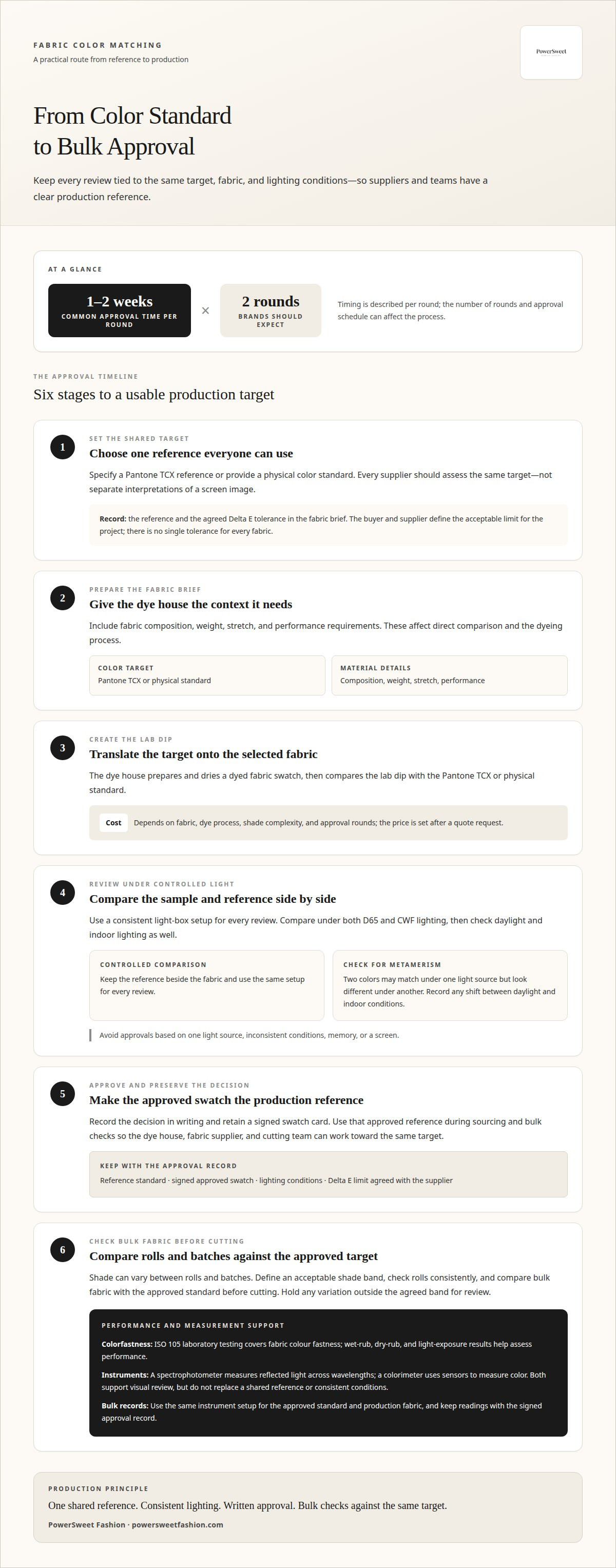
A color match is only reliable when everyone approves it under the same conditions. Fabric color matching in garment manufacturing starts with a Pantone reference or physical color standard, then compares lab dips under consistent D65 and CWF lighting. Record the approved shade in writing with a signed swatch card so the production target is clear.
It’s easy to focus on fabric color in isolation, but the approved shade also needs to work with trims and other garment components. Different materials reflect light differently, so a match that looks right on its own may appear inconsistent once the garment is assembled.
This guide explains how to set a practical color standard, review lab dips, and assess fabric under controlled lighting, including how to spot metamerism. You’ll also learn what to document for suppliers, from the approved reference to colorfastness requirements, so decisions stay clear as materials move toward production.
Table of Contents
Evaluating color under standardized lighting to detect metamerism
Consistent lighting makes fabric comparisons more reliable across suppliers and teams. Compare each sample with its approved reference under controlled conditions, then assess both in daylight and indoor lighting.
Standardized Visual Evaluation Conditions
Standardized visual evaluation means viewing fabric and its reference under the same defined lighting conditions. A light box helps teams repeat the comparison instead of relying on changing room lights or individual impressions. Use the same setup for every review and record the lighting conditions used for approval.
For example, compare a sample with its Pantone or physical reference under D65 and CWF lighting. If a supplier reviews the fabric under different conditions, the result may be difficult to compare. Consistency gives apparel teams a clearer basis for discussion and measurement across production stages.
Natural Light Evaluation
For a daylight evaluation, compare the fabric with its color reference side by side. Don’t judge the sample from memory or a screen. This shows how the shade appears outside a fluorescent-lit workspace, where the same fabric may look different.
Review the sample under indoor lighting, too. A color intended for everyday wear needs to look appropriate beyond the review room. Keep the reference beside the fabric during each comparison and record any shift between daylight and indoor conditions.
Metamerism Risks and Common Mistakes
Metamerism occurs when two colors appear to match under one light source but look different under another. Fabric and its color reference may seem aligned in a light box, yet diverge in bright daylight or indoor lighting. That mismatch can change the intended color when the garment is worn.
The main risks are approving a shade under only one light source, comparing samples under inconsistent conditions, or relying on memory. Avoid these mistakes by using the same controlled setup for each review, checking both daylight and indoor lighting, and recording the conditions. This gives suppliers and teams a shared basis for evaluating color.
Lab dips and matching fabric to Pantone or physical color standards
A shared reference turns a design color into a production target that suppliers can evaluate. Lab dips show how that target translates onto the selected fabric.
Shared Fabric Color Standards
A shared fabric color standard is a Pantone TCX reference or physical swatch that every supplier uses. Separate teams need to assess the same target, not their own interpretations of a screen image. Record the reference and agreed Delta E tolerance in the fabric brief. There is no single tolerance for every fabric; the buyer and supplier define an acceptable limit for the project.
Use one approved reference during sourcing and bulk checks. A clear standard helps align the dye house, fabric supplier, and cutting team.
Lab Dip Matching Steps and Costs
Lab dip matching translates a design or sample into a dyed fabric swatch for approval. The dye house prepares, dries, and compares the dip with the Pantone TCX or physical standard. Review it under D65 and CWF lighting, record the decision, and retain an approved swatch as the production reference. Approval commonly takes 1 to 2 weeks per round, and brands should expect two rounds.
Lab-dip costs depend on the fabric, dye process, shade complexity, and number of approval rounds; the price is set after a quote request. Include fabric weight, stretch, and performance requirements in the brief, as these affect direct comparison and the dyeing process.
Color Tolerances and Quality Testing
Color tolerance defines how far a production shade may vary from its approved target. Set the Delta E limit with the supplier rather than assuming one standard applies to every fabric. ISO 105 laboratory testing covers fabric colour fastness, while wet-rub, dry-rub, and light-exposure results help assess performance.
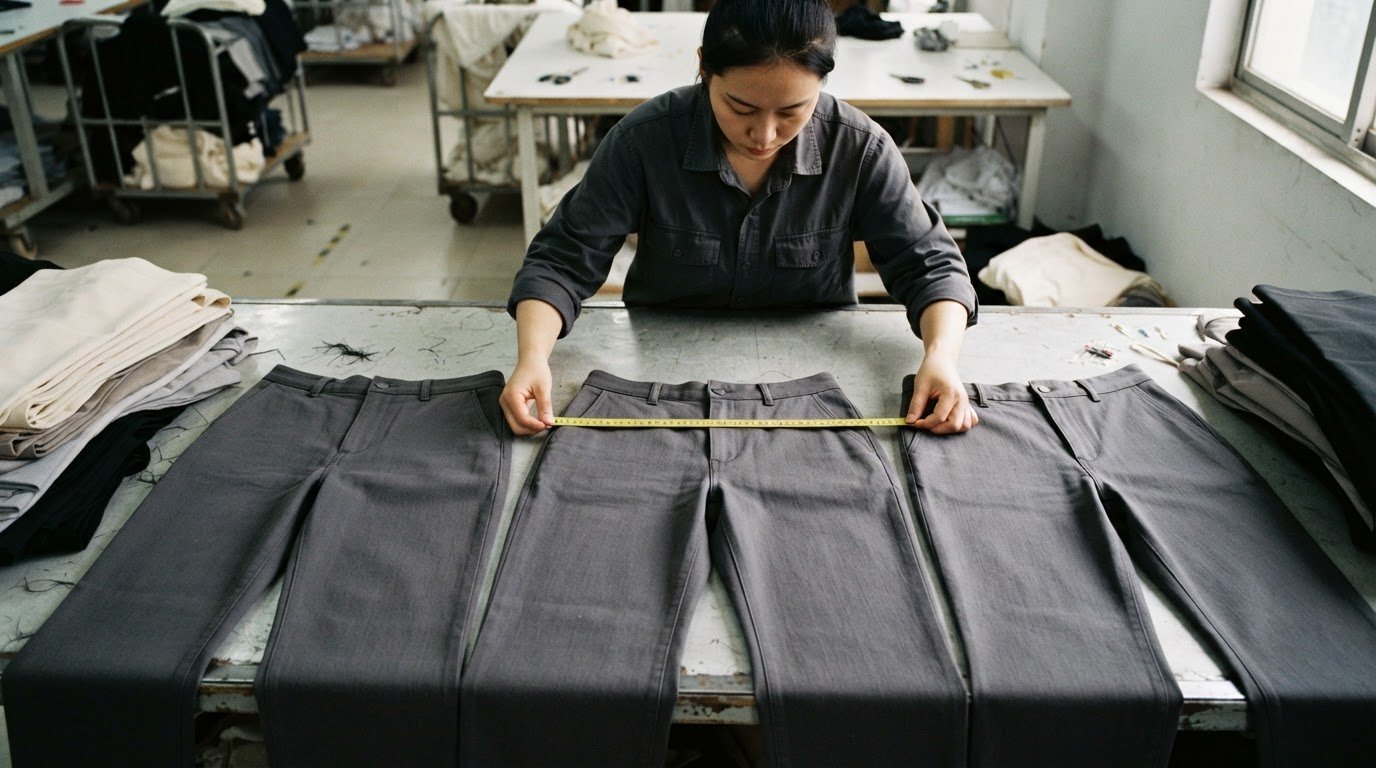
Shade can vary between rolls and batches, so define an acceptable shade band and compare bulk fabric with the approved standard before cutting. Check rolls consistently and hold any variation outside the agreed band for review. Written approval and recorded test results make shade consistency easier to assess.
Color Measurement Instruments
A spectrophotometer measures how fabric reflects light across wavelengths and compares the readings with a color reference. A colorimeter uses sensors to measure color, providing another way to quantify a sample. These instruments support visual review; they don’t replace a shared reference or consistent evaluation conditions.
For bulk checks, measure the approved standard and production fabric using the same instrument setup. Keep the readings with the signed approval record so suppliers can compare later batches against the same target.
Documenting color requirements in supplier inquiries
A clear supplier inquiry makes the approved shade usable throughout sourcing and production. State a Pantone code or provide a physical color standard, then specify which fabric and garment components it applies to. Include trims and secondary materials, not just the main fabric. A zipper, label, or cotton panel can look different beside the garment body, even if each was reviewed separately. The same precision applies when integrating apparel graphics and custom prints from Transfers by MoreTranz, where maintaining color accuracy across different fabric surfaces is essential.
Record approval in writing and retain a signed swatch card as the agreed reference. The inquiry should also distinguish a stock color from a custom-dyed shade. Ask whether a stock option can be reordered or is available only once. This helps brands plan repeat orders and understand whether the target can remain consistent across production batches.
Make the target specific enough for the factory to act on. Include the reference, approved swatch, fabric composition, and relevant construction or garment details. For example, name cotton as the fiber when the target applies to cotton fabric, rather than leaving the material description vague. Document colorfastness requirements as performance criteria, including wet rub, dry rub, and light exposure.
During material sourcing, keep fabric options, lead times, lab dips, and pricing together with the color target. This helps teams assess the full production decision rather than approving a shade without considering the material or timing. Store the final swatch card and written approval with the product records so suppliers and internal teams can use the same references later.
Before ordering bulk fabric, confirm the shade range across rolls and the supplier’s process for checking consistency. A named target, written approval, and stated fastness requirements give each party a shared basis for accepting or holding material. This documentation also helps trace decisions if a shade difference appears before cutting or during garment assembly.
Surface texture, gloss, reflectance, and material composition
A color reference defines a target, but the material affects how that shade appears. Texture, sheen, and fiber content change how fabric reflects light, so components can look different together even when each meets its color target.
Compare materials side by side under the same lighting, then assess them together in a finished garment sample. Smooth, lustrous silk reflects light differently from soft, fuzzy fleece. A woven body fabric beside a knit panel may also show visible contrast, even when both use the same color reference. This difference matters during sewing, when separate components become one product.
Fiber composition affects dye selection and shade coordination. Materials with the same fiber makeup can use consistent dyestuffs, which may simplify color alignment. For example, a garment combining cotton fabric and polyester trim may need separate dyeing approaches. The materials can respond differently, so a close match on separate swatches may not look like a match in the finished garment.
Fabric labels also need precise descriptions. TC fabric contains 65% polyester, while CVC fabric contains 60% cotton. Neither is interchangeable with 100% cotton, which serves different product requirements. Record the composition of each material in the product information, including trims and secondary panels. That gives the supply chain a clear basis for reviewing color and material compatibility.
Evaluate texture and gloss on the actual materials planned for production, rather than inferring them from a digital image. Review the assembled sample under consistent lighting and note where a glossy zipper or matte fabric creates visible contrast. This connects color approval to the finished garment instead of treating each component as an isolated supply item.
Bring material choices together early with sample development to assess how their color and surface qualities work in an assembled garment.
PowerSweet Fashion: Fabric Sourcing
PowerSweet Fashion supports color decisions through fabric sourcing for custom women’s clothing production. Turn to this stage when your approved target needs to be matched with suitable fabric options, or when material choice and color need to be assessed together.
Clear references connect development to production. Share the color standard, fabric composition, and intended garment details so material choices can be assessed in context. Sample development helps evaluate how the selected fabric and shade work in a garment, while quality control services support checks against documented requirements.
This coordinated approach is useful when color consistency matters across the fabric, trims, and finished design. To discuss fabric sourcing or garment development for your collection, contact PowerSweet Fashion.
Carry Your Color Standard Into the Next Collection
Make each approved color target part of your product development record, not just a one-season decision. A consistent reference can guide future fabric choices and help keep design intent clear as styles evolve. For brands building a repeatable process, fabric color matching in garment manufacturing works best when color decisions stay connected to sourcing, sampling, and production planning.
PowerSweet Fashion supports that next step through fabric sourcing, sample development, and custom women’s clothing production. Share your color direction and garment goals to shape development around the materials and styles your collection requires.
Contact PowerSweet Fashion to discuss your project, and take the next step toward turning your color direction into a production-ready collection.
Frequently Asked Questions
What is fabric color matching in garment manufacturing?
Fabric color matching in garment manufacturing means aligning dyed material with a chosen color target for a garment. It connects a design decision to physical fabric, helping teams assess whether a shade suits the intended product. For example, a brand developing a coordinated set can check whether the top and bottom fabrics look consistent when viewed together.
How are color standards such as Pantone and lab dips used in apparel production?
A color standard gives the brand and supplier a common reference, while a lab dip shows how that target looks on a specific fabric. Pantone TCX can identify a target shade, but the physical result depends on the material and dyeing process. For a ribbed cotton knit, review the dip on that knit rather than assuming a smooth reference card predicts its final appearance.
How do lighting conditions and metamerism affect fabric color matching?
Lighting can change how a fabric shade appears. Metamerism describes colors that seem to match under one light but differ under another. A charcoal fabric may appear aligned with its reference indoors, then look slightly warmer in daylight. Reviewing both conditions helps teams judge whether the color remains suitable in the settings where the finished apparel will be seen.
How do dye lot, fiber content, fabric construction, and finishing affect color matching?
Dye lot, fiber content, construction, and finishing all influence how fabric takes dye and reflects light. Cotton jersey and polyester satin may show different versions of the same target because their fibers and surfaces differ. Finishing can also alter sheen or texture. Compare production material with the approved sample, especially when using a replacement roll or later batch.
What are standard color tolerances and Delta E limits for garment fabric approval?
There is no single standard Delta E tolerance for every fabric. The buyer and supplier should agree on a limit and acceptable shade band, then document both for production checks.
How much does fabric color matching and lab dip testing cost in the United States?
Lab-dip costs depend on the fabric, dye process, shade complexity, and number of approval rounds; the price is set after a quote request. Approval commonly takes 1 to 2 weeks per round, and brands should expect two rounds.


Comments