
Circular Fashion: How It Works Across a Product’s Life

A garment should be designed for more than its first sale. To understand what circular fashion is and how to implement it, start with the core idea: keep clothing and materials in use through thoughtful design, care, repair, reuse, and recovery, rather than treating disposal as the finish line.
That shift involves more than choosing different fabrics. Design decisions, production methods, garment care, and what happens when a piece is no longer wanted all shape its life cycle.
This article explains circular fashion principles and how they apply from design and sourcing through wear and end of use. It also shows where technology can help reduce design and fabric waste, and how practical production choices can support longer-lasting, repairable, and remade garments.
Table of Contents
What Is Circular Fashion?
Circular fashion keeps clothing and materials in use through repair, reuse, resale, and recycling. It replaces the linear pattern of making, using, and discarding garments with choices that extend their useful life.
Shared Responsibility for Circular Fashion
Shared responsibility means brands and consumers each influence whether clothing stays useful or becomes waste. This matters because design choices shape repair and recovery, while purchasing and disposal habits affect demand for new garments. Up to 92 million tons of clothing end up in landfills each year. Brands can create durable, repairable pieces; consumers can buy intentionally, care for garments, and pass them on.
Extending Garment Life
Extending a garment’s life means keeping it wearable through care, repair, resale, or sharing. Reusing, renting, or reselling can reduce demand for new production by letting existing clothing serve more people or occasions. The benefit depends on whether the garment is used again instead of replaced. Consumers can follow care instructions, repair damage, and pass unwanted pieces to friends or donate them.
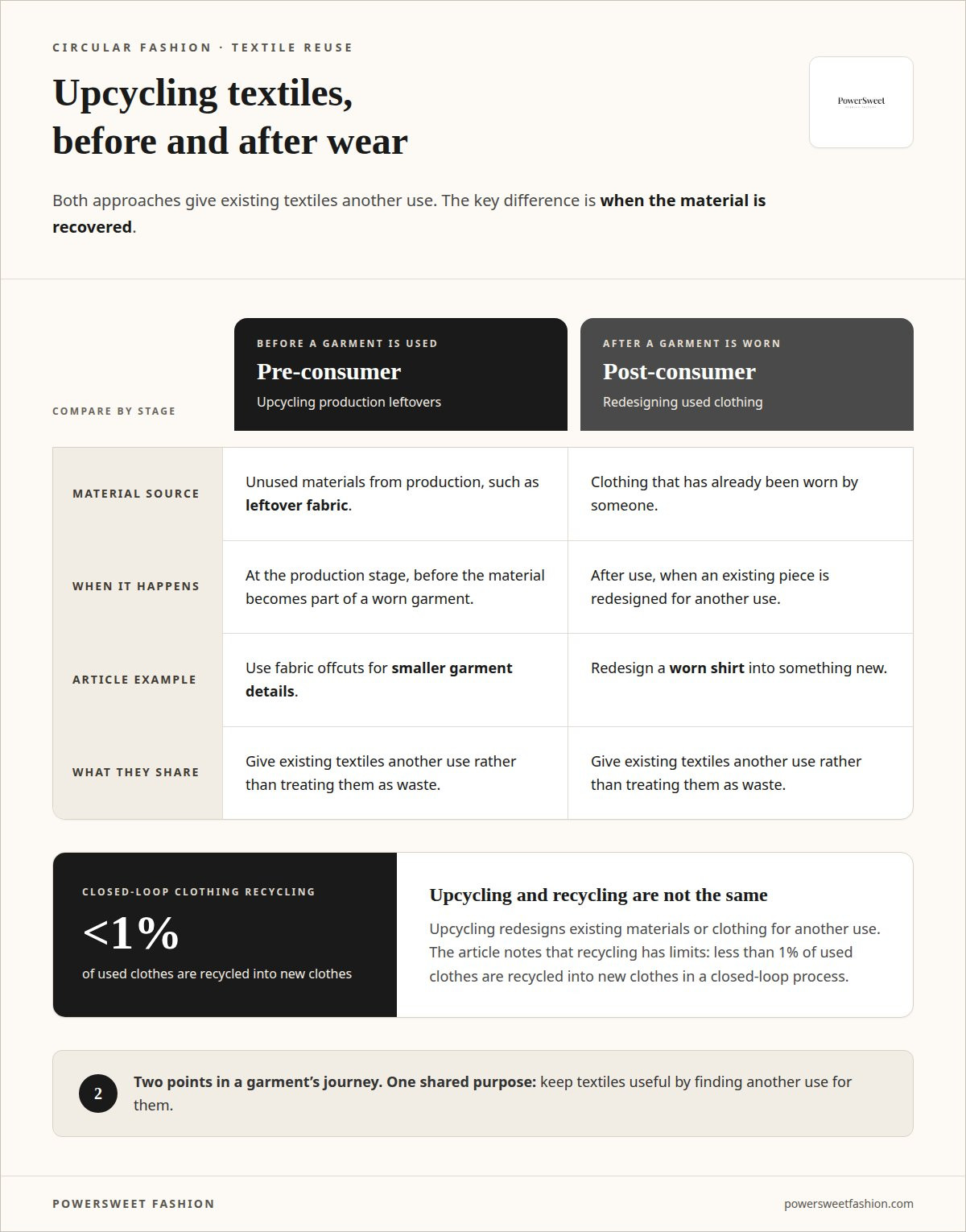
Pre- and Post-Consumer Upcycling
Pre-consumer upcycling turns unused production materials, such as leftover fabric, into new products; post-consumer upcycling redesigns clothing after someone has worn it. Both approaches give existing textiles another use, but they address waste at different points. A brand might use fabric offcuts for smaller garment details, while a consumer could redesign a worn shirt. Recycling also has limits: less than 1% of used clothes are recycled into new clothes in a closed-loop process.
Circular and Sustainable Fashion
Circular fashion focuses on keeping products and materials in use; sustainable fashion is a broader aim to reduce fashion’s environmental and social harms. The terms overlap, but a sustainability claim alone doesn’t explain whether a garment can be repaired, reused, or recovered. In the U.S., requirements depend on the activity, location, and specific claim, so describe take-back and recycling outcomes accurately. Collection alone doesn’t prove recycling, and mixed materials can complicate recovery.
Technology for reducing design and fabric waste
Technology helps teams make better design and production decisions before fabric is cut. WRAP scenario modelling indicates circular design could enable over half of the impact reductions needed to reduce the fashion and textiles industry’s carbon and water footprints by 50% by 2030.
Circular Design Guidance
Circular design guidance turns goals such as durability and recovery into practical decisions for designers and manufacturers. A toolkit can help teams assess repair, resale, rental, and take-back options while developing a garment brief. Before launching these programs, brands can define service processes, collection routes, sorting, and product records. Costs depend on operating needs; potential benefits include better material use and more ways to serve customers.
Designing Circular Garments
Digital pattern tools help teams arrange pattern pieces efficiently and identify fabric waste before manufacturing. Virtual samples can support fit and construction reviews before a physical sample is made. Design teams can also reinforce stress points, allow easier repairs, and plan garment components for disassembly. Since up to 80% of a product’s environmental impact is determined at the design stage, early decisions shape later use and recovery.
To measure progress, track practical indicators such as fabric waste per garment, repair or resale participation, and the share of materials recovered. Define each measure consistently, record its boundaries, and report it against standards relevant to the business. Consistent tracking makes progress easier to assess across collections and production cycles.
Circular Design and Material Selection
Material selection determines how a textile performs during wear and what recovery options remain afterward. A single-material garment can be easier to recycle than a blend, while trims, labels, and finishes can affect separation. Teams can compare durability, repair needs, and end-of-life routes when choosing materials. Careful fabric sourcing supports those design decisions by connecting material choices to the intended garment and production plan.
Reinforced stitching or extra fabric at stress points can improve physical durability. Transformable garments can adapt to changing needs and may reduce the need to buy new pieces. Features such as drawstrings, buttons, adaptable patterns, and removable thermal layers can help garments serve different needs over time.
Definition and principles of circular fashion
Circular fashion applies circular economy thinking to clothing, from material supply through use and recovery. Its principles guide decisions across the supply chain, not just the garment’s final destination.
Circular Fashion Definition
Circular fashion keeps garments, textiles, and fibers in use through reuse, repair, resale, or recycling rather than disposal after one use cycle. It also considers a product’s end of life during its initial design. Materials and construction affect whether a garment can be maintained, passed on, remade, or recovered.
Dr. Anna Brismar coined the term “circular fashion” in June 2014 while preparing for a sustainable fashion event in Stockholm. The definition was refined in 2017. For a brand, the practical test is whether each stage supports continued use, from selecting inputs to planning what happens when the garment is no longer wanted.
Circular Economy Principles in Fashion
A circular economy aims to eliminate waste and pollution, circulate products and materials at their highest value, and regenerate nature. Applied to fashion, these principles mean preventing avoidable waste, keeping clothing useful, and considering how material choices affect environmental outcomes. A repairable jacket, for example, can stay in use instead of being discarded because of a damaged seam.
These principles work together. Reducing waste during design and production limits surplus, while reuse and repair preserve the value already built into a garment. Recycling can recover material when continued wear or repair is no longer practical. Responsible supply chain decisions connect these stages, aligning material selection, garment construction, and recovery plans with the same circular aim.
For brands, applying circular principles means considering a product’s full journey: where its materials come from, how it is made, how it can be used again, and how its components might return to productive use. A circular economy is not a single recycling step. It coordinates choices across the clothing supply chain so products and materials retain value for longer.
Circular fashion across the product life cycle
Circularity depends on connected choices at every stage, from material sourcing to recovery after use. One isolated innovation cannot make the entire product journey circular. For teams exploring what circular fashion is and how to implement it, mapping each stage shows where design, production, use, and recovery decisions need to connect.
Design and sourcing: Set the foundation with durable styles, repairable construction, and materials suited to their intended use. Decide early how seams, trims, labels, and fabric choices may affect future repair or recovery. Responsible sourcing also considers how materials are produced. These choices shape environmental impact before manufacturing begins, making design a practical starting point for sustainable fashion.
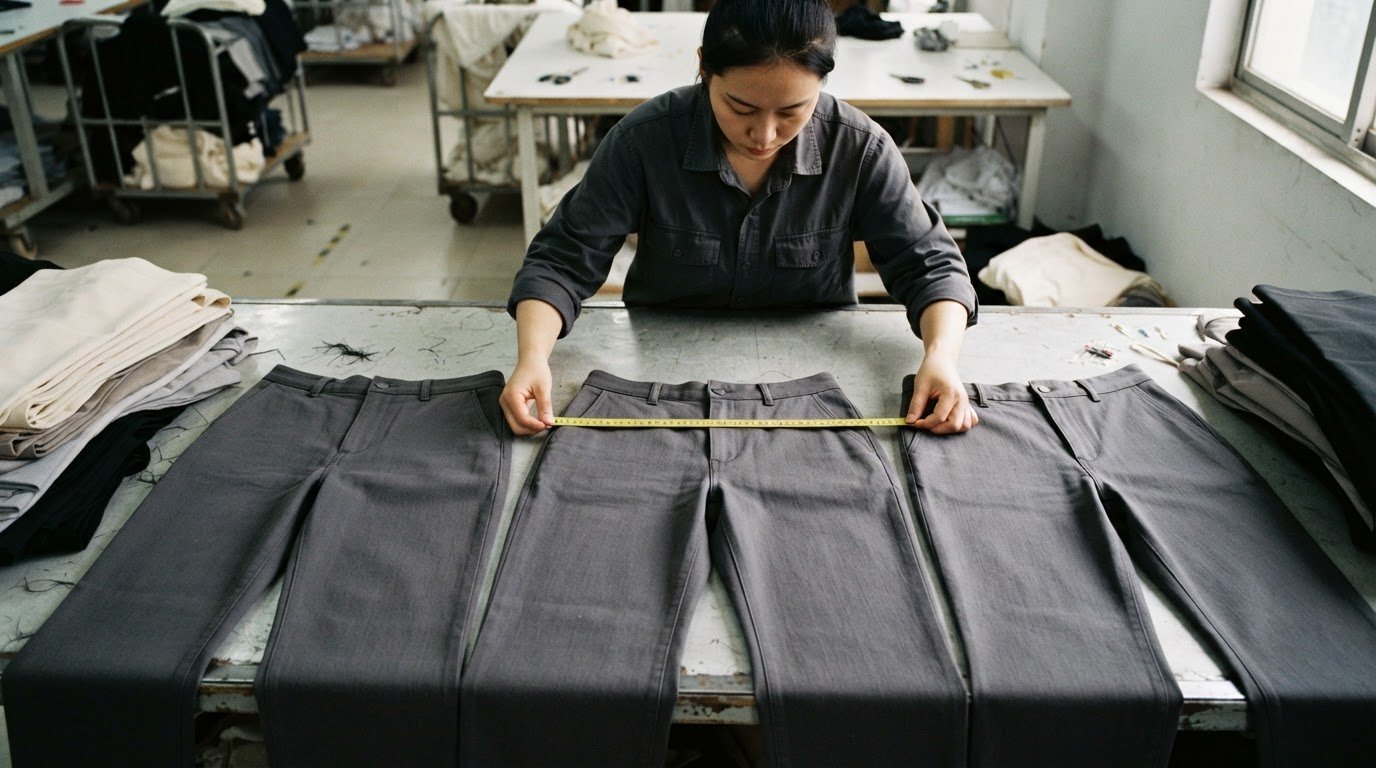
Production: Plan processes that use fabric efficiently and build quality checks into manufacturing. Pattern placement can reduce offcuts, while leftover material can be planned for another purpose instead of treated as unusable waste. Pre-consumer upcycling can turn offcuts into smaller products or design details. Connect material quantities to the garments and orders being produced.
Use: A garment creates more value when it stays wearable and useful. Brands can support this stage through repair, resale, rental, or take-back models. Consumers can follow care instructions, mend damage, and pass clothing to another wearer. Washing synthetic garments is responsible for 35% of microplastics in oceans, so garment care and material choices both matter during use.
Return and recovery: Define what happens when an item is returned. Collection requires sorting, with clear routes for wearable pieces, repair, resale, remaking, or material recovery. The UK Textiles Pact’s Circularity Roadmap identifies designing for circularity as one of three priority action areas, linking product design to the collection and recovery systems needed after use.
A practical way to decide what circular fashion is and how to implement it is to connect each stage, rather than treating recycling as the final solution. Review product design, production processes, use models, and recovery routes together. Brands developing circular clothing can plan custom garment production around durability, material use, and the intended product journey.
PowerSweet Fashion
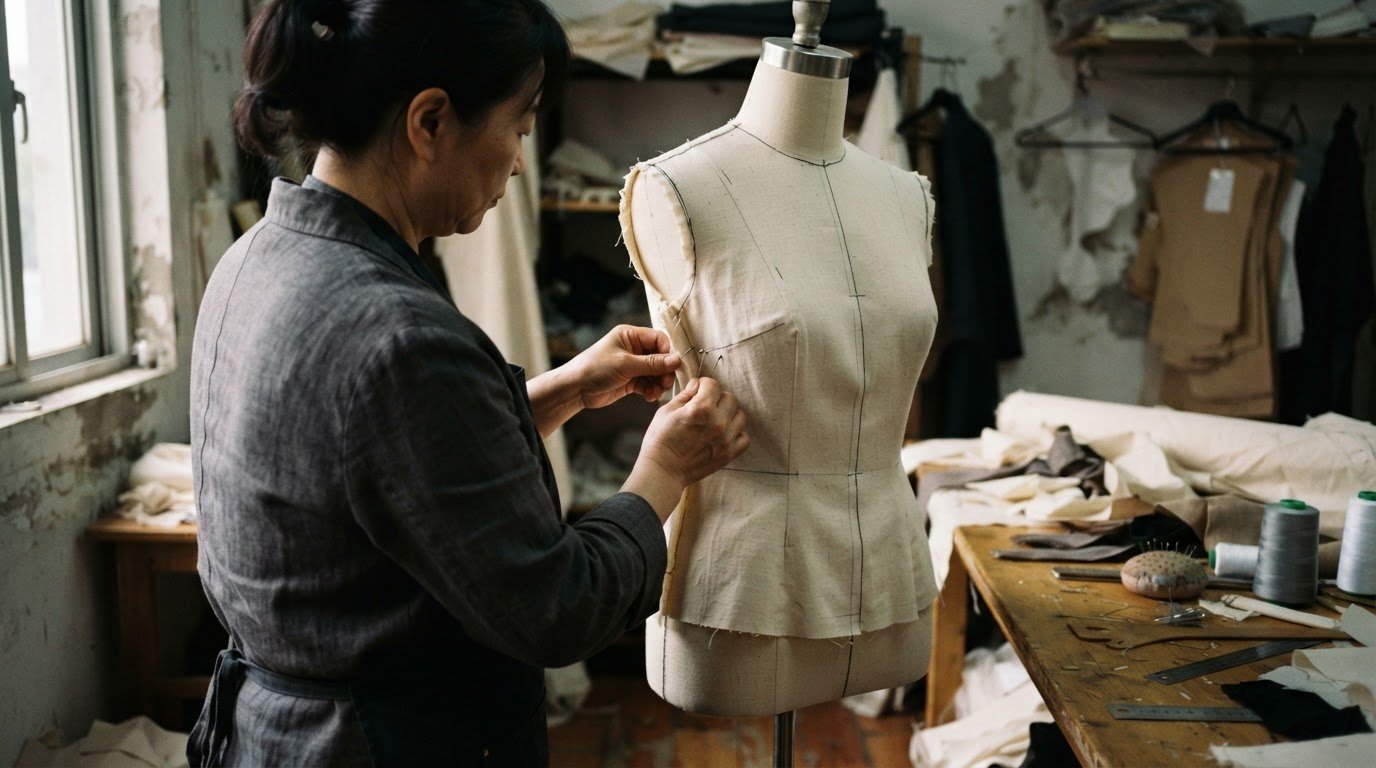
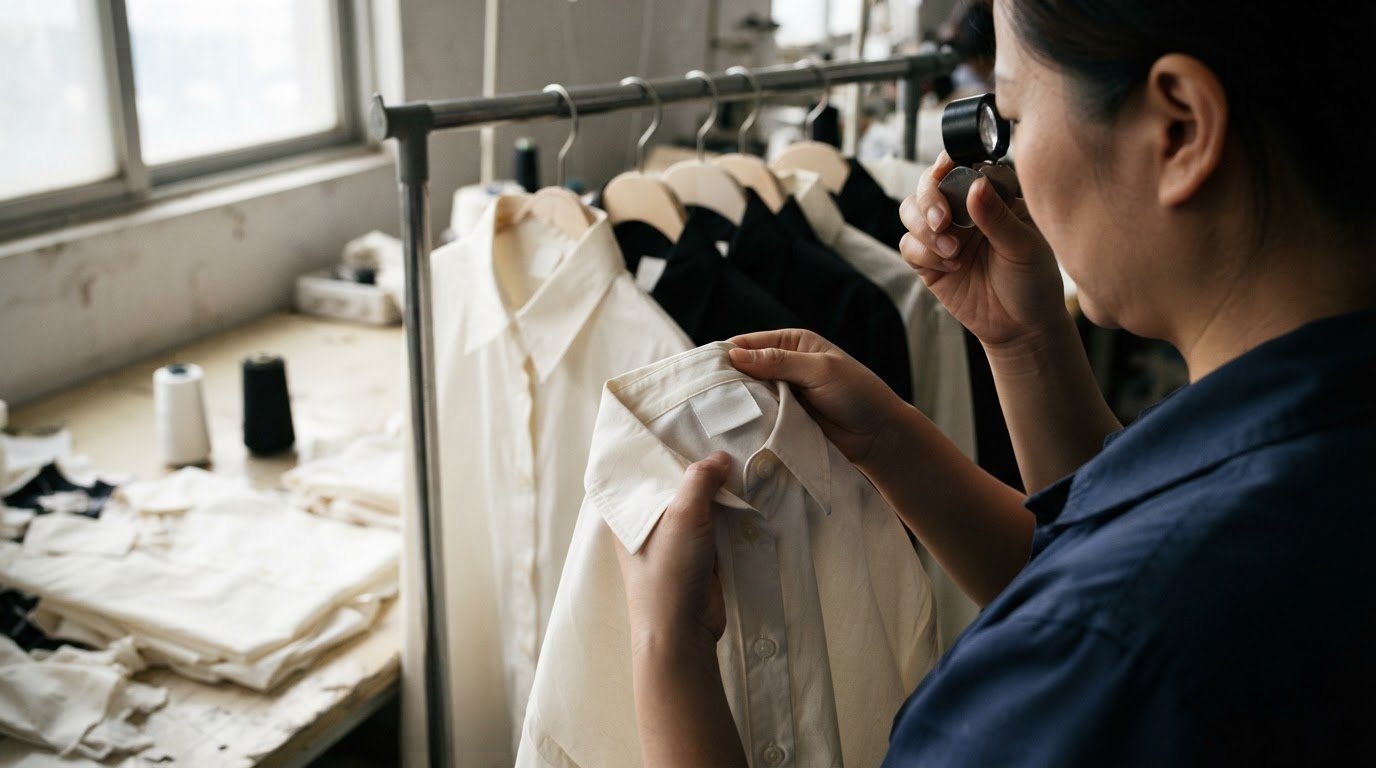
PowerSweet Fashion helps brands turn circular design goals into practical garment development and production decisions. For custom women’s clothing, sample development brings a design into physical form, while fabric sourcing supports material choices suited to the intended product. Quality control services help assess finished garments against project specifications.
Turn to PowerSweet Fashion when you’re ready to move from circular design principles to garment development and production. Share your design direction and production requirements to get support through the relevant services.
Contact PowerSweet Fashion to discuss your garment project.
Turn Circular Intent Into Your Next Design Decision
Make circularity part of a real product brief. Choose an upcoming garment and define what should happen across its life: which materials suit its purpose, how construction can support continued wear, and what options exist for repair or reuse. These decisions give designers and production teams a shared direction before development begins.
For teams exploring what circular fashion is and how to implement it, PowerSweet Fashion supports the practical work through Custom Women's Clothing Production, Sample Development, and Fabric Sourcing. Start with the garment concept and your brand’s priorities, then shape the development process around them.
Contact PowerSweet Fashion to discuss circular fashion and take the next step toward putting your design goals into practice.
Frequently Asked Questions
What are the core principles of circular fashion?
The core principles are to prevent waste and pollution, keep products and materials in use, and support nature’s regeneration. Fashion teams can translate these aims into design brief criteria: define expected wear, access for repairs, and a clear next use for the garment. Apply the criteria during development reviews so circular goals guide product decisions rather than remain broad brand language.
How can fashion brands implement circular design and choose durable, recyclable materials?
Match materials and construction to the garment’s purpose and likely recovery route. Assess whether fabric, thread, labels, and trims can be separated or processed together, and whether seams allow straightforward repair. Record these choices in product specifications, then review sample construction and material performance before production. This makes durability and recyclability concrete design requirements rather than unsupported claims.
How can consumers participate in circular fashion through buying, caring for, repairing, and reselling clothes?
Consumers can start by considering whether a purchase meets a real wardrobe need and suits repeated wear. Follow care instructions, address a loose button or seam before damage spreads, and resell wearable pieces that are no longer needed. Clear, honest descriptions of condition and repairs help the next owner decide whether the garment suits them.
Comments