
Pattern Grading in Garment Manufacturing: Choosing Size Increments

Pattern grading in garment manufacturing keeps a design’s fit and proportions consistent as it expands or reduces across sizes. The main purpose is to adjust key measurements without redrafting the garment for every size. As a reference point, women’s bust or chest and waist measurements commonly grade by 2.5 cm per size step, while children’s bust or chest grades by 1.5-2 cm.
A larger size isn’t simply a smaller pattern with the same amount added everywhere. Each garment needs grade rules that account for how its measurements, construction, and intended fit change from size to size.
Here, you’ll learn how grade rules and libraries guide those adjustments, what standard increments look like for women’s and children’s garments, and how garment design and fabric affect the choices. We’ll also explain how a sample becomes a graded size range, showing where measurement decisions shape fit and production.
Table of Contents
How do grade rules and grade rule libraries work in fashion?
Grade rules define how pattern measurements change between sizes. A library organizes those rules by garment, fit, and size range.
Size Charts and Base Size Selection
A size chart sets target body measurements, while a base size provides the starting pattern for grading. Manufacturers often select a middle size, such as size 12 or size S or M, then grade up and down. Build the chart around the intended customer and fit, recording measurements such as chest, waist, hip, shoulder, and length. ASTM International publishes charts for Misses, Women’s Plus, Men’s, Juniors, and Children’s markets.
Plan petite, tall, plus-size, and extended sizing around the proportions each group needs, rather than simply widening or lengthening every piece. Confident Patternmaking recommends a 35-70-inch hip measurement range for size-inclusive sewing patterns. Body data informs the chart; garment ease is added to relevant measurements to define the finished fit.
Size Increments and Ease Allowances
Size increments specify how much each point of measurement changes between adjacent sizes. Women’s bust or chest and waist commonly increase by 2.5 cm per size step; children’s bust or chest increases by 1.5-2 cm per size step. A rule library stores these changes by garment and measurement, so a sleeve, shoulder, and body length need not grow equally.
Ease is the difference between body and garment measurements, and its amount depends on the intended fit. Pattern grading costs vary with pattern complexity, size range, and deliverables; pricing is provided after a quote request.
Nested Multi-Size Patterns
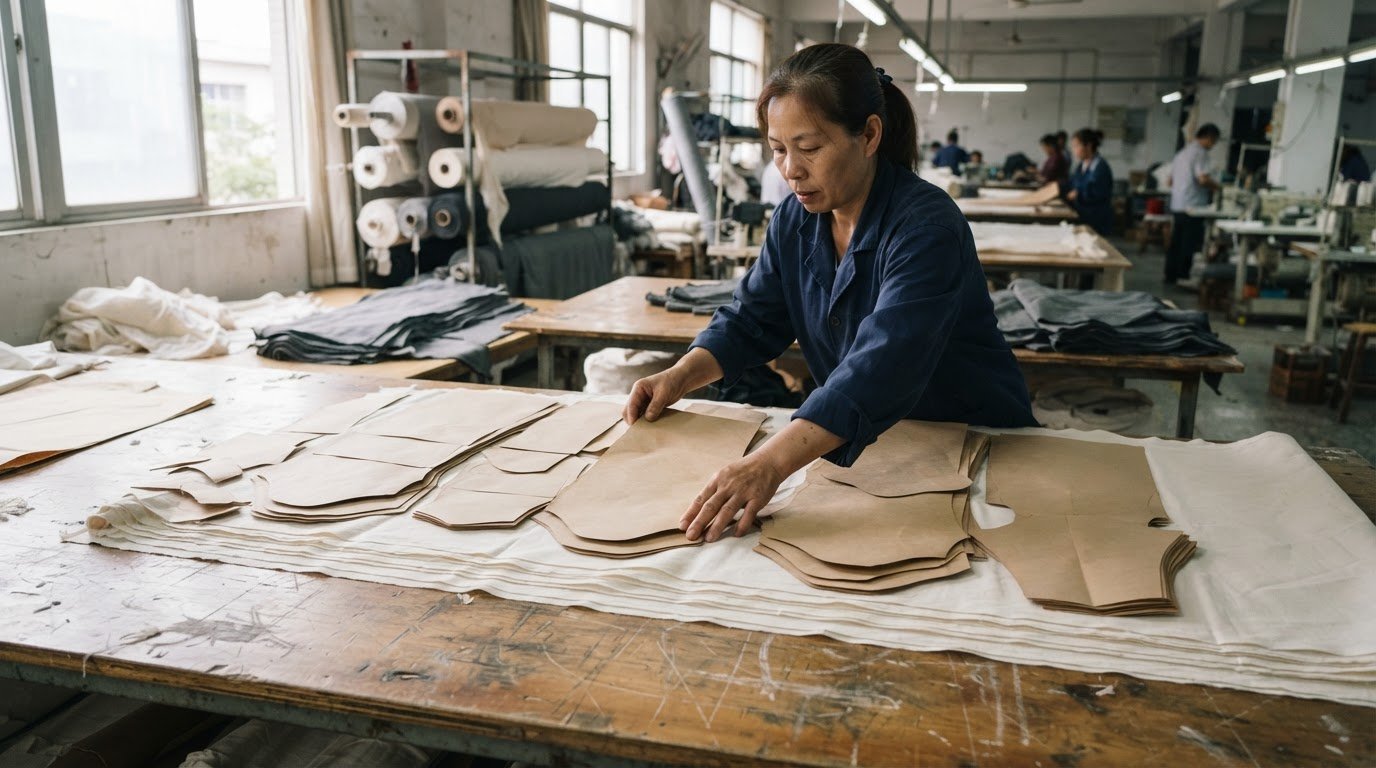
A nested pattern overlays graded outlines around one base pattern, showing each size in a shared file. Each outline follows its size-specific rules, so cutters can identify the correct pieces without separate pattern sheets. For example, one nested-pattern example raises the neckline by 1/16 inch per size and drops the hemline by 1/4 inch per size.
Nested outlines make the full range easier to compare, but they don’t replace fit review. Check the smallest and largest sizes for proportion and function; a large range may need incremental grading, such as size 4 to 12, then size 12 to 18.
Grading Methods and Computer-Aided Workflows
Manual grading uses pattern shifting or cut-and-spread to move selected points by the grade rules. A ruler marked in increments as small as 1/64 inch supports fine adjustments. Computer-aided grading applies the same rules digitally: the pattern maker enters measurement changes, software generates nested sizes, and a plotter can produce full-size patterns.
Industrial workflows use pattern-grading software alongside digitizing and plotting equipment. Common errors include applying one increment to every point, misaligning notches, or changing proportions. Compare each size’s measurements with the chart, inspect seam alignment, and fit-test the smallest and largest graded sizes.
Creating grade rules for different garments and fabrics
Pattern making creates the original pattern; grading applies measurement changes across sizes. Rules should reflect each garment’s construction and fabric, since uniform shifts can distort fit.
Applying and Blending Grade Changes
Applying grade rules means moving defined points on pattern pieces by planned amounts, then blending the new points into smooth lines. This keeps connected pieces aligned as sizing changes. For a quarter-body pattern, a 4-inch increase around the body equals a 1-inch increase on that pattern piece. Distribute changes across the relevant sections, rather than adding the full amount to one edge.
Base Patterns and Rule Libraries
A base pattern is the original size from which a graded range is developed; a rule library stores reusable changes for specific garments and measurements. Together, they give pattern makers a consistent starting point while leaving room for custom adjustments. Organize rules by garment type and design features, then apply only the relevant entries. A sleeve rule, for example, shouldn’t automatically dictate how a bodice changes.
Garment and Fabric-Specific Rules
Grade rules should account for how a garment is meant to fit and move. Sportswear needs ease for movement, while a boxy design needs enough room to preserve its oversized silhouette. Fabric also matters: a garment in 280 GSM fabric may behave differently from one in 180 GSM jersey. Differences can affect drape, structure, neckline behavior, sleeve fall, perceived volume, and silhouette.
Adjustments Before Grading
Blending adjustments means connecting changed points without creating abrupt angles or mismatched seams. The required changes can differ across the body; one example adds 2 inches at the bust and 4 inches at the hip. Review the front, back, and adjoining pieces together so the adjusted shape remains workable. For a new style that needs an original pattern, pattern-making support can establish its starting point before grading.
What is the main purpose of pattern grading in garment production?
Pattern grading changes key measurements across sizes while preserving a garment’s design, proportions, and details. This consistency lets clothing brands prepare a size range from an approved sample instead of redrawing every size. In production, the graded pattern guides cutting and sewing, while each size retains the style’s intended balance. The goal is controlled size variation, not a different design.
Start by separating body measurements from finished garment measurements. Body measurements describe the wearer; pattern and garment measurements describe the clothing after construction. Common garment points of measurement include full length, chest, waist, hip, sleeve length, neck width, front neck drop, and across shoulder. Record the same points consistently on the body chart and finished sample so each grade rule changes the intended dimension.
The difference between those measurements shapes ease allowances and fit. For example, a pattern measuring 35-27-37 has a 2-inch difference at each point from a body measuring 37-29-39. That difference is not automatically the same for every garment. A fitted shirt and a relaxed sweatshirt need different allowances. Likewise, a hoodie with a 64 cm half-chest measurement doesn’t necessarily fit someone with a 128 cm chest; construction and intended ease affect how it wears.
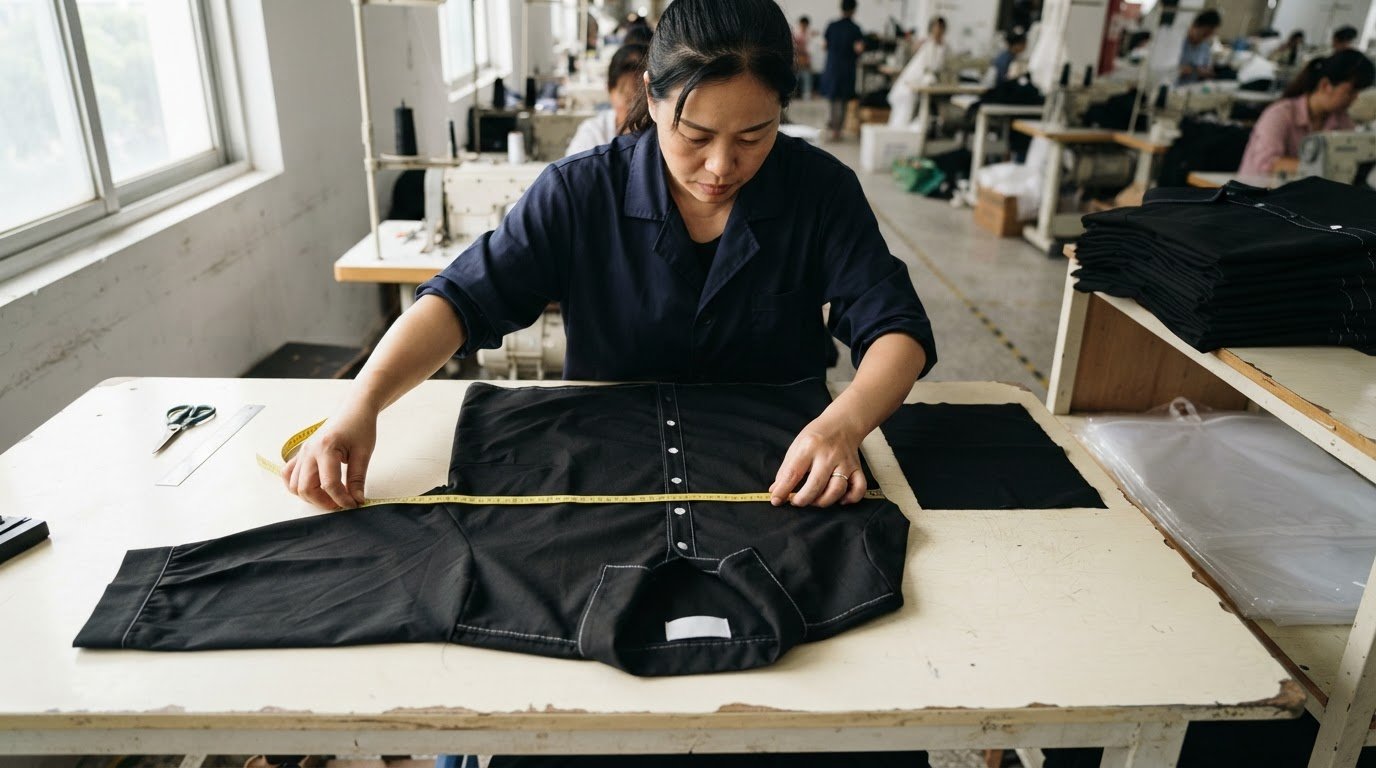
For a reliable grading reference, measure the sample flat at marked points, then compare those figures with the target body chart. Measure hips at the specified hip level, which is 9 inches below the waist for the method described. Keep measurement positions consistent between sizes, and distinguish circumference from half-width measurements. These checks help identify whether a discrepancy comes from the body chart, the pattern, or a grading adjustment before cutting and sewing begin.
Standard grading increments for women’s and children’s garments
Standard increments provide a technical reference, not a universal formula. The correct method distributes changes across points so smaller and larger sizes retain balanced proportions.
For women’s garments, the listed back-width increment is 0.6 cm per size step, while shoulder length increases by 0.3 cm. For children’s garments, waist increases by 1.5 cm per step, and shoulder length by 0.2-0.3 cm. These points show why a grading chart needs separate rules for each measurement, rather than one uniform adjustment.
Numerical size systems use different spacing across the range. Smaller numerical sizes are commonly separated by 3/4 or 1 inch; intermediate sizes by 1-1/2 or 2 inches; larger sizes by 3 inches or more. These figures describe common grade spacing, not an instruction to add the same amount to every pattern edge. A sleeve, shoulder, and body section each need their own planned distribution.
Choose increments against the size chart, garment fit, and intended size range. A fitted style needs proportions that remain close to its base reference; a looser design may require more room in selected areas. Extended sizing also needs attention to shape, not only width. Avoid adding the same fixed amount to every torso pattern, since body proportions do not expand uniformly. Smaller increments can support a broader range, while a full clothing line may use 18 or more sizes.
For production, document the point of measurement, change per size, and direction of each adjustment. Then compare graded measurements and fit-test the smallest and largest sizes. If your women’s range needs pattern development and production support, explore custom women’s clothing production.
PowerSweet Fashion: Custom Women's Clothing Production
PowerSweet Fashion supports brands moving from size planning to custom women’s clothing production. When your graded range is ready to become garments, Sample Development provides a physical sample to assess, while Fabric Sourcing and Quality Control Services support other stages of production.
Samples are ready in 10 days, and bulk production takes 15-20 days. These services can fit brands that need coordinated support from fabric selection through finished garments, rather than grading guidance alone.
Contact PowerSweet Fashion to discuss your women’s clothing production project.
Turn your size plan into a production-ready direction
Your next step is to connect the approved pattern and size range to the garments you intend to produce. Treat pattern grading in garment manufacturing as one part of a broader development decision: the fit target, fabric choice, and sample need to work together before production moves ahead. A clear brief helps align these decisions and gives the team a practical basis for development.
PowerSweet Fashion brings together custom women’s clothing production, Sample Development, and Fabric Sourcing for brands moving from a sizing plan toward finished garments. Share your design direction and production needs to begin a focused discussion about the next stage.
Contact PowerSweet Fashion to discuss your project. Your size plan can become a clear starting point for the garments you want to bring to market.
Frequently Asked Questions
Do you need to grade a sewing pattern to fit?
Grading is needed when you want a pattern in multiple sizes; a single-size pattern can be altered for an individual fit. Grading creates related sizes for production, while alteration adjusts selected areas for one wearer. For example, someone who needs extra length but not extra width may need a targeted alteration rather than a larger graded size. Choose based on whether you’re building a range or refining one garment.
What Is Size Grading?
Size grading develops additional pattern sizes from a selected sample size. In production, the sample provides the design reference, and measurements are adjusted to create the other sizes. A pattern graded from a sample size M can, for example, be developed into size L. The resulting outlines form a range, with each size following defined measurement changes rather than a separate redesign.
Why Can’t a Medium Pattern Simply Be Enlarged for Large and XL?
Uniform enlargement changes every part by the same proportion, but garment dimensions don’t grow evenly across sizes. A larger size may need different adjustments at the chest, shoulder, armhole, sleeve, or length to preserve balance. Scaling the entire medium pattern can shift the neckline or distort the sleeve shape. Grade rules direct changes at specific pattern points, helping larger sizes retain the original style.
How can fashion designers create effective grade rules for their collections?
Designers can begin with an approved sample and a measurement chart for their intended customers. Set a change for each important point, then review how those changes interact across connected pieces. A fitted bodice, for instance, needs coordinated adjustments to the front, back, and sleeve. Keep rules organized by style and fit intent, and use sample reviews to identify where the chart or pattern needs revision.
How does grading affect the overall fit of a garment?
Grading determines how a garment’s dimensions and proportions shift across its size range. If the chest grows but the shoulder or sleeve changes incorrectly, the garment may feel restrictive or look unbalanced. The effect also depends on ease and design intent: a close-fitting top and an oversized hoodie need different amounts of room. Reviewing the graded sample helps show whether the fit remains consistent beyond the base size.
What is pattern grading in garment manufacturing?
Pattern grading in garment manufacturing develops a coordinated set of pattern sizes from a sample or base pattern. It supports production by giving each size its own pattern outline and measurement targets. The process differs from creating a new design: the style remains recognizable while dimensions change according to grade rules. This lets a brand plan cutting and sewing across a size range using consistent pattern specifications.

Comments