
Overcoming Stereotypes of Chinese Manufacturing Quality

The stigma around “Made in China” reflects history and public perceptions, not a reliable verdict on every factory. As manufacturing expanded across Asia in the 1970s, the region became associated with large-scale production; by the early 1990s, revelations about sweatshop and child labor in Asian factories further shaped how consumers viewed goods made there. Overcoming stereotypes of Chinese manufacturing starts with separating those broad assumptions from the quality controls and working practices of an individual producer.
It’s reasonable to ask whether a garment made in China will meet your standards. The country of origin alone can’t answer that. Quality depends on materials, production processes, specifications, and inspections. Assessing those factors gives brands a practical basis for evaluating a manufacturer instead of relying on a label or an outdated assumption.
This article explores where manufacturing stereotypes come from and how production processes, materials, certifications, and inspections shape perceptions of quality. You’ll learn why factory capabilities vary and what quality checks can reveal about how a garment is made.
Table of Contents
Why Is There Stigma Around “Made In China”?
The label carries a history that often overshadows differences between factories. By the 1970s, Asian countries, including China, were investing in engineering, technology, infrastructure, and resources as outsourcing expanded. Reports of labor abuses can shape public perceptions of production across a region. Those cases raised serious concerns, but they don’t establish the quality or conditions of every Chinese factory today.
China’s manufacturing capacity can make the country an attractive production base. Its industry employs more than 100 million people and accounts for 20 to 30 percent of global manufacturing output. Established infrastructure and networks of suppliers can help brands coordinate materials and production at scale. That capacity is not a guarantee of quality; factory processes, specifications, and oversight still shape each order.
Wages and working conditions vary by role, region, factory, and production practices. A low price alone doesn’t explain how employees are paid or treated. Reports of more than a million Uyghurs detained in Xinjiang and thousands sent to factories worldwide have intensified scrutiny of labor conditions. These concerns make it important to examine the actual production chain rather than draw conclusions from a country label alone.
Brands choose China for reasons that can include manufacturing scale, supplier networks, and access to production capabilities. These advantages matter when a product requires coordinated sourcing and repeatable processes. But China isn’t automatically the cheapest or fastest option. Total cost depends on materials, garment complexity, order volume, labor, and shipping. Lead time depends on sourcing, sample revisions, production scheduling, and transport. Comparing countries without considering these factors can lead to a misleading decision.
Chinese manufacturing capabilities and technology
Chinese factories range from labor-intensive workshops to highly automated production sites. Their capabilities depend on equipment, worker training, supplier coordination, and management systems. A country label can’t establish a factory’s quality. Consistent results depend on clear specifications and checks throughout production, not just at the end. Overcoming stereotypes of Chinese manufacturing starts with assessing these practices, not making assumptions about a country.
It isn’t useful to rank Chinese, US, European, or other Asian manufacturers as entire groups. Compare factories making the same type of goods with similar materials, specifications, and quality controls. Technology matters, but so do employee skills, communication, and how the factory responds to defects. These operational factors offer a more practical basis for comparison than country-level assumptions.
China’s smartphone industry illustrates the range of its manufacturing capabilities. Seven of the top 10 smartphone manufacturers are Chinese. That figure points to a strong presence in a technology-intensive industry, but it doesn’t certify every factory or product. For a specific order, production results depend on the processes and quality requirements applied to that product.
Quality systems can help turn equipment and expertise into consistent output. Lean Six Sigma uses data to identify and reduce waste and defects while improving efficiency. Effective implementation requires training, data-analysis tools, and process adjustments. Manufacturers can also tailor checks to customer expectations, develop relevant employee skills, and work with suppliers that prioritize quality. Employee participation can support continuous improvement, but these practices require ongoing attention and adaptation.
For garments, clear measurement tolerances, construction details, and inspection criteria help translate a design into repeatable production. A practical approach to overcoming stereotypes of Chinese manufacturing is to connect those criteria with checks during production. Quality control services can help brands assess whether output matches their specifications.
Clothing and textile manufacturing
China’s clothing industry doesn’t represent a single quality tier. Some manufacturers prioritize affordability, while others focus on premium quality. Differences can be seen in material selection, construction, finishing, and checks. A lightweight blouse and a structured jacket place different demands on fabric stability, seam strength, and shape retention. A factory is a good fit when its equipment and production skills match the garment, not simply because of where it is located.
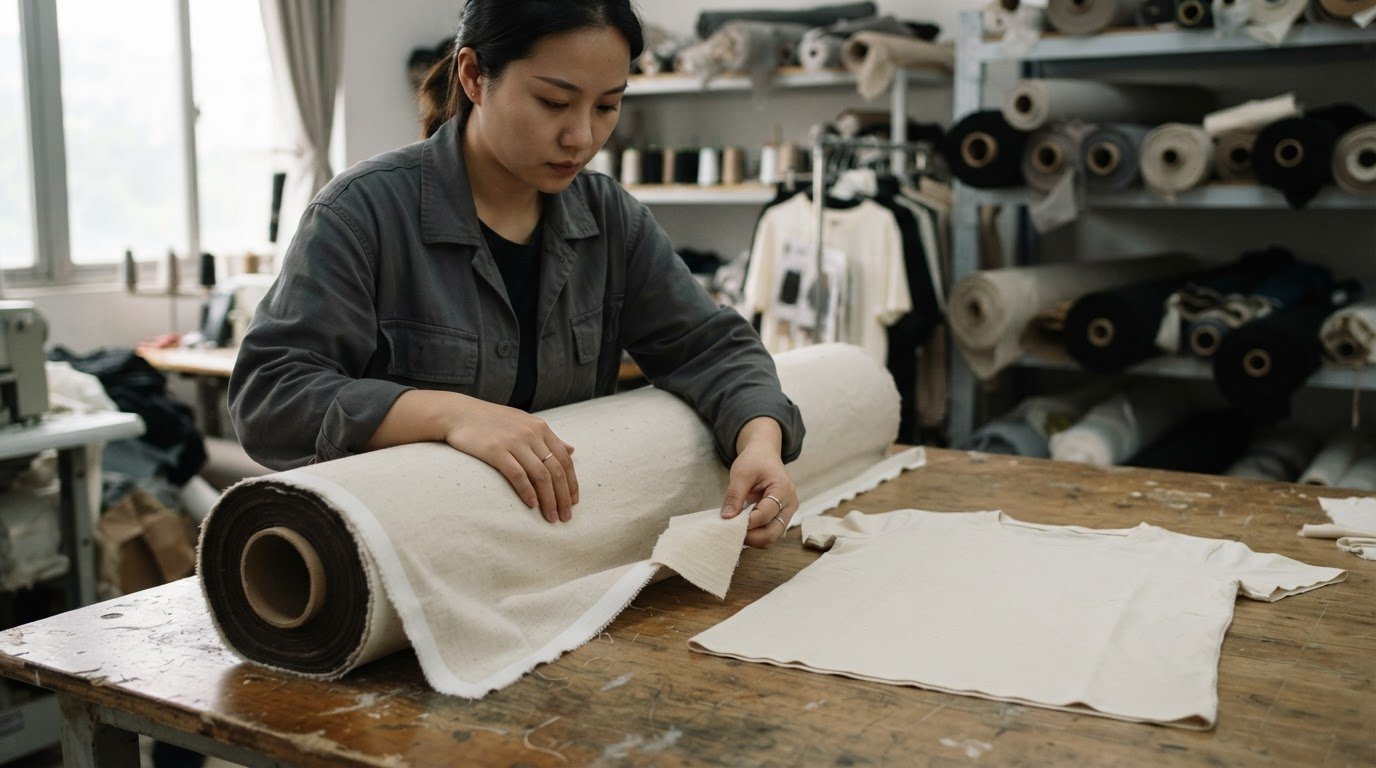
Fabric sourcing is an early quality decision. Fiber content, weight, weave or knit, color, and finish all affect a garment’s feel and performance. A cotton jersey top, for example, needs different handling from a woven dress. An unapproved substitute can change the finished item’s drape, color, or shrinkage behavior. Clear material references and an approved sample give the production team a shared target before bulk cutting begins.
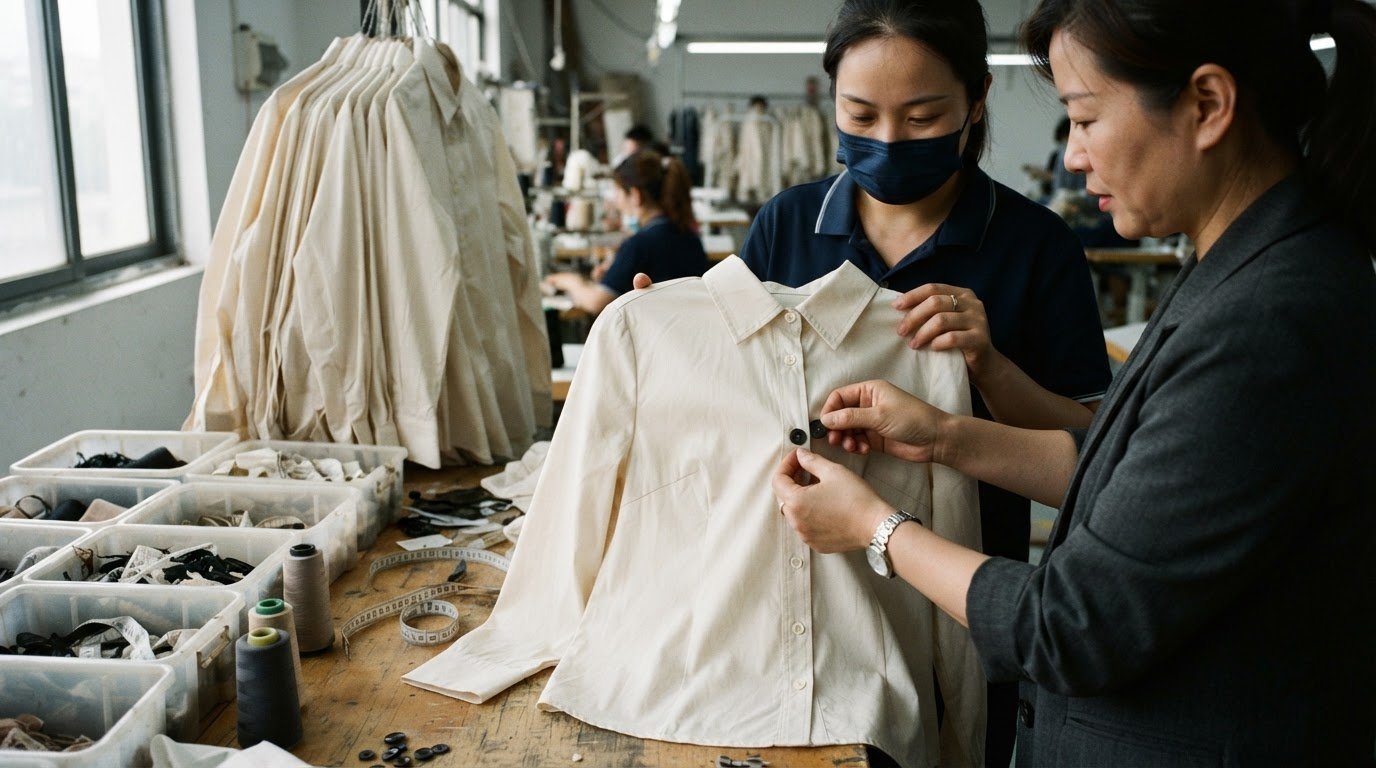
Construction turns a design into repeatable production steps. Pattern pieces must deliver the intended fit, while cutting, stitching, pressing, and finishing all affect the result. A twisted sleeve seam or uneven hem can undermine even suitable fabric. During sample development, teams can review fit, seam placement, and details such as closures before approving the design for production. These checks make expectations concrete instead of relying on broad terms such as “premium.”
Complex supply chains can introduce inconsistencies in manufacturing. Fabric may pass through mills, dye houses, trim suppliers, and sewing facilities, so each handoff needs coordination. A color lot may differ, trim may arrive late, or approved fabric may be replaced. Brands can reduce these risks by documenting material and construction requirements, recording approvals, and aligning inspections with garment features. A stretch waistband, for example, needs checks for recovery and stitching, while a printed panel needs consistent placement. These details help distinguish factory capability from variation across the supply chain.
Factory certifications and inspections
A certification can indicate that a factory follows a defined management or production standard. Its value depends on what it covers, which facility or process it applies to, and whether it remains current. It doesn’t prove that every garment meets your specifications. A management-system certificate, for example, can’t replace checking stitching, measurements, or fabric in a finished order.
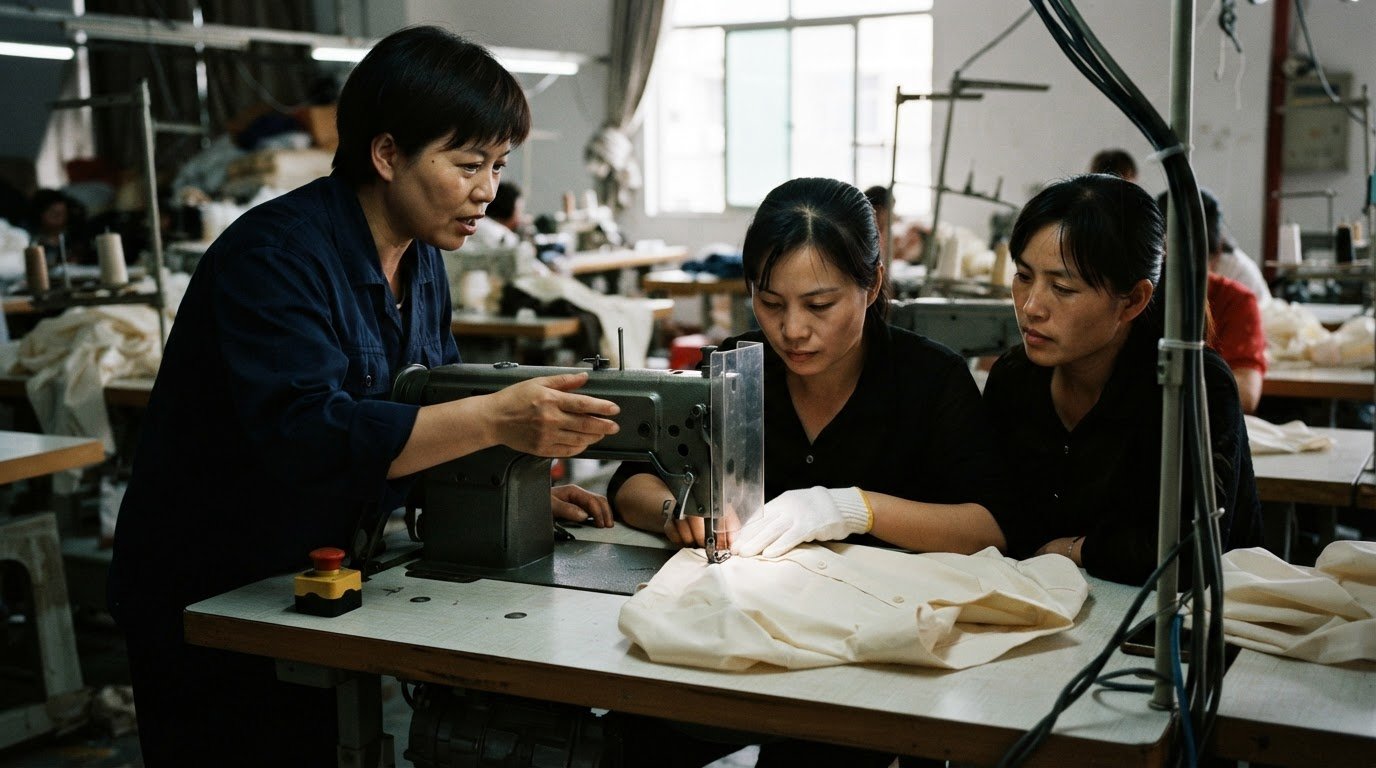
Inspections provide evidence about the product itself. Before production starts, a quality plan can define acceptable measurements, construction details, and material requirements. Checks during production can catch recurring seam problems earlier than a final inspection alone. A final review can assess finished garments against approved samples and documented requirements. Brands sourcing from China should maintain rigorous quality control, including monitoring production operations.
Risks include defects, unauthorized use of designs or production information, and supply-chain interruptions. A delayed fabric shipment, for example, can affect the sewing schedule. Inspection reduces uncertainty about quality, but it can’t prevent every disruption or protect intellectual property on its own.
Reliable relationships develop through specific communication and consistent follow-through. Set out the garment specifications, approved materials, quality criteria, and responsibilities in written documents. Discuss changes promptly, since production details may evolve as a relationship develops. Learn how communication styles affect expectations, allow time for processes, and build trust through dependable actions. These practices make decisions and responsibilities easier to understand across teams.
For apparel, fabric choices also shape inspection criteria. A lightweight knit may need checks for stretch and recovery, while a woven fabric may require attention to shade and surface consistency. Aligning material requirements with production checks connects design intent to measurable acceptance criteria. Fabric sourcing supports that alignment by linking material selection to the garment’s construction and quality requirements.
Use fabric sourcing with PowerSweet Fashion to align material decisions with your garment’s production requirements.
PowerSweet Fashion
PowerSweet Fashion helps fashion brands turn a design into a production plan based on materials, samples, and quality checks. For brands evaluating manufacturing in China, this practical process replaces assumptions with clearer information about how garments are developed and produced.
Custom women’s clothing production brings a garment brief into manufacturing. Sample development helps refine fit and construction before bulk production, while fabric sourcing connects material choices to the design. Quality control checks garments against their defined requirements. These services provide coordinated support from early development through production, keeping decisions connected at each stage.
Share your design goals and production requirements to start a focused conversation. Contact PowerSweet Fashion to discuss your project.
Make Your Next Production Decision With Clarity
Overcoming stereotypes of Chinese manufacturing starts with a more useful question: can the production process meet your garment’s specific requirements? Clear design details, material choices, and quality criteria give the brand and factory a practical basis for decisions. The next step is turning those requirements into a production plan.
PowerSweet Fashion supports this work with custom women’s clothing production, sample development, and fabric sourcing. These services connect design intent with material selection and garment development, helping you make informed decisions as your project takes shape.
Bring your garment concept and priorities into the conversation. Contact PowerSweet Fashion today to discuss your production needs and identify a practical way forward. A clear brief is a strong starting point for building a product you’re ready to stand behind.
Frequently Asked Questions
What stereotypes exist about Chinese manufacturing, and how accurate are they?
Common stereotypes portray Chinese-made goods as uniformly cheap or poorly made, treating a diverse manufacturing sector as though it were a single factory. Quality depends on production requirements, materials, skills, and controls. A garment made to vague specifications, for example, may vary regardless of its country of origin. Assessing the product and process gives a more accurate picture than relying on a label alone.
How has the quality of Chinese manufacturing changed over time?
Chinese manufacturing spans different industries and capabilities, but quality hasn’t changed uniformly across every factory. A supplier’s current equipment, workforce skills, and production controls matter more to a specific order than a broad historical comparison. For a fashion brand, the key question is whether the factory can consistently reproduce the approved fit, fabric, and construction details.
What quality-control standards and certifications do Chinese manufacturers follow?
Standards and certifications vary by manufacturer and scope; a certificate doesn’t automatically prove that a specific garment meets its specifications. PowerSweet Fashion states that it is independently audited and certified, including a SMETA 6.1 audit, BSCI monitoring, and Global Recycled Standard certification. These credentials relate to defined assessment areas, while garment quality still depends on product-level requirements and inspections.
How can buyers verify a Chinese supplier's quality, factory, and business credentials?
Build a consistent record linking the business, production site, approved sample, and order requirements. For example, compare the factory name on business documents with the site handling production, and check that inspection records refer to the same garment specifications. Reviewing a sample and documenting checks during production can provide product-specific evidence that general company credentials alone cannot.
How do labor, environmental, and safety practices vary among Chinese manufacturers?
Practices vary by factory, management systems, suppliers, and the work performed. Relevant evidence can include how employee training is handled, how safety procedures are communicated, and how materials and production waste are managed. A certification or audit covers only its defined scope; it shouldn’t be treated as proof of every workplace or environmental practice across an entire supply chain.
Which Chinese manufacturers and industries are known for high-quality products?
Chinese smartphone manufacturing demonstrates strong capability in a technology-intensive industry, and some clothing manufacturers focus on premium quality. Since quality varies by factory, assess the specific processes, materials, and inspections.
Comments